Overview
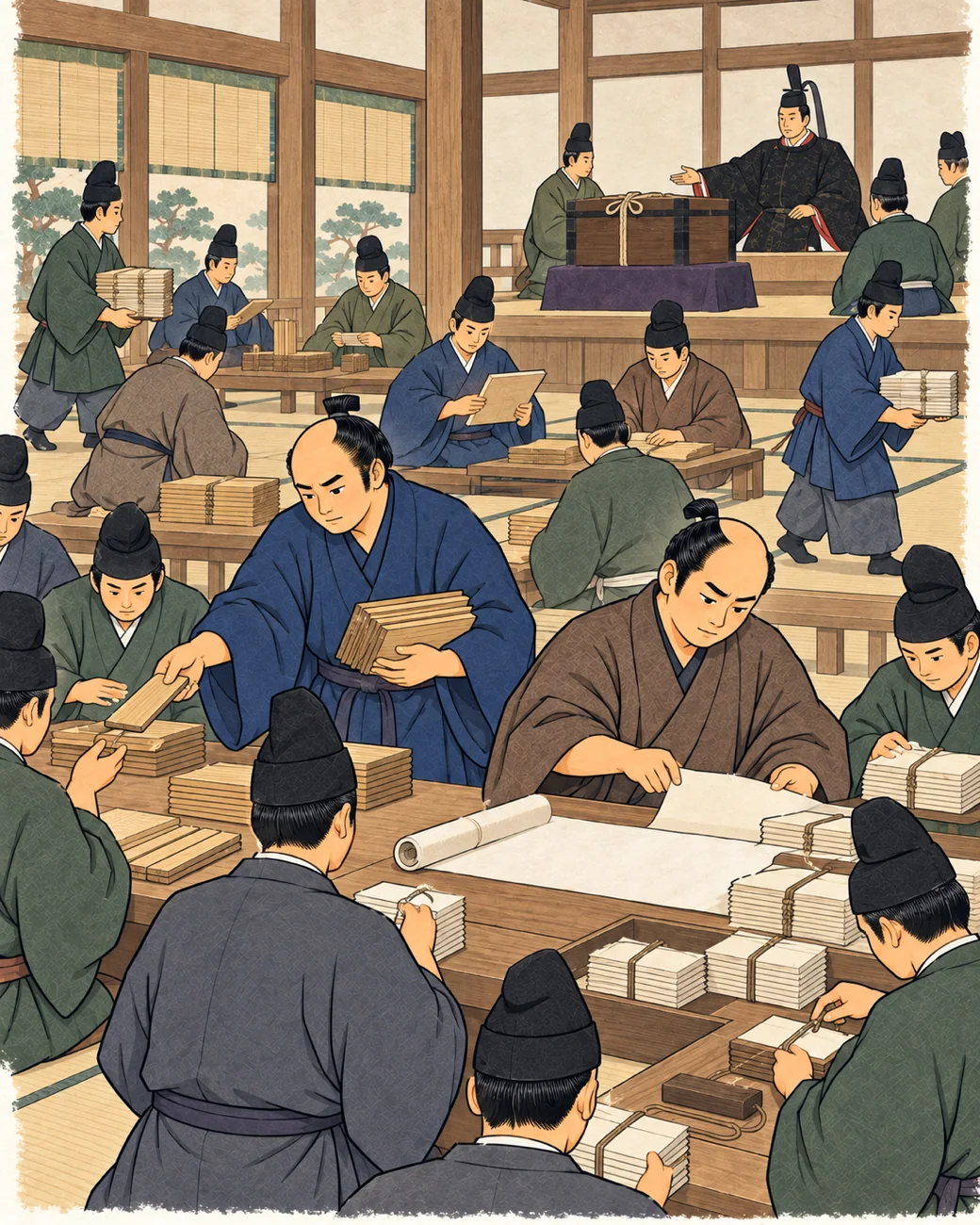
Under Emperor Monmu, Prince Osakabe, Fujiwara no Fuhito and a larger group of learned officials prepared the Taihō Code. Modern reference accounts distinguish stages across 700–702: compilation and presentation, promulgation, reorganization of offices and ranks, instruction, distribution and practical use.
The code joined penal rules to administrative provisions adapted from continental models. It organized central offices, court ranks, provincial and district government, household registration, taxes and labor obligations. These categories gave the court a written framework for assigning people and resources, but did not make practice uniform everywhere at once.
Fuhito was a central compiler, not sole author, and Monmu's reign provided the authority under which the code entered government. The original text has not survived intact; much of its content is reconstructed through later legal works and quotations.