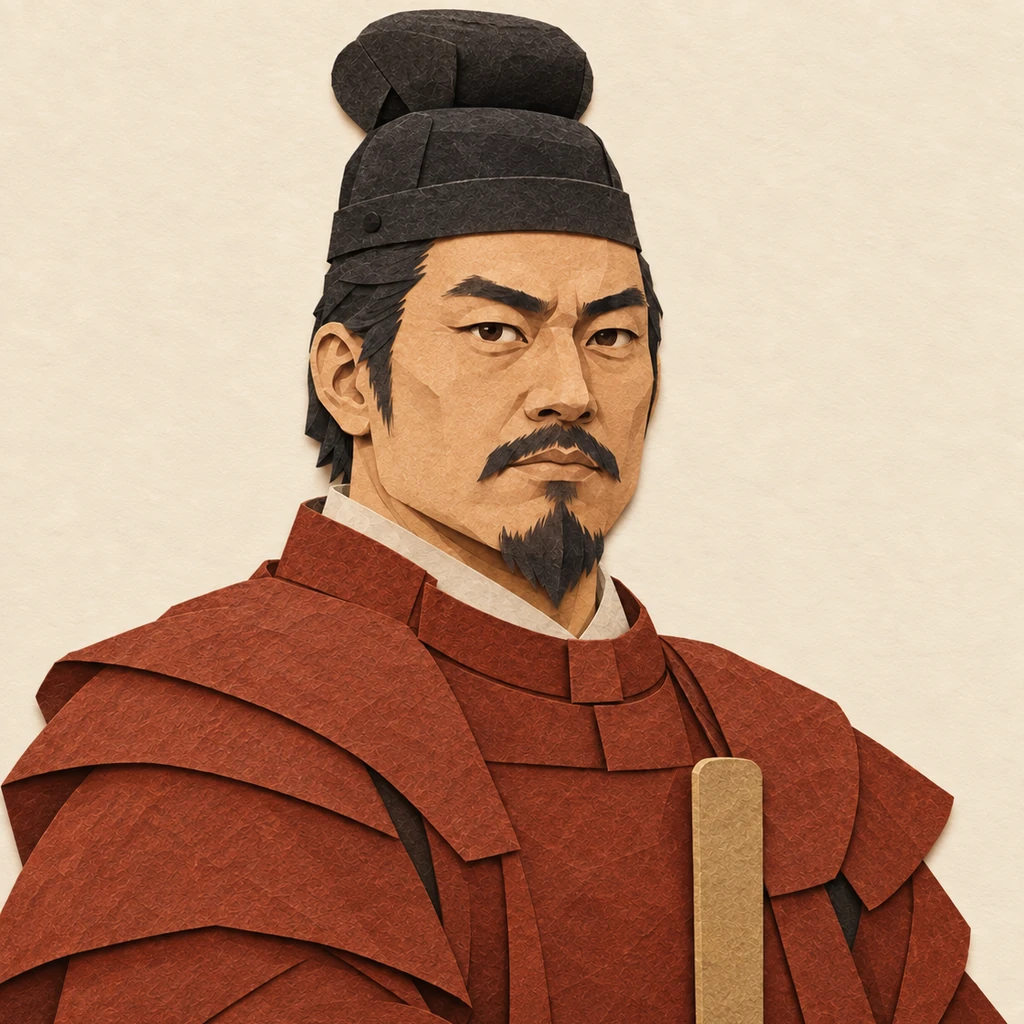
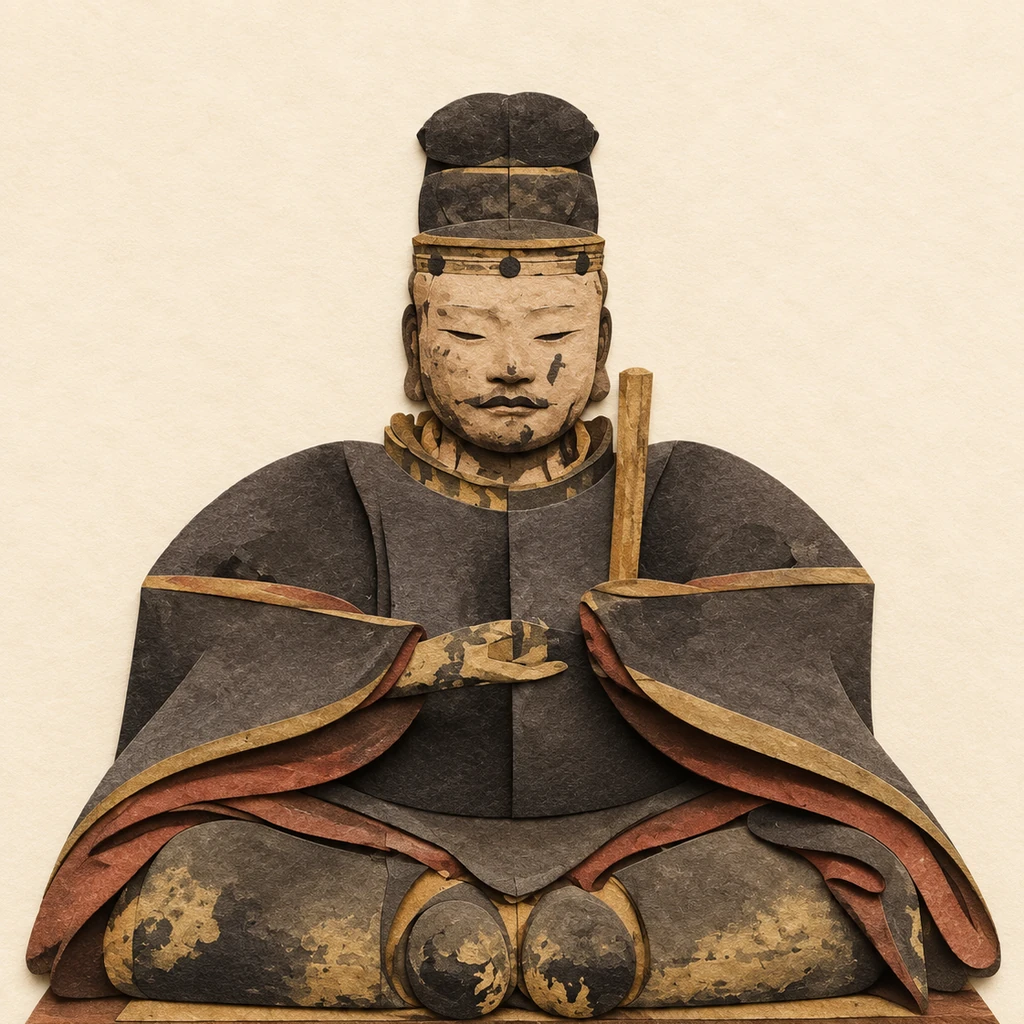
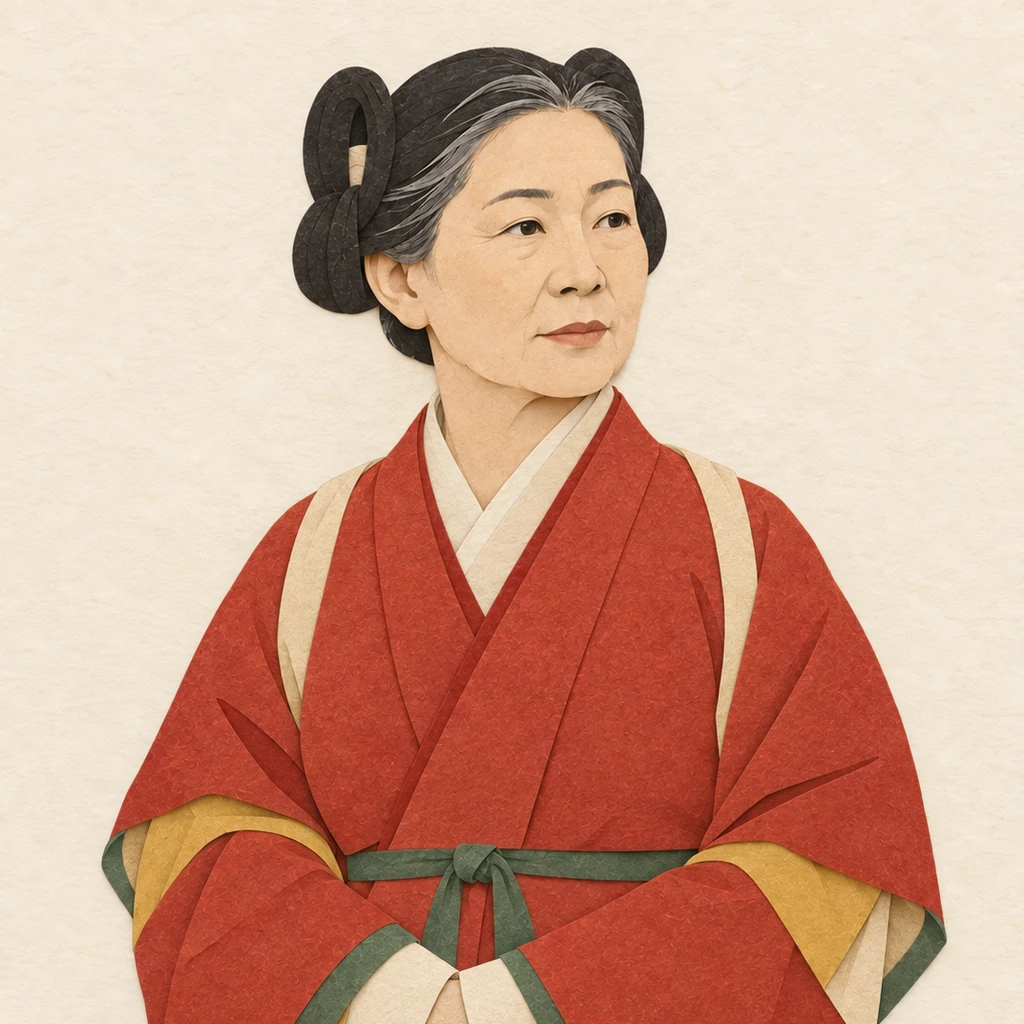
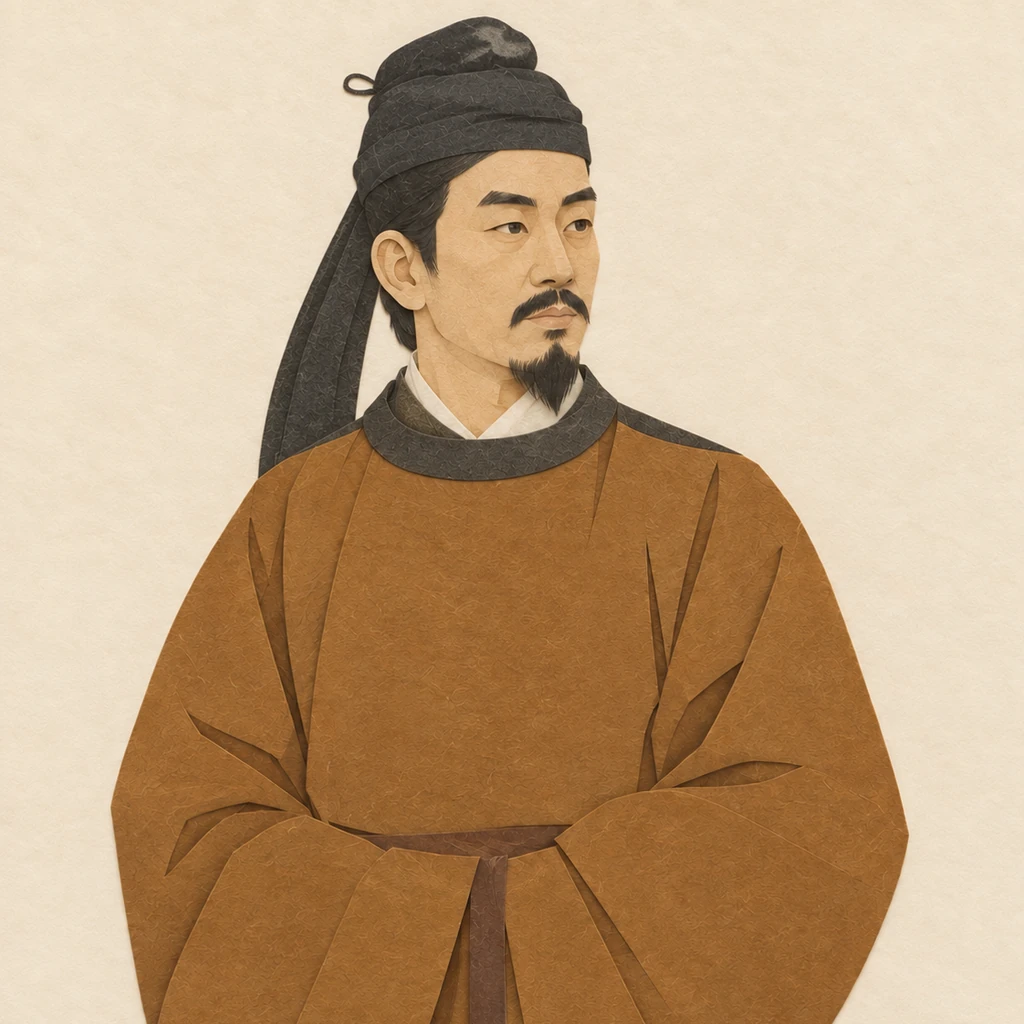
The Nihon shoki records Kusakabe joining the Yoshino oath in 679 and Tenmu pledging paternal care to the assembled princes. Kusakabe speaks first in the chronicle, but this does not establish that the oath itself formally appointed him crown prince.
Grade BWell supported, with source closure or nuance still open.
The Nihon shoki records Tenmu designating Kusakabe crown prince in 681 and associating him with government. The formal development of the later crown-prince office remains debated; the record establishes Kusakabe’s favored succession position.
Grade BWell supported, with source closure or nuance still open.
During his final illness in 686, Tenmu directed state affairs to be referred to Kusakabe together with the empress consort. This was shared responsibility under the ailing ruler, not Kusakabe’s enthronement.
Grade BWell supported, with source closure or nuance still open.
Father-in-lawKinship; exact dates not separately specifiedGrade B+
Emperor Tenmu → Prince Ōtomo
Tenmu was Otomo’s father-in-law through Otomo’s marriage to his daughter Tochi. This affinity is distinct from their uncle–nephew relationship and does not establish Tochi’s loyalties during the succession conflict.
Grade BWell supported, with source closure or nuance still open.
The Nihon shoki records Tenmu raising Uno-no-Sarara, the future Jito, to empress consort in 673. This is a court designation during Tenmu’s reign; it is separate from her later accession as sovereign.
Grade BWell supported, with source closure or nuance still open.
Tenmu and Uno-no-Sarara, the future Jito, joined in the 679 Yoshino oath promising parental support to six princes. The chronicle presents a collective dynastic pledge, not evidence that rivalries ended or that the consort shared every governing decision equally.
Grade BWell supported, with source closure or nuance still open.
In 680 Tenmu vowed to establish Yakushiji for the recovery of his ill consort Uno-no-Sarara, later Jito. The vow is recorded in the Nihon shoki; it does not establish a medical diagnosis or a supernatural cause of recovery.
Grade BWell supported, with source closure or nuance still open.
The Nihon shoki places Tenmu and Uno-no-Sarara together at the announcement of a legal-reform program in 681. Their joint appearance and announcement are recorded; an equal division of all governmental authority is not established.
Grade BWell supported, with source closure or nuance still open.
During his final illness in 686, Tenmu directed state affairs to be referred to Uno-no-Sarara, the future Jito, and Prince Kusakabe. This delegation preceded Tenmu’s death and did not itself constitute Jito’s formal accession.
Grade BWell supported, with source closure or nuance still open.
Paternal uncle and nieceKinship; exact dates not separately specifiedGrade B+
Emperor Tenmu → Empress Jitō
Tenmu was Jito’s paternal uncle as well as her husband. Her father Tenji was Tenmu’s elder brother. This biological relationship is separate from their already recorded marriage and joint government.
Grade BWell supported, with source closure or nuance still open.
Participation in government683 onward; end unspecifiedGrade B+
Emperor Tenmu → Prince Ōtsu
The Nihon shoki records Prince Otsu beginning to participate in state affairs under Tenmu in 683. The entry establishes governmental participation, without naming a separate office or making Otsu the designated heir.
Grade BWell supported, with source closure or nuance still open.
Tenmu granted Kawara-dera an endowment of 500 households for Saimei’s thirteenth memorial observance. The source supports the memorial endowment. The separate 673 scripture-copying notice does not by itself establish that every copied text was dedicated to Saimei.
Grade BWell supported, with source closure or nuance still open.
The Nihon shoki says Tenji offered succession to Oama in 671; Oama declined and obtained permission to withdraw to Yoshino. The later chronicle’s account of the exchange does not establish the participants’ private intentions.
Grade BWell supported, with source closure or nuance still open.
Father-in-law through JitoMarriage date unspecifiedGrade B+
Emperor Tenji → Emperor Tenmu
Tenji was also Tenmu’s father-in-law through the marriage of his daughter Uno-no-Sarara, later Empress Jitō, to Tenmu. This affinal link coexisted with their relationship as brothers; no marriage date is imposed on the relationship record.
Grade BWell supported, with source closure or nuance still open.
Burial attendance and mourning678, chronicle accountGrade B+
Emperor Tenmu → Princess Tōchi
The Nihon shoki records Tenmu attending Tōchi’s burial at Akaho and lamenting her death in 678. Her sudden death also halted the planned royal procession and sacrifice; this is the chronicle’s account of public mourning.
Grade BWell supported, with source closure or nuance still open.
Princess Oku was designated for Ise service in 673 during Tenmu’s reign and went to Ise in 674. Her service lasted until 686. The relation is the royal religious office, not a reconstructed private appointment conversation.
Grade BWell supported, with source closure or nuance still open.
Conveying royal honors669; chronicle accountGrade B+
Emperor Tenmu → Nakatomi no Kamatari
The Nihon shoki records Prince Oama, later Tenmu, conveying Tenji’s honors to the ill Kamatari in 669. Oama acted as the sovereign’s emissary; the award did not originate from him.
Grade BWell supported, with source closure or nuance still open.
GrandfatherKinship; exact dates not separately specifiedGrade B+
Emperor Tenmu → Empress Genshō
Tenmu was Genshō’s grandfather through Kusakabe. The bounded two-generation genealogy is supported by explicit parent links; it does not establish personal contact or guardianship.
Grade BWell supported, with source closure or nuance still open.
Maternal uncleKinship; exact dates not separately specifiedGrade B+
Emperor Kōtoku → Emperor Tenmu
Kōtoku was Tenmu’s maternal uncle through Kōgyoku. Two explicit family links establish the relationship; succession to office is not used as genealogy.
Grade BWell supported, with source closure or nuance still open.
Paternal uncleKinship; exact dates not separately specifiedGrade B+
Emperor Tenmu → Prince Shiki
Tenmu was the paternal uncle of Prince Shiki, the son of Tenji. This is Tenji’s son Shiki; he must not be confused with the differently written prince among Tenmu’s own sons.
Grade BWell supported, with source closure or nuance still open.