

 729
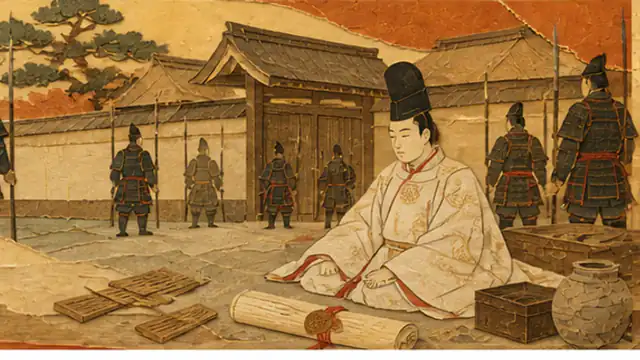
729The Nagaya no Ō Incident
長屋王の変
Why it mattersIn 729, troops surrounded the residence of Prince Nagaya after accusations of a plot against the throne; the court ordered his suicide, and his wife Kibi and their four sons also died. 770-772
The Death of Shōtoku and Dōkyō's Fall from Power
称徳天皇の死と道鏡の失脚
Why it mattersEmpress Shōtoku died in 770, after which the court chose Prince Shirakabe, the future Emperor Kōnin, as heir and removed the monk Dōkyō to Shimotsuke.- 785
Tanetsugu Is Assassinated and Crown Prince Sawara Is Removed
藤原種継暗殺と早良親王
Why it mattersIn 785, the capital-building official Fujiwara no Tanetsugu was assassinated at Nagaoka, and the investigation led to Crown Prince Sawara's removal and death during his transfer into exile. - 901
Michizane Is Removed from Office and Sent to Dazaifu
菅原道真の大宰府左遷
Why it mattersIn 901, Sugawara no Michizane was removed as Minister of the Right and sent to Dazaifu after accusations of a plot against Emperor Daigo, ending his authority at the central court. - 1271
Nichiren’s Arrest, Tatsunokuchi Tradition and Sado Exile
龍ノ口法難と佐渡流罪
Why it mattersArrested in 1271, Nichiren was exiled to Sado, where he wrote major doctrinal works; religious accounts also describe an interrupted execution at Tatsunokuchi before his removal. - 1434
Zeami Is Exiled to Sado
世阿弥の佐渡流罪
Why it mattersIn 1434, shogun Ashikaga Yoshinori exiled Zeami to Sado, interrupting the elder Noh master’s work in the capital while he continued writing and corresponding from the island. - 1723
Restrictions on Love-Suicide Stories
心中物の規制
Why it mattersTokugawa authorities restricted paired suicides and their representation in 1722–1723, curtailing the love-suicide plays that Chikamatsu and Osaka’s theaters had made commercially successful. 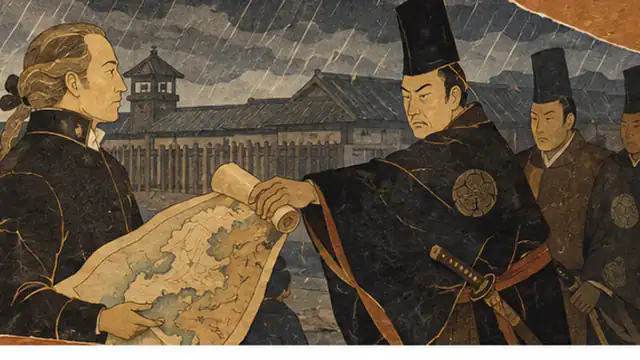 1828–1829
The Siebold Incident: Maps, Expulsion, and a Family Left in Nagasaki
シーボルト事件と長崎に残された家族
Why it mattersIn 1828, the shogunate discovered that Philipp Franz von Siebold possessed restricted Japanese maps; the resulting investigation punished Japanese collaborators, expelled Siebold, and separated him from the Nagasaki family in which his daughter Kusumoto Ine was growing up.- 1858-1859
The Ansei Purge
安政の大獄
Why it mattersIn 1858–1859, Ii Naosuke’s government arrested and punished opponents involved in treaty, succession and court disputes, imposing confinement and executions on people with different political programs. - 1863
A Palace Coup Expels Chōshū and Seven Courtiers
八月十八日の政変
Why it mattersOn the eighteenth day of the eighth month of the Japanese calendar in 1863, Aizu and Satsuma forces secured Kyoto’s palace gates and excluded Chōshū and seven allied courtiers from court politics.