Read the article below. Interactive reading tools are available when scripts load.
Quick
The Iwakura Mission sailed from Yokohama on December 23, 1871. Iwakura Tomomi served as ambassador, with Kido Takayoshi, Ōkubo Toshimichi, Itō Hirobumi and Yamaguchi Naoyoshi as deputies. Officials, specialists and students accompanied them to the United States and Europe.
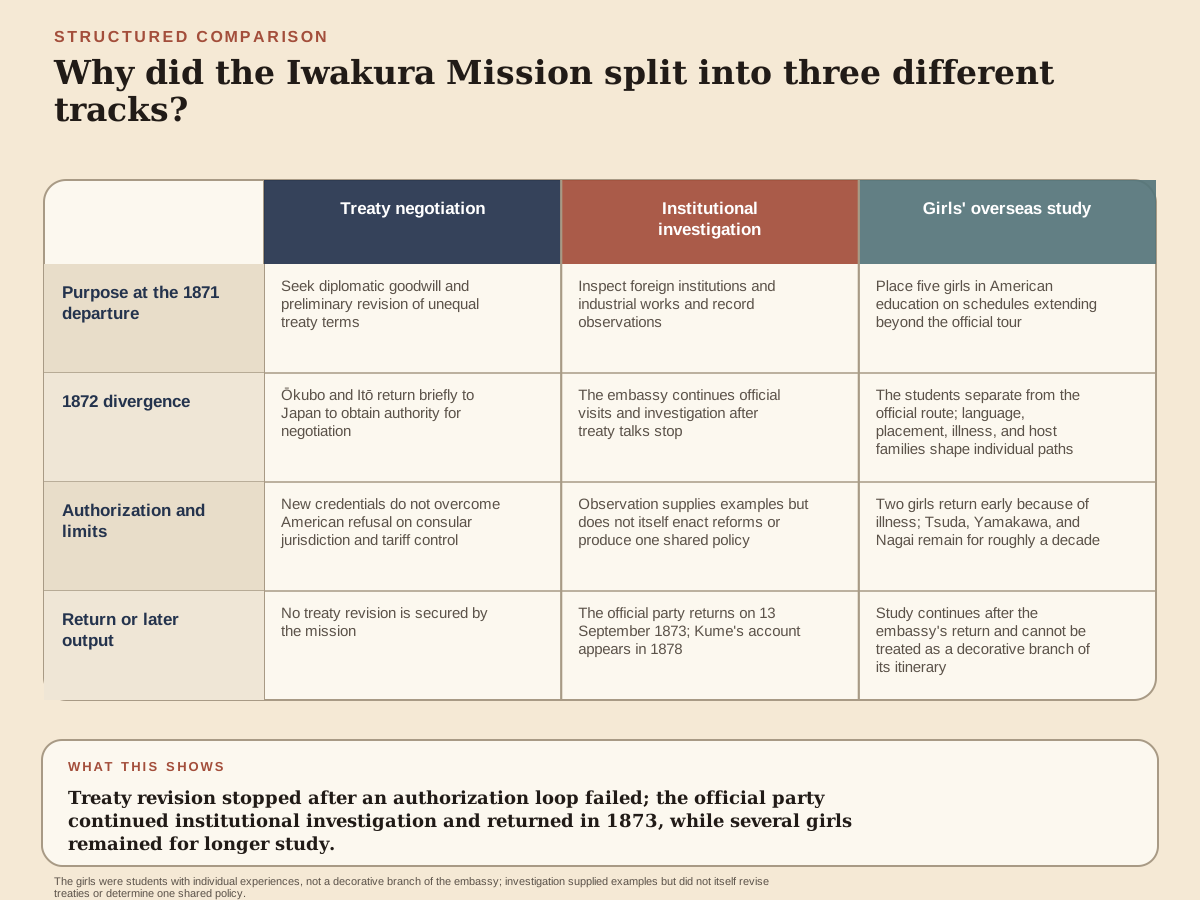
The mission presented imperial credentials and attempted preliminary treaty revision. In the United States, Ōkubo and Itō temporarily returned to Japan for the necessary authorization. Even after their return, American negotiators rejected Japan’s demands to end consular jurisdiction and recover tariff control. The negotiations stopped, and the later European visits concentrated on official audiences and investigation.
Members inspected institutions and industrial works and recorded their observations. Kume Kunitake compiled the official account, Beiō Kairan Jikki, published in 1878. Its descriptions made the delegation’s findings available beyond the travelers themselves.
Five girls, including Tsuda Umeko, Yamakawa Sutematsu and Nagai Shigeko, crossed the Pacific as students; their American education continued on a different schedule from the official tour. Iwakura returned on September 13, 1873. Although an agreement had asked the caretaker government to defer major reforms, changes at home had proceeded, and disagreement over Korea soon divided the leadership. The mission supplied records and examples for policy without revising the treaties or securing a common political program among its members.
Iwakura and fellow court noble Sanjō Sanetomi held senior places in the new government alongside leaders from the victorious domains. Kido Takayoshi worked on centralization, Ōkubo on administration and finance, and Saigō on military affairs. Their interests often conflicted. Offices changed as the leadership designed institutions while the war continued. Court access remained a resource: Iwakura and Sanjō connected new appointments and commands to the emperor, helping a domain-backed regime claim authority beyond its original allies.
Classic
The Iwakura Mission sailed from Yokohama on December 23, 1871. Iwakura Tomomi served as ambassador, with Kido Takayoshi, Ōkubo Toshimichi, Itō Hirobumi and Yamaguchi Naoyoshi as deputies. Officials, specialists and students accompanied them to the United States and Europe.
On 3 January 1868, Iwakura's court and domain allies took control of palace access and announced a restoration of imperial government. Their declaration abolished the shogunate, the regency and the old court offices, replacing them with a new governing hierarchy. The young emperor authorized a settlement prepared by advisers and protected by allied troops. Iwakura's procedural knowledge helped turn the coalition's demands into appointments and orders carrying court authority. Opponents excluded from the palace had no equal opportunity to shape that first settlement.
Ōkubo and Saigō Takamori, Satsuma's military leader, connected that form to Satsuma's political and military resources. Yoshinobu had already returned governing authority to the emperor. Tosa leaders argued that this act entitled him to participate in constructing the next system. His house controlled immense land and troops, which made inclusion both plausible and threatening. At the Kogosho Conference, held in the palace's small audience hall, the former Tosa lord Yamauchi Yōdō criticized decisions made without Yoshinobu. Matsudaira Yoshinaga, the former Fukui lord, also sought a less punitive route. Iwakura insisted that resignation of office and land return precede participation. The debate concerned material power, not etiquette alone. Satsuma forces near the palace and allied control of gates limited the range of safe outcomes. Armed pressure did not render every spoken argument meaningless; it defined the conditions under which the arguments counted.
Urban residents near the troops faced requisitions and uncertainty while the coalition imposed its first settlement. Yoshinobu initially accepted parts of the demand while mobilization continued. Provocation, disorder, and competing troop movements led to battle at Toba and Fushimi. The court branded the Tokugawa side enemies, giving the new government an imperial banner and command claim. The Boshin War, the 1868–1869 civil war between the new imperial government and Tokugawa supporters, extended through Edo and the northeastern domains to Hokkaido. Saigō and the Tokugawa negotiator Katsu Kaishū helped arrange Edo's surrender; commanders and local officials shaped settlements elsewhere. Iwakura did not personally direct every battlefield from Kyoto. Fiscal survival remained uncertain. Domain contributions, merchant loans, requisitions, and new paper money supported a government whose authority preceded stable revenue.
The government needed revenue and military success to extend the declaration beyond Kyoto. Its imperial claim helped justify contributions, loans and requisitions, while allied domain forces did much of the fighting. Iwakura defended the exclusion of Yoshinobu from the first settlement and gave the coalition a form the court could recognize. His authority depended on the armed allies who made that form enforceable; their victory in turn depended partly on being able to act in the emperor's name.
The mission presented imperial credentials and attempted preliminary treaty revision. In the United States, Ōkubo and Itō temporarily returned to Japan for the necessary authorization. Even after their return, American negotiators rejected Japan’s demands to end consular jurisdiction and recover tariff control. The negotiations stopped, and the later European visits concentrated on official audiences and investigation.
Members inspected institutions and industrial works and recorded their observations. Kume Kunitake compiled the official account, Beiō Kairan Jikki, published in 1878. Its descriptions made the delegation’s findings available beyond the travelers themselves.
Five girls, including Tsuda Umeko, Yamakawa Sutematsu and Nagai Shigeko, crossed the Pacific as students; their American education continued on a different schedule from the official tour. Iwakura returned on September 13, 1873. Although an agreement had asked the caretaker government to defer major reforms, changes at home had proceeded, and disagreement over Korea soon divided the leadership. The mission supplied records and examples for policy without revising the treaties or securing a common political program among its members.
Iwakura and fellow court noble Sanjō Sanetomi held senior places in the new government alongside leaders from the victorious domains. Kido Takayoshi worked on centralization, Ōkubo on administration and finance, and Saigō on military affairs. Their interests often conflicted. Offices changed as the leadership designed institutions while the war continued. Court access remained a resource: Iwakura and Sanjō connected new appointments and commands to the emperor, helping a domain-backed regime claim authority beyond its original allies.
The Charter Oath, the new regime's 1868 statement of governing principles, promised wider deliberation and the pursuit of knowledge. Yuri Kimimasa drafted an initial version, Fukuoka Takachika revised it, and Kido made further changes before Meiji swore the text before nobles and lords. Iwakura belonged to the leadership presenting this programme as an imperial commitment. Oath and audience gave unfamiliar commands recognizable authority. Beyond the ceremony, northern opponents and the Hokkaido regime continued resisting the new center, imposing further demands on its troops and finances.
The move toward Tokyo changed court geography. Meiji's presence in the former shogunal city gave the government access to bakufu infrastructure and eastern political space. Kyoto households lost some proximity and economic activity. Iwakura helped connect ancient court continuity to a capital practice that weakened Kyoto's monopoly. Return of domain registers in 1869 made lords acknowledge imperial ownership while often leaving them as governors. Abolition in 1871 replaced the domains with prefectures under a more decisive central action supported by imperial guards. The two stages should not collapse into voluntary surrender. Court and domain elites received new ranks and compensation. Former hereditary privilege was transformed rather than eliminated. Ordinary subjects obtained uniform institutions and new burdens without choosing the elite settlement.
Foreign affairs exposed dependence. Treaty powers expected recognizable ministries and consistent enforcement. Iwakura became Foreign Minister in 1871, but diplomats, translators, port officials, and legal advisers performed the work. His tenure was brief before the mission. The post of Right Minister placed him near the formal summit below Sanjō's Great Minister. It expressed revived court nomenclature within a new bureaucratic order. Ancient title and modern centralization could coexist because both concentrated authority around the emperor. Iwakura's achievement was to keep court capacity central while domain specialists built administration.
On 23 December 1871 Iwakura departed Yokohama as head of a mission to the United States and Europe. It sought diplomatic goodwill, information for treaty revision and knowledge of foreign institutions. His rank as Right Minister gave him standing with foreign governments. Vice ambassadors Ōkubo, Kido, Itō Hirobumi and Yamaguchi Naoyoshi brought different political connections and expertise. Kume Kunitake kept the central record, while ministry specialists conducted their own investigations. Students also traveled with the delegation, some intending to remain overseas after the official party moved on.
Tsuda Ume was only six by modern age; Yamakawa Sutematsu, Nagai Shige, Ueda Tei, and Yoshimasu Ryō were also young. Officials imagined their education in relation to national and household roles, while each faced language, placement, illness, and dependence on host families. Two returned early because of illness; Tsuda, Yamakawa, and Nagai remained for roughly a decade. Their later contributions to education and music belonged to their own labor and networks. Their route separated from the official party in the United States. Elida DeLong and other women helped place or accompany the girls.
In San Francisco, ceremony created an image of a government eager to learn and deserving recognition. Iwakura was photographed in Japanese court dress before later adopting Western formal clothing. Clothing changes were diplomatic adaptation, not evidence that identity had been exchanged. Newspapers interpreted the delegation through admiration, ridicule, and Orientalist expectation. Hosts could celebrate modernization while their governments preserved unequal treaty benefits. Public warmth was a resource, not a binding concession. Rail travel and visits to schools, factories and public institutions gave officials material for their reports. Visits were curated by hosts and limited in time. Observers saw institutions functioning, not every conflict and exclusion beneath them.
An agreement with the leaders remaining in Tokyo called for consultation and restraint in introducing new systems, while allowing policies to unify domestic administration after domain abolition. The resident government introduced schooling, conscription and land-tax reforms. Its reorganization of the central council in 1873 also shifted power among ministries and produced resignations. Officials presented this change as an adjustment within the existing system, a description that exposed how contestable the agreement's limits had become. Reports of unrest and policy changes reached travelers who had not taken part in the decisions. Iwakura also had to coordinate vice ambassadors and specialists whose investigations sometimes took them away from the main party. By the time they returned, both the country's institutions and the balance among its leaders had changed.
Iwakura helped make imperial authority effective in the overthrow of Tokugawa government. He connected palace procedure and appointments to the military resources of Satsuma and its allies. At the January 1868 palace settlement he opposed admitting the last shogun, Yoshinobu, without first reducing his office and lands. The new government emerged through that combination of court authority and armed pressure, not through a declaration alone.
The mission he led tested Japan's demand for treaty equality and supplied officials with foreign comparisons when immediate revision failed. His later constitutional proposals favored a legislature within an emperor-centered order, while his protection of noble institutions helped inherited elites retain a place in the centralized state. Legal formulation and final drafting belonged to Inoue Kowashi, Itō Hirobumi and others; Iwakura's contribution was political sponsorship and direction rather than sole authorship.
Emperor Kōmei died in early 1867 and was succeeded by his young son, the emperor known as Meiji. Iwakura gained permission to re-enter Kyoto, although restoration to secular court status came later. The new reign changed the palace relationships on which he had depended. Kōmei had supported cooperation with the Tokugawa government; the anti-bakufu nobles and domain leaders now had more room to prepare a different settlement. Ōkubo Toshimichi, a leading Satsuma official, supplied an important link to a domain with troops and revenue. The last Tokugawa shogun, Yoshinobu, was meanwhile reorganizing his government and could still command substantial resources.