Yoshinobu’s return of governing authority had left the Tokugawa house’s resources intact. January’s restoration council demanded his court office and lands. He moved to Osaka while the terms remained disputed.
Reports of the burning of the Satsuma residence in Edo reached Osaka and intensified hostility among former shogunal troops and their Aizu and Kuwana allies. Yoshinobu issued an accusation against Satsuma and ordered an advance toward Kyoto.
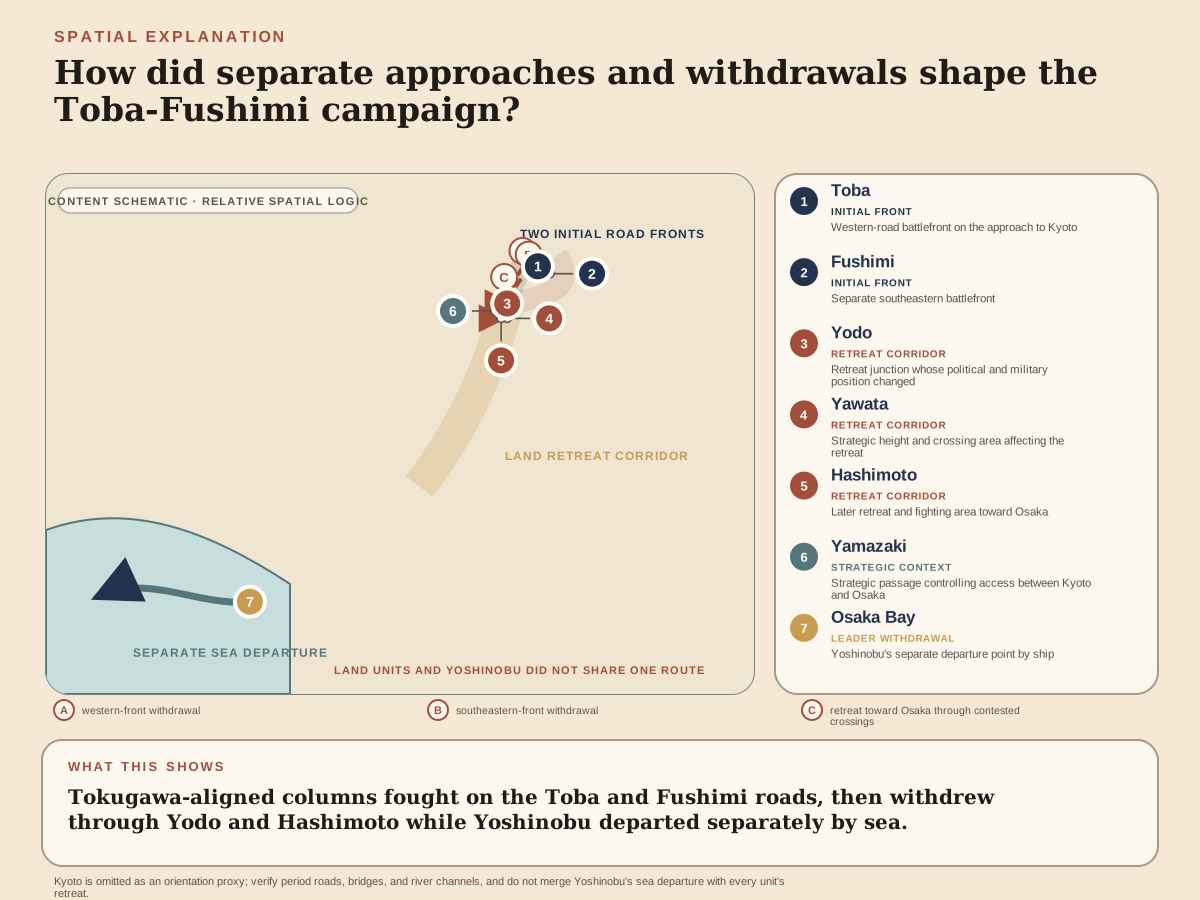
Kyoto could be approached along the Toba and Fushimi roads. Government-aligned domain units guarded these routes. The advance therefore had to pass forces already deployed to prevent its entry into the imperial government’s headquarters.
The two approaches led through inhabited places. Fushimi was a port joining Kyoto to the Yodo River traffic toward Osaka. A battle there would put magistracy buildings, homes and commercial streets within the same field of fire.
The former shogunal side was not untouched by Western military learning. The bakufu had sought French advisers and introduced French-style organization, while domains on the other side had also acquired foreign weapons and drill. Equipment therefore cannot explain the conflict as a self-evident victory of modern troops over an entirely obsolete army. The question was whether an armed accusation against Satsuma could be delivered through approaches held by a government claiming imperial authority.
Negotiation had not disappeared before the advance. Shinagawa's history describes attempts to settle Yoshinobu's office and land obligations through court intermediaries, alongside anger among troops in Osaka. The accusation and the armed columns changed the risks of that process. The roles of petition, escort and attack cannot be separated simply by accepting either side's description of its own purpose.
Former shogunal contingents advanced north from Osaka, with Kuwana units on the Toba approach and Aizu forces around Fushimi. The written accusation against Satsuma supplied a political purpose; armed columns made its delivery a military confrontation.
On January 27, the Toba force met Satsuma’s barrier near Koedabashi. Takigawa Tomotaka, a senior bakufu inspector, was among those seeking passage. Satsuma artillery under Nozu Shizuo had been deployed near Jōnangū. The exchange over access ended in firing.
At Fushimi, fighting developed between forces at the magistracy and government units around Gokōnomiya. Residential fires spread. The positions were embedded in a town whose buildings and waterways also served civilian transport and trade.
Satsuma’s records describe hard fighting on January 28 and reinforcements moving from Fushimi to Toba. The winning side redistributed contingents between fronts. Its advance depended on getting troops to contested positions as well as on holding court authority.
Prince Yoshiaki took imperial command with the brocade banner. As former shogunal forces fell back, pursuit divided between the Fushimi, Toba and Yamazaki routes. Court designation accompanied movements by named domain units; a centralized conscript army did not already exist.
The pursuit reached Yodo and then Yawata and Hashimoto. Tsu’s troops held Yamazaki on the opposite side of the river after aligning with the government under imperial orders. Satsuma and allied units advanced along the embankment toward Hashimoto, and the former shogunal force retreated toward Osaka.
The banner also had a recent material history. Yamaguchi's account connects its manufacture to Iwakura's commission through Ōkubo and Shinagawa Yajirō, who took cloth to Chōshū to be made into an imperial flag. This was preparation by political actors using an imperial tradition, rather than the spontaneous appearance of a medieval relic. The local account's wider claims about psychological impact do not establish that every soldier or domain responded alike.
Tsu illustrates how court authority worked through a particular decision. Some within the domain had favored the bakufu, but court orders led it to support the government and defend Yamazaki. Kameyama, by contrast, delayed agreement before following the side gaining advantage. These choices occurred alongside reinforcements and pursuit; the banner did not move soldiers, hold roads or settle every domain debate on its own.
The Kyoto advance failed. Government forces retained the approaches and drove their opponents south. The losses deprived Yoshinobu’s coalition of the immediate means to overturn the palace settlement by bringing its army into Kyoto.
On January 30, Yoshinobu left Osaka at night with the Aizu and Kuwana lords, Katamori and Sadaaki. Kaiyō Maru carried them toward Edo. Forces left in Osaka could no longer expect those leaders to direct another campaign from the castle.
The subsequent imperial pursuit order characterized the advance as an attack on the court. It accused Yoshinobu of deception despite his earlier professions of obedience. That wording records the government’s case for pursuing him, rather than proving his private intentions.
The battlefield result also left damaged communities. Fushimi’s magistracy and extensive residential areas burned. Meanwhile, resistance continued farther east and north; the defeat around Kyoto did not mean that every former shogunal formation or allied domain had surrendered.
Yoshinobu's departure removed the principal leaders from the remaining army. Calling it cowardice or an effort to spare Osaka substitutes a private motive for the better-established consequence: the troops could no longer conduct another Osaka campaign under those leaders. The government's pursuit proclamation then recast the armed advance as an offense against the court. This designation supported its demand for cooperation without proving that every defeated man had intended to attack the emperor.
Diplomatic acknowledgment also proceeded beyond the battlefield. Parkes supported foreign neutrality during the civil war and later helped arrange audiences with the emperor. His presentation of a royal credential in May 1868 expressed British recognition of the new government. Military success and foreign recognition were connected developments, but neither a court banner nor victory on the Kyoto roads alone completed the diplomatic transfer.
The government could now issue a pursuit order against Yoshinobu and send forces east. Its proclamation joined the demand for control of lands and people to the accusation that his followers had opened hostilities. It presented the campaign as both punishment and relief from warfare.
Domain choices did not follow one pattern. Tsu obeyed court orders and supported the government at Yamazaki. Kuwana remained divided: its castle was surrendered by supporters of submission while Sadaaki continued resistance elsewhere. Allegiance at a castle and a lord’s subsequent actions could diverge.
Satsuma’s records trace continued deployment beyond this victory. Troops proceeded toward eastern and northeastern campaigns, with Hakodate still ahead. The coalition expanded its authority through successive operations; the banner had not instantly brought all regions under control.
The government’s promise to rescue people from war sits beside the destruction in Fushimi. Its forces could now pursue their opponents, while residents where the armies met faced burned homes and lost property. Military victory and the transfer of authority left these local losses behind.
Military expertise likewise survived defeat. Former bakufu men carried military and language knowledge into the Tokugawa settlement at Shizuoka and the school at Numazu. The Meiji government later employed French advisers too. The losing side's participation in this history prevents the new state's forces from being imagined as fully created, equipped and trained in their first victory.
The domain army's origins remain visible in its uneven allegiances. Tsu supplied a defended position; Kuwana's castle surrendered while its lord continued fighting elsewhere. Court designation gave the coalition a claim to national command, while successive campaigns had to establish control in practice. The burned neighborhoods of Fushimi belong to the same history as the proclamation's promise of relief from war, rather than disappearing into a story of inevitable unification.