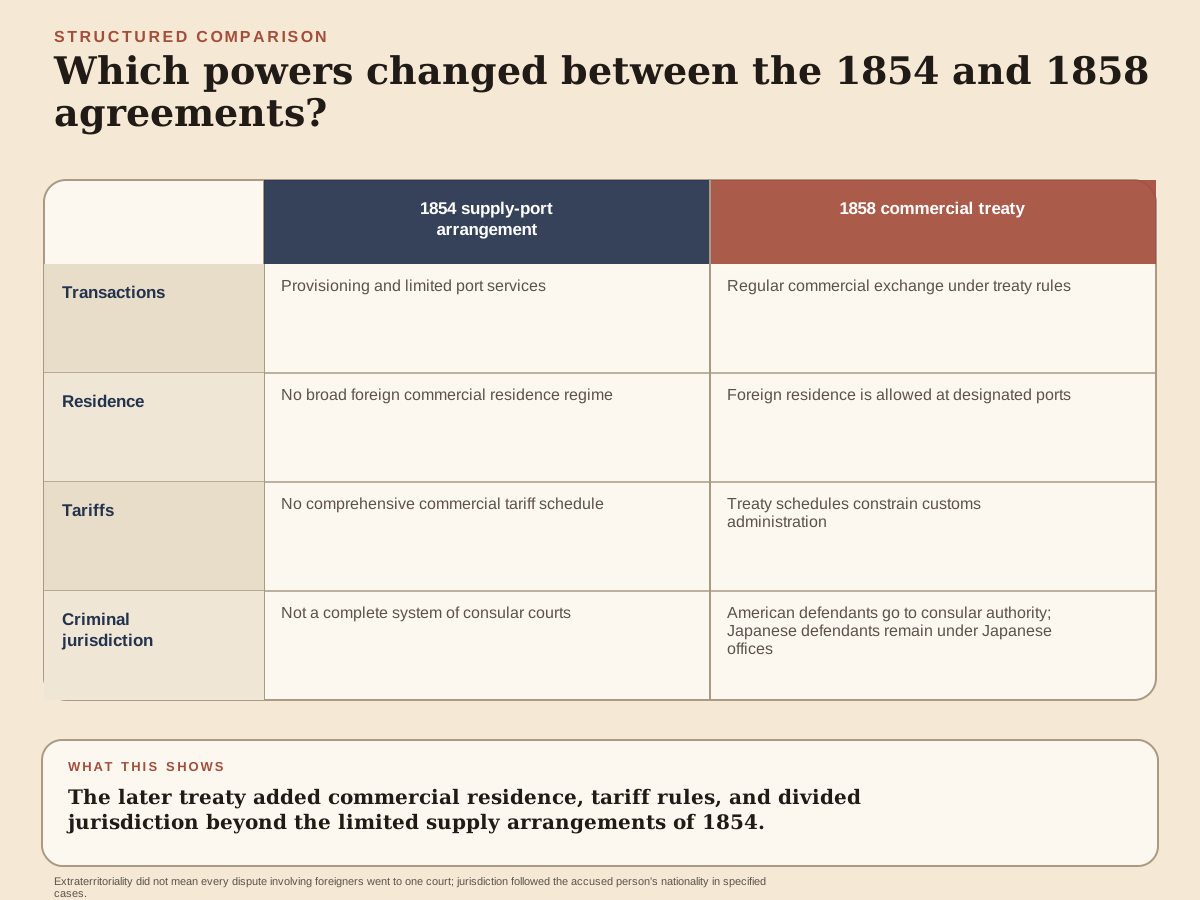
The Kanagawa convention of 1854 opened Shimoda and Hakodate for supplies and castaway assistance. Goods needed by visiting ships were procured through appointed Japanese officers. These provisions supplied contact without the later direct-trade system.
Its consul clause allowed an American representative at Shimoda if either government considered one necessary after eighteen months. Harris’s later demands therefore developed from an established arrangement, rather than from a first encounter with Japan.
Hotta Masayoshi appointed Inoue Kiyonao and Iwase Tadanari as plenipotentiaries. They negotiated the text with Harris. Political responsibility for accepting an agreement and the specialists’ work on its provisions belonged to different stages.
Hotta sought imperial sanction but failed to obtain it. Ii Naosuke’s appointment as tairō occurred during this unresolved treaty question and a contest over the shogunal heir. The treaty could not supply agreement among those domestic authorities.
Harris arrived at Shimoda in 1856 and established his consulate at Gyokusenji. His pressure for a commercial agreement intensified as Britain and France fought the Qing. He warned that their forces could next demand terms from Japan. That warning served his negotiation; it was not independent proof that signing his draft would prevent a war. Emperor Kōmei's refusal left Hotta's diplomats with a negotiated text whose domestic authorization remained disputed.
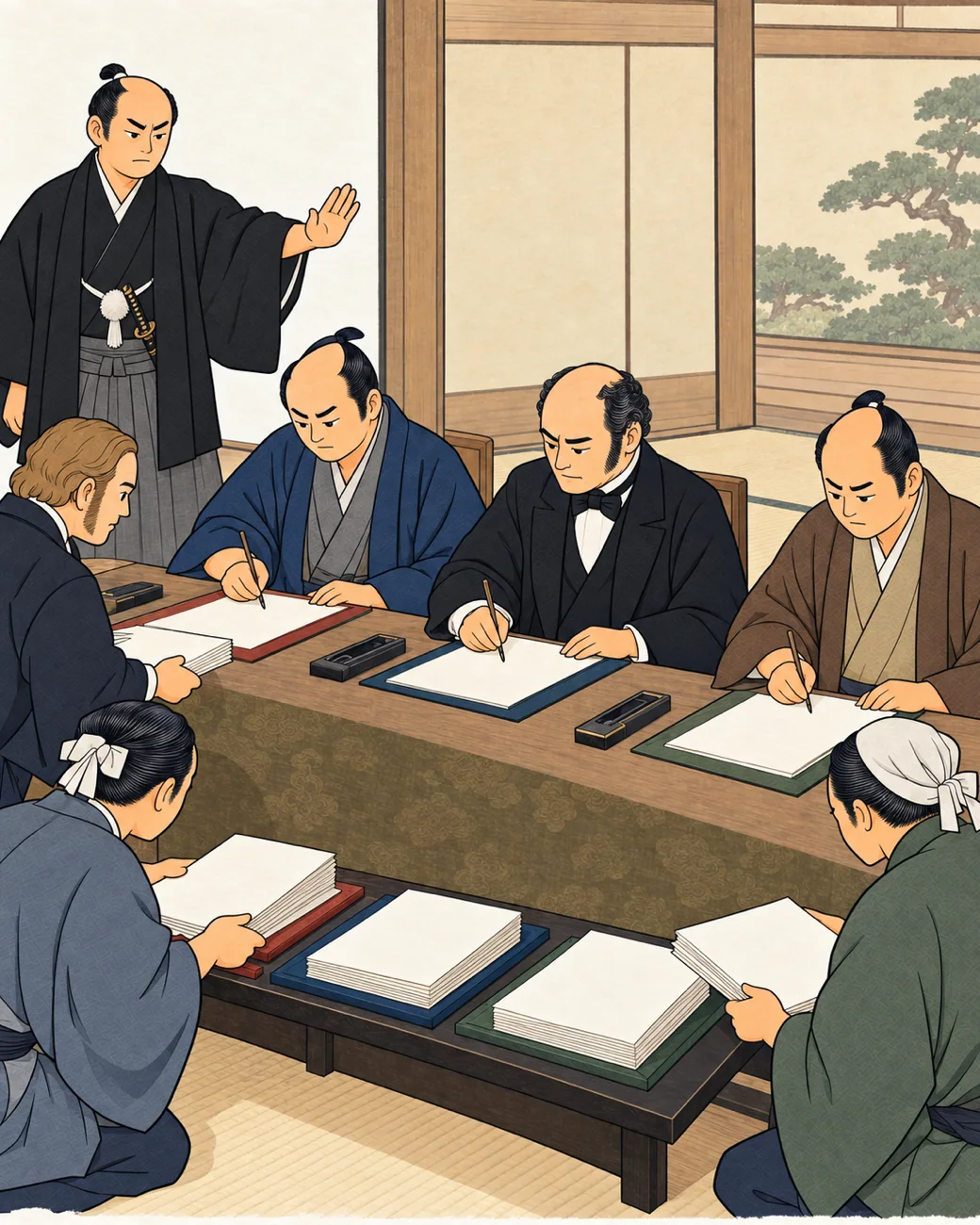
Inoue and Iwase negotiated as officials with full powers, and Harris represented the United States. The completed document names all three and records execution in Japanese, English and Dutch, with Dutch designated the original version.
The shogunate authorized signature without prior imperial approval. On July 29, 1858, the plenipotentiaries signed at Edo. Ii’s authorization was consequential, while his name was not among the treaty’s signatures.
Article III scheduled port openings and permitted residences and warehouses. It also prohibited foreigners from using such buildings as fortifications and allowed Japanese authorities to inspect construction.
The same article permitted direct buying and selling between Japanese and Americans. It retained limits on particular goods: rice and wheat could not be exported as cargo, and arms sales were restricted to the Japanese government and foreigners.
Article IV established treaty duties and prohibited opium importation. Article VI assigned American offenders to consular courts and Japanese offenders to Japanese authorities, while allowing creditors to seek claims in the other side’s courts.
The document also regulated movement, religion, currency and official assistance. Ratifications were exchanged at Washington in May 1860, after signature and after the treaty’s stated effective date. These were further formal stages, rather than a new negotiation of every clause.
The succession dispute sharpened the decision. The Hitotsubashi party supported Yoshinobu, also known as Keiki; Ii supported the young Kii lord Yoshitomi, later Shogun Iemochi. Ii nevertheless initially favored explaining the treaty to the court and postponing signature, while other senior councillors urged immediate action. When the negotiators asked whether they could sign if Harris refused a delay, Ii conceded that conditional permission. They then concluded the agreement. His responsibility rests on this authorization, rather than on the fiction that he personally drafted and signed it.
Putting the treaty into operation also required decisions about people and places. Americans could employ Japanese and transact directly with them, but residence and travel were limited to specified areas. Japanese authorities retained construction inspection and obligations to assist consuls. Port officials therefore had to reconcile new commercial rights with continuing restrictions, not merely announce that Japan was open.
The treaty permitted a durable commercial and residential presence under written rules. The scheduled dates were obligations in the document; actual opening and later postponement required further administration and negotiation.
Consular jurisdiction divided legal responsibility by the accused person’s nationality. Japanese victims and creditors therefore faced procedures different from those applying to Japanese offenders. This provision limited the reach of local jurisdiction over Americans.
Local authorities still had work to perform. Article IX required assistance with arrests, jail accommodation and enforcement, with costs paid by the consul. The treaty’s legal division consequently depended on cooperation between offices.
Commerce also remained regulated. Duties applied under the attached tariff, and certain exports and imports were prohibited. The agreement expanded direct transactions within these conditions. It was a particular set of rights and restrictions, rather than permission for every commodity and activity.
Currency created a further consequence that the words of a tariff could not contain. The treaty allowed foreign coins to be exchanged by weight and coin to be exported, except copper. Gold was cheaper relative to silver in Japan than abroad. Traders could bring silver, exchange it for Japanese currency, obtain gold coins and export the gold for a gain. The Bank of Japan's currency history describes this outflow and the later inflation associated with monetary changes. Merchants, wage earners and households encountered these effects through prices, while officials had to manage exchange and customs.
Signature created a framework for continued negotiation rather than proving that danger had disappeared. Foreign governments gained enforceable commercial and legal privileges; Japanese negotiators gained an agreement with stated obligations but also domestic opponents. Even someone favoring negotiated trade could challenge the procedure used to accept it. The immediate diplomatic settlement and the crisis of political authority were simultaneous results.
The commercial text became part of a wider treaty framework when agreements with the Netherlands, Russia, Britain and France followed. Foreign residence, consular law and fixed duties became recurring matters for Japanese administration and later diplomacy.
Article XIII provided for revision after July 1872 on a year’s notice from either government, through commissioners from both sides. Its procedure required agreement; Japan could not simply announce that the original duties and jurisdiction no longer applied.
Inside Japan, the absence of prior court approval continued to matter. Repression in 1858–1859 and the attack on Ii in 1860 carried disputes over foreign policy and authority into punishment and assassination. The treaty formed part of that conflict, alongside succession and court relations.
The record preserves several kinds of responsibility. Diplomats negotiated and signed, senior officials authorized, and consuls and Japanese authorities administered the resulting rules. Their different roles explain both how the agreement became operative and why later revision involved more than changing a single official’s decision.
The court dispute exposed a practical question: whose consent was needed before the government could bind the country? Wider domain consultation had already made foreign affairs a subject of competing political claims. In 1858 an imperial message sent directly to Mito bypassed the shogunate. Ii's government punished opponents and sent Manabe Akikatsu to explain its position in Kyoto. Neither treaty expertise nor a senior office alone settled this conflict over authority.
Recovery of jurisdiction later required both negotiation and domestic legal work. The proposed settlement of 1887 linked consular-law reform to Western-style codes and the employment of foreign lawyers; opposition prevented signature. The 1894 settlement with Britain removed consular jurisdiction when implemented five years later, while tariff recovery remained incomplete. New treaties in 1911 restored the remaining tariff authority. These separate stages show why the obligations inherited from 1858 survived the government that had accepted them.