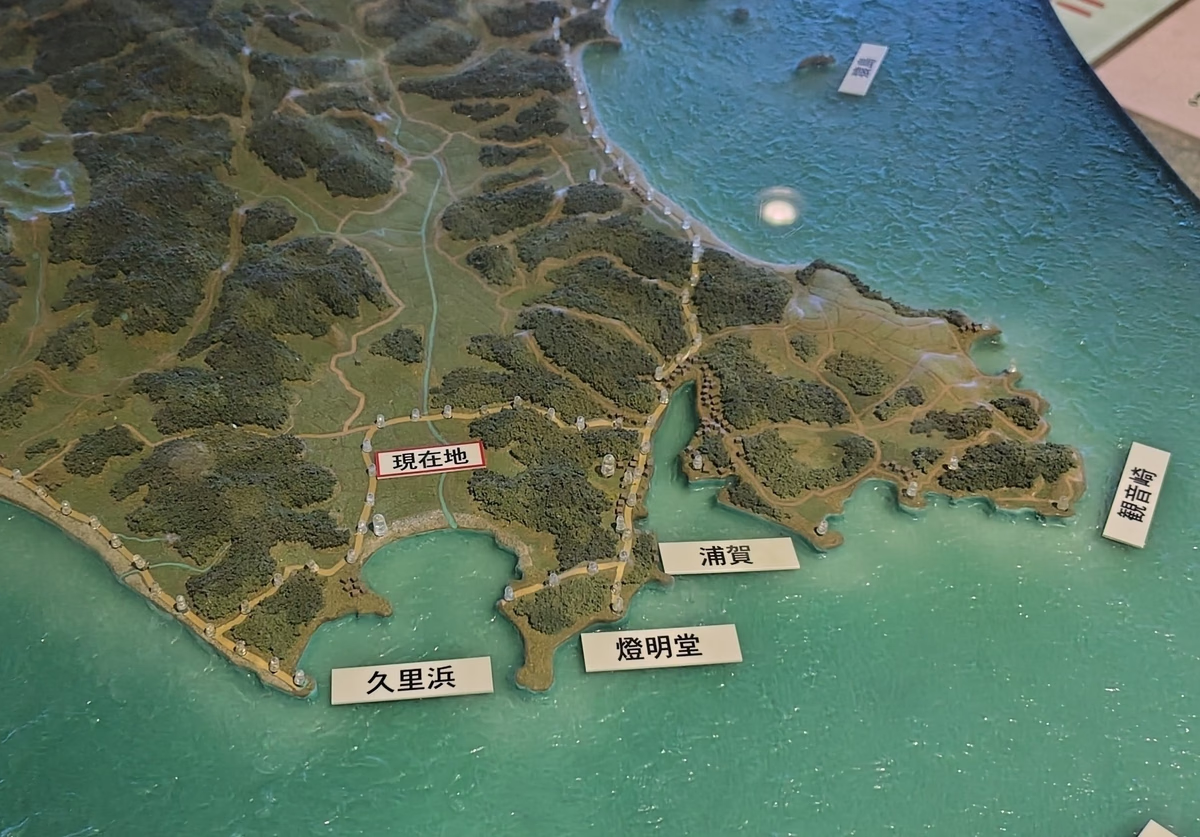
Uraga Harbor and the Shogunate's First Response
Attraction
Perry's four ships appeared off Uraga in July 1853 because the harbor guarded a principal maritime approach to Edo. The steam-powered vessels were technologically striking, but the response began through an existing administrative system. Officials of the Uraga magistrate office boarded, reported, negotiated over rank and tried to control where formal contact could occur. The original office no longer stands; its site and harbor must be read together through markers and shoreline geography. This shifts attention from an image of helpless astonishment to institutional action under severe pressure. The shogunate did not possess an easy military answer, yet its local personnel gathered information and created the procedure through which the crisis moved from shipboard confrontation to a controlled landing.
Current visibility
“Uraga Harbor and the Shogunate's First Response” is encountered across the present Uraga and Kurihama landscape, with the harbor, the administrative landscape, and the ground markers carrying the reading rather than one uniformly accessible object.
Kayama Eizaemon and Negotiation through Performed Rank
Attraction
Kayama Eizaemon, a lower official of the Uraga magistrate, presented himself to the Americans as a magistrate so that negotiations could proceed at the level Perry demanded. The episode shows diplomacy operating through translated words, staged status and improvisation. It was neither a simple surrender nor a meeting between fully informed governments. Local officers had to satisfy foreign expectations while consulting superiors in Edo and maintaining domestic hierarchy. The magistrate-office site anchors this process even though its buildings are gone. Connecting Kayama to that institution prevents his ingenuity from becoming an isolated anecdote: he acted within an office responsible for coastal surveillance and foreign ships, but the unprecedented scale of Perry's demand forced its personnel to stretch ordinary procedure.
Current visibility
The marked Uraga magistrate-office site anchors Kayama Eizaemon's negotiations, but the office buildings themselves are gone; the visible setting should not be mistaken for surviving architecture.
Kurihama and the Letter Ceremony of 1853
Attraction
At Kurihama on July 14, 1853, Perry landed with an organized procession and delivered President Millard Fillmore's letter to shogunal representatives in a temporary reception structure. The present park and monument commemorate that event; they are not remnants of the makeshift hall or pier. The ceremony converted naval pressure into a document the government had to debate after the fleet departed. Perry returned the following year, and the eventual agreement was concluded elsewhere, so Kurihama should not be mislabeled as the place where Japan was opened by one signature. Its historical value is more precise. Here, threat, protocol and written diplomacy met on shore, creating a deadline that accelerated arguments about defense, foreign relations and shogunal authority.
Current visibility
Kurihama's present park, shoreline, and monument commemorate the 1853 letter ceremony; the temporary reception hall and pier do not survive.