Tang and Silla forces overthrew Baekje in 660. Resistance continued under leaders including Boksin and Dochim, who sought Buyeo Pung, a Baekje prince then in Wa, as a dynastic center. They also asked the Yamato court for military help. The request drew on long-standing exchanges of rulers, envoys, specialists and refugees between the archipelago and the Korean peninsula.
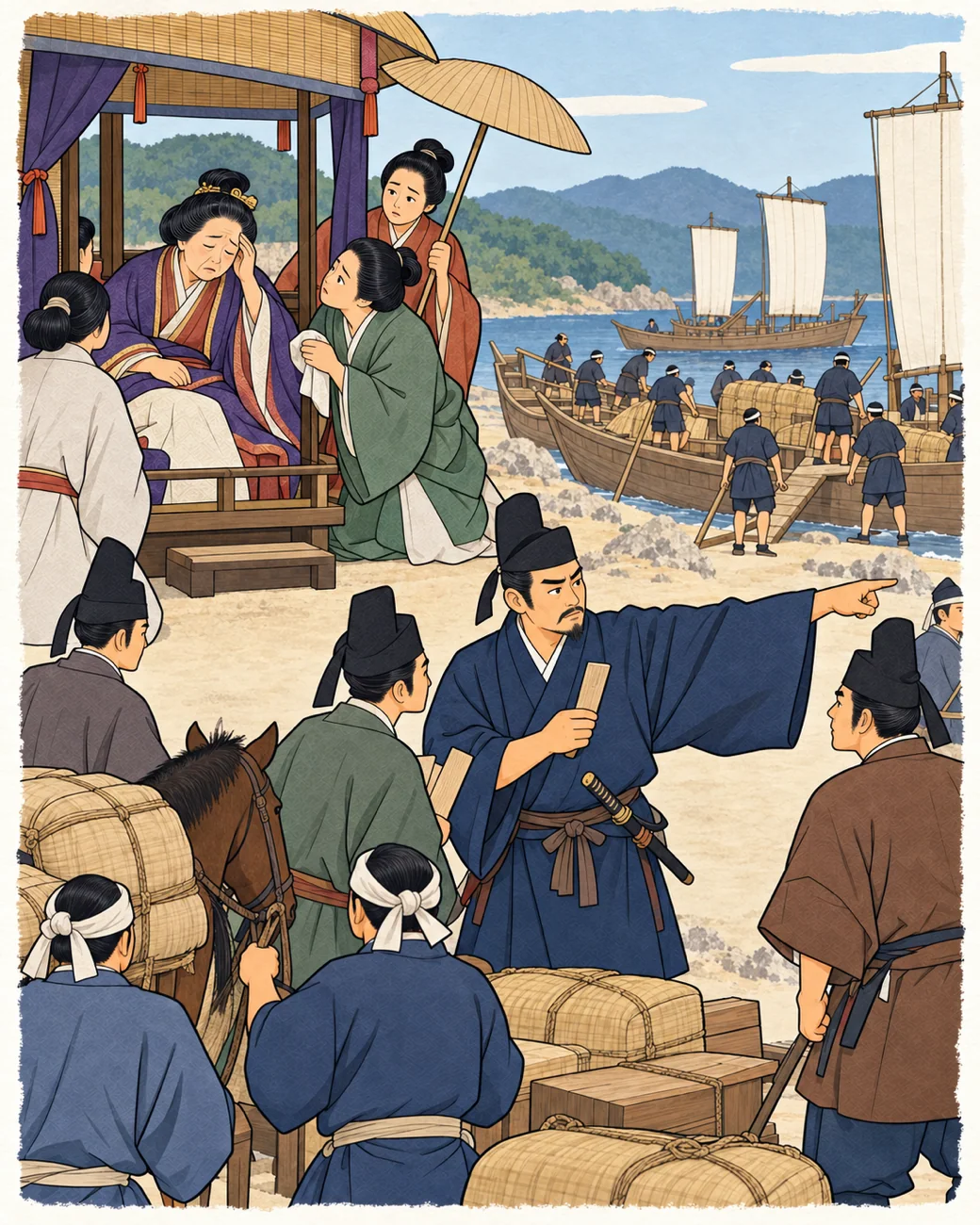
Empress Saimei accepted the restoration appeal and traveled toward northern Kyushu in 661. The move placed the sovereign near the ports and supply routes needed to assemble forces. The Nihon shoki records preparations involving ships, arms and provisions. Saimei died at Asakura that year. Her personal phase therefore ends with mobilization; it must not be stretched across every decision made in 662 and 663.
Prince Naka no Ōe continued government after his mother's death without immediately acceding. Pung returned to the peninsula and joined the restoration leadership. The coalition was already fragile. Conflict among Boksin, Dochim and Pung culminated in killings, including Pung's execution of Boksin as reported in the sources. Military aid from Wa entered a struggle whose political center was divided.
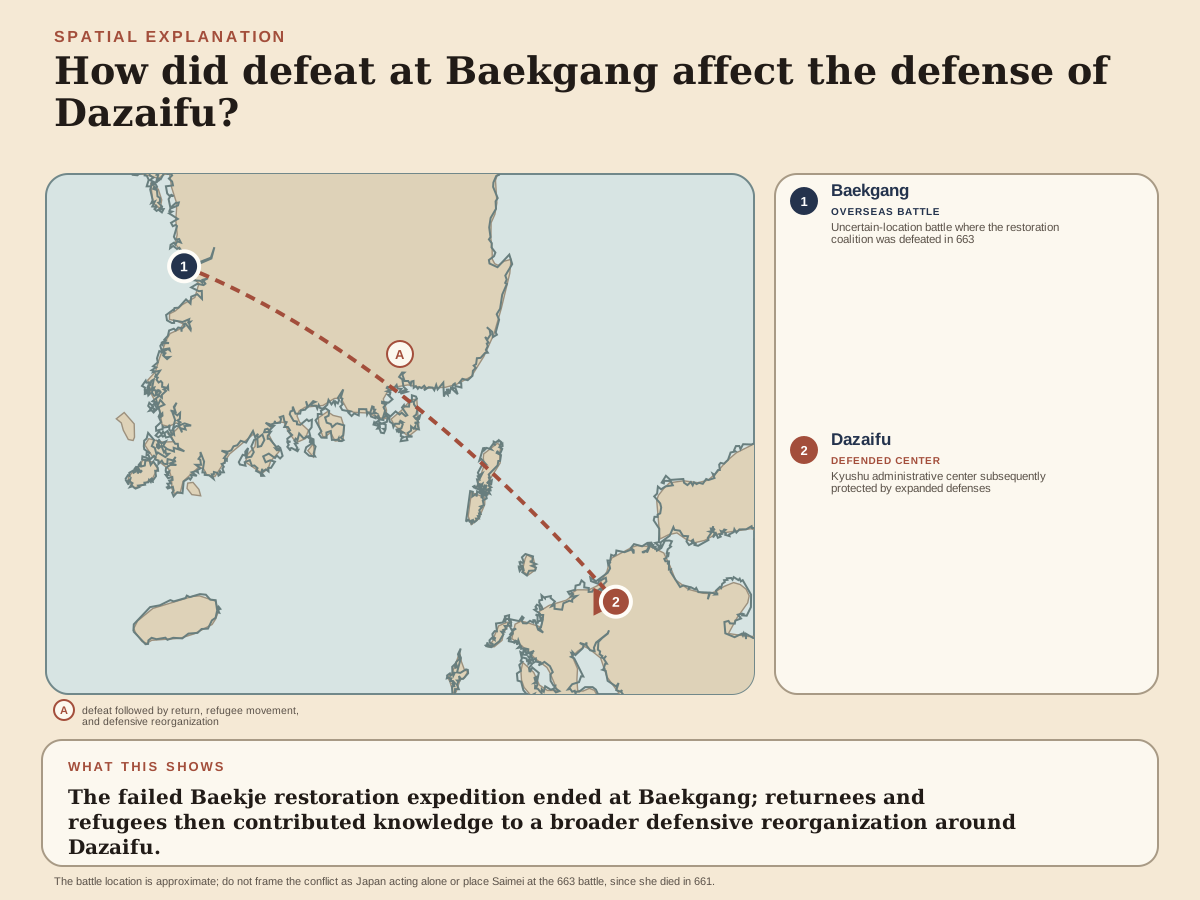
In 663 the fleet from Wa reached the Baekgang area. The Japanese chronicle describes repeated attacks against Tang ships and a crushing defeat; the Korean institutional account places the battle within the combined Tang-Silla destruction of the restoration. Abe no Hirafu is named among commanders of a rear division, but the sources do not justify making him commander of every naval action. Pung fled toward Goguryeo, and the remaining restoration collapsed.
Survivors and Baekje refugees moved to Wa. The court later built defenses in northern Kyushu and western Honshu and employed immigrant knowledge in its institutions. These measures followed defeat and fear of further conflict. They show a changed security environment, but they do not make Baekgang the sole cause of all later administrative reform.