Attraction
Your first major building is already a warning against dating the whole temple to one century. The Nara-period gate was lost, and the present Nandaimon belongs to the great medieval restoration led by Chōgen after Tōdai-ji's destruction in 1180. Its scale and exposed structural logic are part of the late-twelfth-century Daibutsu-yō rebuilding tradition. Before the Great Buddha appears, Tōdai-ji already makes its central lesson visible: one living institution can contain major physical layers from very different centuries. Tōdai-ji is one component of the UNESCO World Heritage property Historic Monuments of Ancient Nara, inscribed in 1998.
Current visibility
The surviving setting at Tōdai-ji anchors “Nandaimon”; its physical context is the surviving building, the gate sequence, and the reconstructed building.
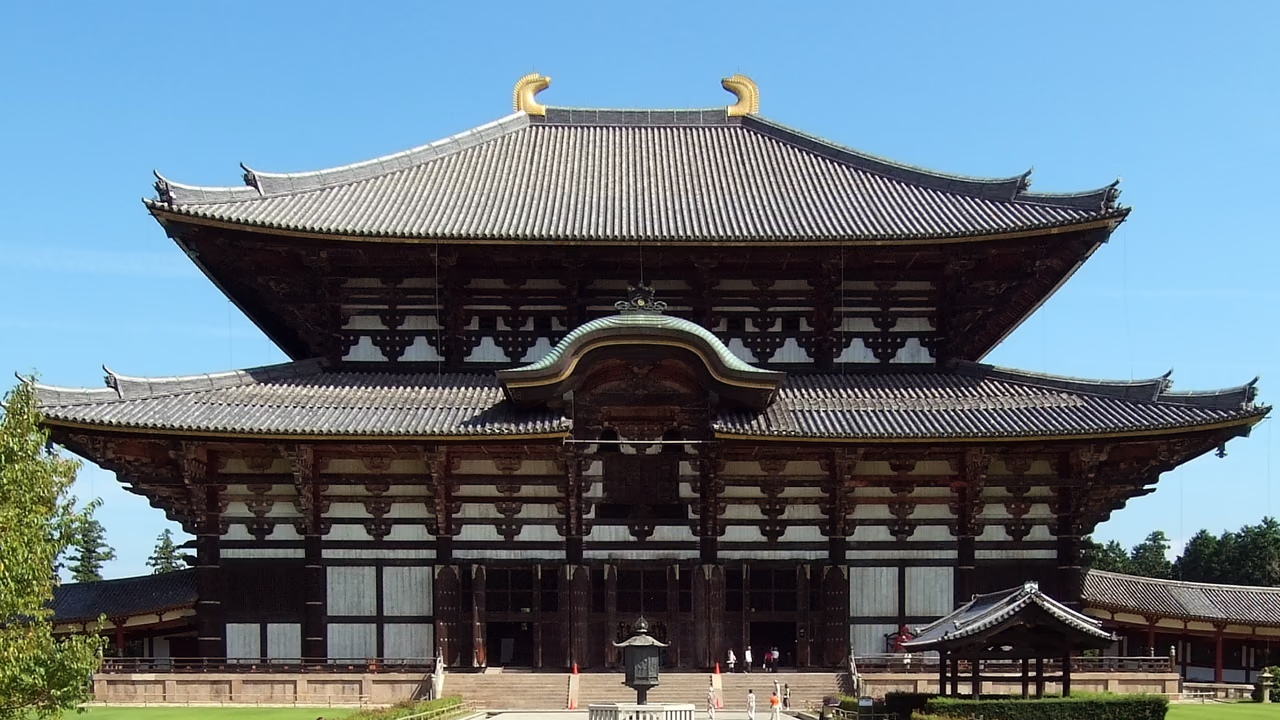
Daibutsuden: Reduced Width after Rebuilding
Attraction
The building is intentionally overwhelming, but its size can mislead. The original Nara-period hall and the medieval rebuilt hall were wider than what you see now. After destruction in 1567, the present hall was rebuilt in the Edo period with fewer bays because resources were limited. The temple remained monumental by rebuilding at a reduced width rather than reproducing every earlier dimension.
Current visibility
The place-specific feature discussed as “Daibutsuden: Reduced Width after Rebuilding” is anchored by the main hall, the surviving building, and the reconstructed building, but today's access or operating condition at Tōdai-ji requires a current official check.
Attraction
The Great Buddha is not simply a giant artwork. Emperor Shōmu's project was cast in stages and completed in 749; its hall was completed in 751, followed by the great consecration ceremony in 752. The image has also suffered major damage and restoration across later centuries. This is the clearest test of mixed authenticity: the historical identity of an object can remain continuous even when its material body has undergone major restoration. The project was not the emperor’s work alone: the monk Rōben helped establish the institution, while Gyōki mobilized broad fundraising and participation for the Great Buddha. Their roles reveal how court sponsorship, clerical leadership and popular support converged in the eighth-century undertaking.
Current visibility
The Great Buddha remains in situ within Daibutsuden, but hall admission and operating hours can change; it is not a rotating gallery object.
Daibutsuden as a Ritual Interior
Attraction
Inside Daibutsuden, the Great Buddha dominates attention, but the hall is not a neutral container around one masterpiece. Tōdai-ji's main hall is a functioning religious interior. The visitor moves among architecture, sacred images, offerings and other worshippers. Turn briefly from the central image to the immense timber columns, roof volume and secondary sacred figures. Their relationship makes the hall a complete ritual environment rather than a museum built around one masterpiece.
Current visibility
“Daibutsuden as a Ritual Interior” remains legible at Tōdai-ji through the main hall, the ritual setting, and the interior; the visible setting does not promise that a particular rite occurs on every visit.
Goshuin as Devotional Practice
Attraction
Tōdai-ji issues goshuin at multiple halls. The temple itself describes goshuin as a record of connection with Buddhist or Shinto deities, not simply as a tourist stamp. Observe the calligraphy, vermilion seals and respectful exchange at the counter. A goshuin records a devotional visit; availability and handling vary by hall, so it should not be treated as a guaranteed souvenir service.
Current visibility
The place-specific feature discussed as “Goshuin as Devotional Practice” is anchored by the ritual setting and the documentary evidence, but today's access or operating condition at Tōdai-ji requires a current official check.
The Upper Precinct beyond Daibutsuden
Attraction
Many visitors mentally finish Tōdai-ji after the Great Buddha. The walk toward Nigatsudō reveals a different temple: smaller halls, steep paths, changing sightlines and active ritual spaces. Community reports consistently note that this upper area feels quieter than the central approach. That visitor signal justifies the detour; it does not establish any historical claim.
Current visibility
The place-specific feature discussed as “The Upper Precinct beyond Daibutsuden” is anchored by the main hall, the road and path, and the ritual setting, but today's access or operating condition at Tōdai-ji requires a current official check.
Attraction
The Nigatsudō terrace gives one of Tōdai-ji's strongest views across Nara, which is why travel guides and visitors value it. But this is not merely a viewpoint deck. Nigatsudō remains a ritual center, especially through traditions such as Shuni-e. At certain times, ceremonies change how the building should be approached and how long a visitor should linger.
Current visibility
The place-specific feature discussed as “Nigatsudō” is anchored by the ritual setting and the surviving building, but today's access or operating condition at Tōdai-ji requires a current official check.
Attraction
Hokke-dō, also called Sangatsu-dō, is Tōdai-ji’s oldest surviving building and preserves an eighth-century image hall joined to a worship hall rebuilt in 1199. Its dense group of Nara-period sculptures gives the early temple a material presence beyond the Great Buddha. The nearby Shōsō-in treasure repository survives as another rare structure from the ancient complex, though access and viewing arrangements differ from those of the main temple precinct.
Current visibility
The object or display associated with “Hokke-dō and Shōsō-in” is not guaranteed on every visit to Tōdai-ji; check current gallery or special-opening notices, while reading the surviving building, the sculpture group, and the ritual setting as the stable context.