Map: GSI Japan Keiō's Mita campus makes the institutional history of a private school visible through moved, repaired and repurposed buildings. Fukuzawa Yukichi opened a Dutch-learning school in Tsukiji in 1858, reorganized it as Keiō Gijuku, and transferred it to the former Shimabara domain residence at Mita in 1871. The campus later became a setting for public speech, university expansion, wartime destruction, postwar repair, and historical self-interpretation. Its strongest surviving objects are the 1875 Speech Hall and the 1912 Old Library.
The 1871 Move Turned a School into a Mita Institution
Attraction
Fukuzawa Yukichi began a Dutch-learning school in the Nakatsu domain's Tsukiji residence in 1858 and later reorganized it under the Keiō Gijuku name. Moving to the former Shimabara domain estate at Mita in 1871 gave the school a durable campus and clarified its cooperative rules. The transfer also illustrates a broader Meiji reuse of domain property by new educational institutions. Few buildings from the first Mita years survive, so continuity lies in the occupied hill, institutional records and later monuments rather than an intact founding classroom. The active campus is the historical object: a private school that repeatedly rebuilt itself on one site.
Current visibility
The campus remains on the 1871 site, but the first school buildings and Fukuzawa residence no longer stand intact.
Mita Speech Hall Made Public Argument into a Place
Attraction
Fukuzawa and his associates promoted enzetsu and tōron as Japanese terms and practices for public speech and debate. In 1875 they constructed Mita Speech Hall, often identified as Japan's first building dedicated to public speaking. Its hybrid timber form combines a Western-style meeting hall with tiled roof and namako wall treatment. The hall originally stood nearer the campus center and was moved to its present hill position in 1924 after the Great Kantō Earthquake, then repaired again after the war and in the 1990s. It still hosts selected university ceremonies, but its interior is not part of ordinary campus visiting.
Current visibility
The relocated 1875 hall is visible from the campus, while general visitors are explicitly not admitted to the interior.
The 1912 Old Library Announced University Ambition
Attraction
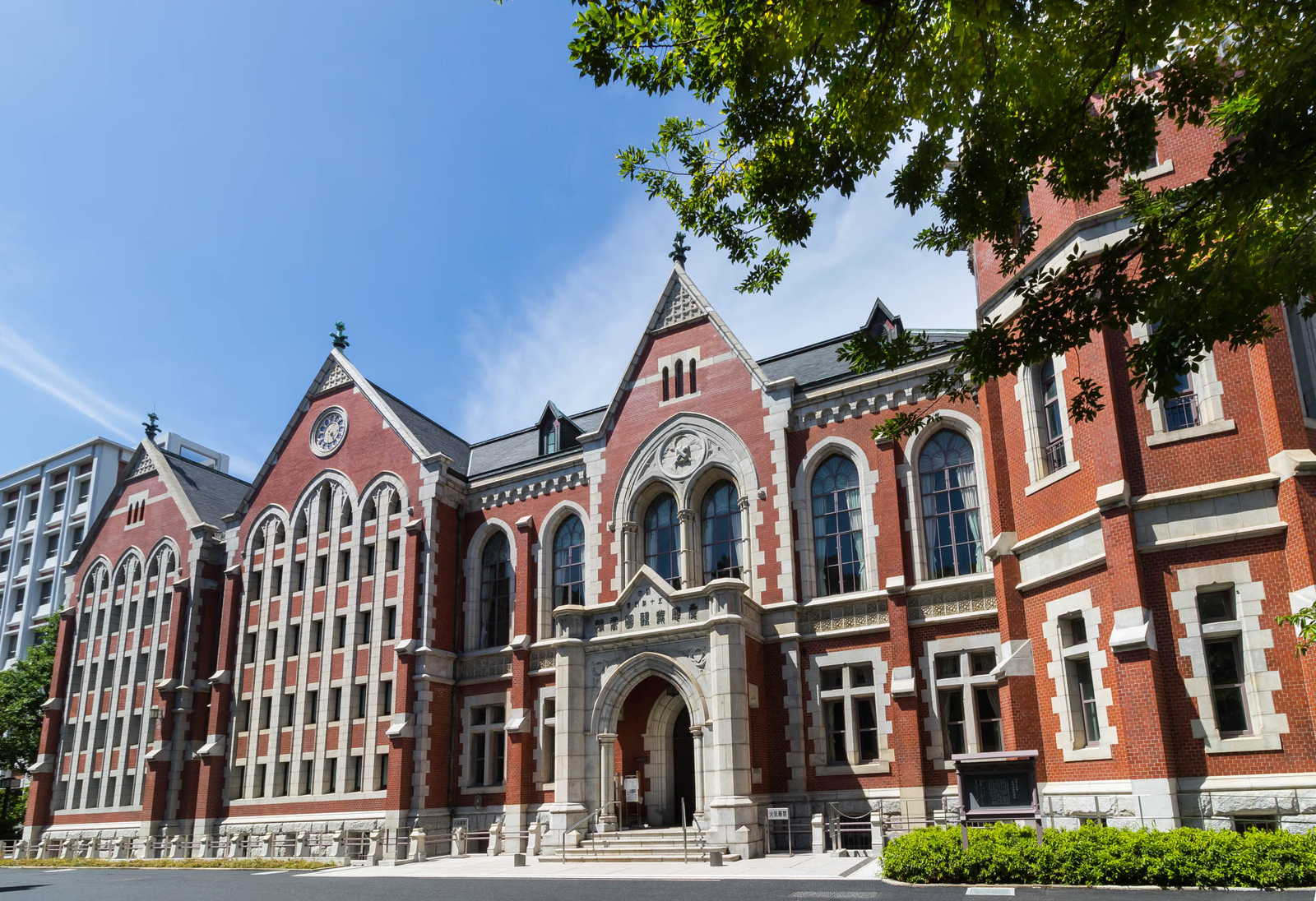
Completed for Keio's fiftieth anniversary in 1912, the Old Library joined red brick and granite in a Gothic Revival design by Sone Tatsuzō and Chūjō Seiichirō. Its large stacks, reading space, clock and octagonal tower made scholarship physically prominent above the Mita approach. The building survived the Great Kantō Earthquake with damage and later underwent substantial repair. It is a genuine Meiji-period structure, but continued use, restoration and adaptation have changed interiors and services. The surviving exterior is therefore both architectural monument and evidence of a private institution claiming the scale and permanence of a modern university.
Current visibility
The historic exterior and museum route are visible; library, archive and office spaces are not generally open simply because the campus admits visitors.
Air-Raid Damage and Deliberately Preserved Scars
Attraction
American air raids on 24–26 May 1945 destroyed most wooden buildings at Mita. The Speech Hall and some other structures survived, but fire consumed major interiors and roofs of the Old Library while protected books and the stack area escaped total loss. Repair of the library became an early symbol of institutional recovery; its stained glass was reconstructed later. Keio has retained selected damage rather than erase every trace, including scarred exterior ornament and the soot-blackened, mutilated marble figure Tekona. Normally closed roof spaces preserve further deformation. These remains make the campus a war-damaged site as well as a celebration of educational modernity.
Current visibility
Some war traces are visible on public museum routes, while roof-space evidence and other interiors open only on special programs.
The Keio History Museum Reuses the Old Library
Attraction
Opened in 2021 on the Old Library's second floor, the Fukuzawa Yukichi Memorial Keio History Museum makes the campus an interpreter of its own past. Original documents, objects and contemporary language trace Fukuzawa's life, the school's growth, setbacks and changing place within modern Japan. Because the museum occupies the heritage building rather than a neutral new gallery, institutional memory and architectural conservation meet directly. Anyone may normally enter without advance booking, but the museum closes on Sundays, holidays and university shutdown periods, and special closures are posted online. Public museum access does not extend to classrooms, research rooms or every part of the Old Library.
Current visibility
The museum normally opens Monday through Saturday under its published schedule; campus shutdowns, admissions periods and temporary closures can change access.