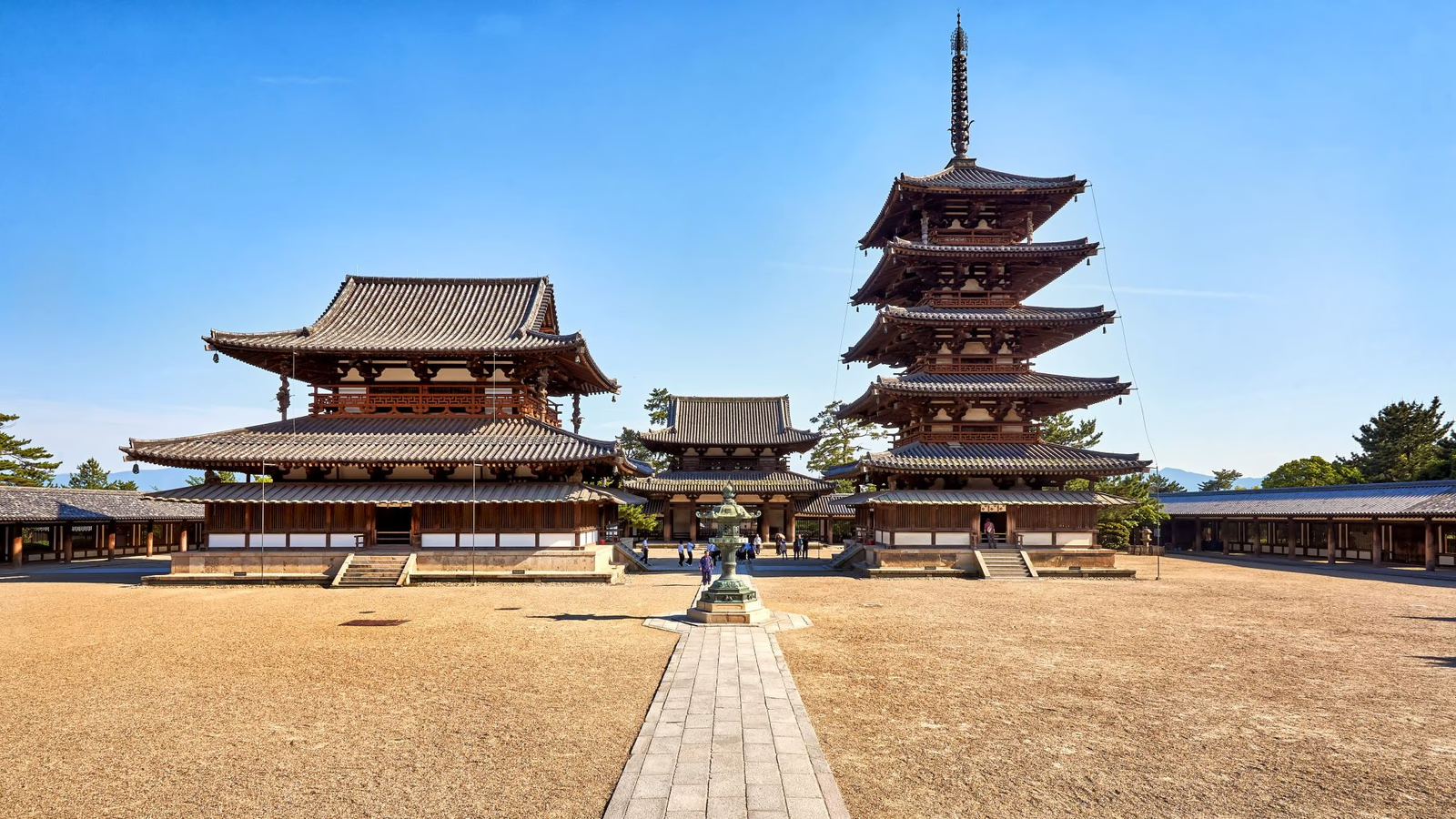
Western Precinct: Architecture After the 670 Fire
Attraction
Horyu-ji's Western Precinct centers on the Kondo and Five-storied Pagoda, among the world's oldest surviving wooden buildings. Their age must be explained with the temple's destruction problem. The Nihon Shoki records that Horyu-ji burned in 670, and the standing complex is generally understood as the great rebuilding that followed rather than the untouched temple of 607. This does not reduce its importance. It preserves how early Buddhist architecture was re-established through a balanced arrangement of image hall, reliquary tower, gate and enclosing corridor. Read the spaces between buildings as carefully as the timber. The Kondo and pagoda have different ritual functions, while the corridor makes them one ordered precinct. Later repairs have kept ancient structures standing, so survival here is a continuing process rather than proof that every component remained unchanged for thirteen centuries.
Current visibility
The surviving setting at Hōryū-ji anchors “Western Precinct: Architecture After the 670 Fire”; its physical context is the main hall, the pagoda, and the surviving building.
Kondo Images and the Courtly Adoption of Buddhism
Attraction
The Kondo joins early architecture to images associated with the political households that promoted Buddhism. Its central Shaka Triad was dedicated in memory of Prince Shotoku, while other groups connect devotion to Emperor Yomei and members of Shotoku's family. These relationships matter more than treating the statues as a ranked art list. Patronage, illness, memorial prayer and imported Buddhist forms gave court families a new language for authority and salvation. Fire and later conservation complicate the interior's material history, and famous wall paintings were severely damaged in 1949; present viewing therefore includes both ancient works and the consequences of modern preservation. Light is limited and access is controlled. Rather than expecting unrestricted inspection, identify how canopy, image groups and compact hall create a ritual hierarchy. The building makes the adoption of Buddhism visible as a political and family project, not as an abstract change in doctrine.
Current visibility
The object or display associated with “Kondo Images and the Courtly Adoption of Buddhism” is not guaranteed on every visit to Hōryū-ji; check current gallery or special-opening notices, while reading the main hall, the sculpture group, and the memorial as the stable context.
Five-storied Pagoda and the Material Work of Transmission
Attraction
The Five-storied Pagoda is a reliquary monument, not a tower built for panoramic access. Its diminishing roofs create a powerful exterior profile, while sculpted tableaux around the inner base represent episodes connected with the Buddha's life and death. The public normally reads the structure from outside, so interpretation should not imply that visitors climb through its levels. Construction itself is historical evidence: timber selection, joinery, tiled roofs and the translation of a continental Buddhist monument into Japanese materials required organized specialist labor. The pagoda also demonstrates why Horyu-ji cannot be reduced to Prince Shotoku biography. Even when memorial traditions supplied patronage and meaning, the surviving object belongs to institutional rebuilding after the recorded 670 fire. Look at its relation to the Kondo across the courtyard; the paired but unequal buildings give sacred relic and sacred image distinct architectural weight within one precinct.
Current visibility
“Five-storied Pagoda and the Material Work of Transmission” can be assessed from the exterior at Hōryū-ji; the on-site cues are the pagoda, the memorial, and the exterior fabric, and routine interior entry is not implied.
Hall of Dreams and the Making of Prince Shotoku's Memory
Attraction
The octagonal Hall of Dreams in the Eastern Precinct was built in 739 on the site associated with Prince Shotoku's Ikaruga Palace. That date is crucial: the hall is a Nara-period memorial to a prince who died in 622, not a surviving room in which he governed. It houses the Kuse Kannon, a revered image traditionally linked to Shotoku and unveiled only during limited periods. The surrounding precinct therefore records the growth of memory after death. Biography, sacred image, palace-site tradition and later worship were assembled into a durable cult of Shotoku as Buddhist founder and exemplary ruler. Visitors can see the hall throughout normal precinct access, but should not assume its principal image is always visible. The separation between standing memorial architecture and restricted icon makes the historical process clearer: Horyu-ji preserved early Buddhist culture while repeatedly reshaping how later generations understood the prince at its origin.
Current visibility
The Hall of Dreams exterior is normally visible in the Eastern Precinct, while the Kuse Kannon inside is unveiled only during limited periods; check current notices for image access.