Attraction
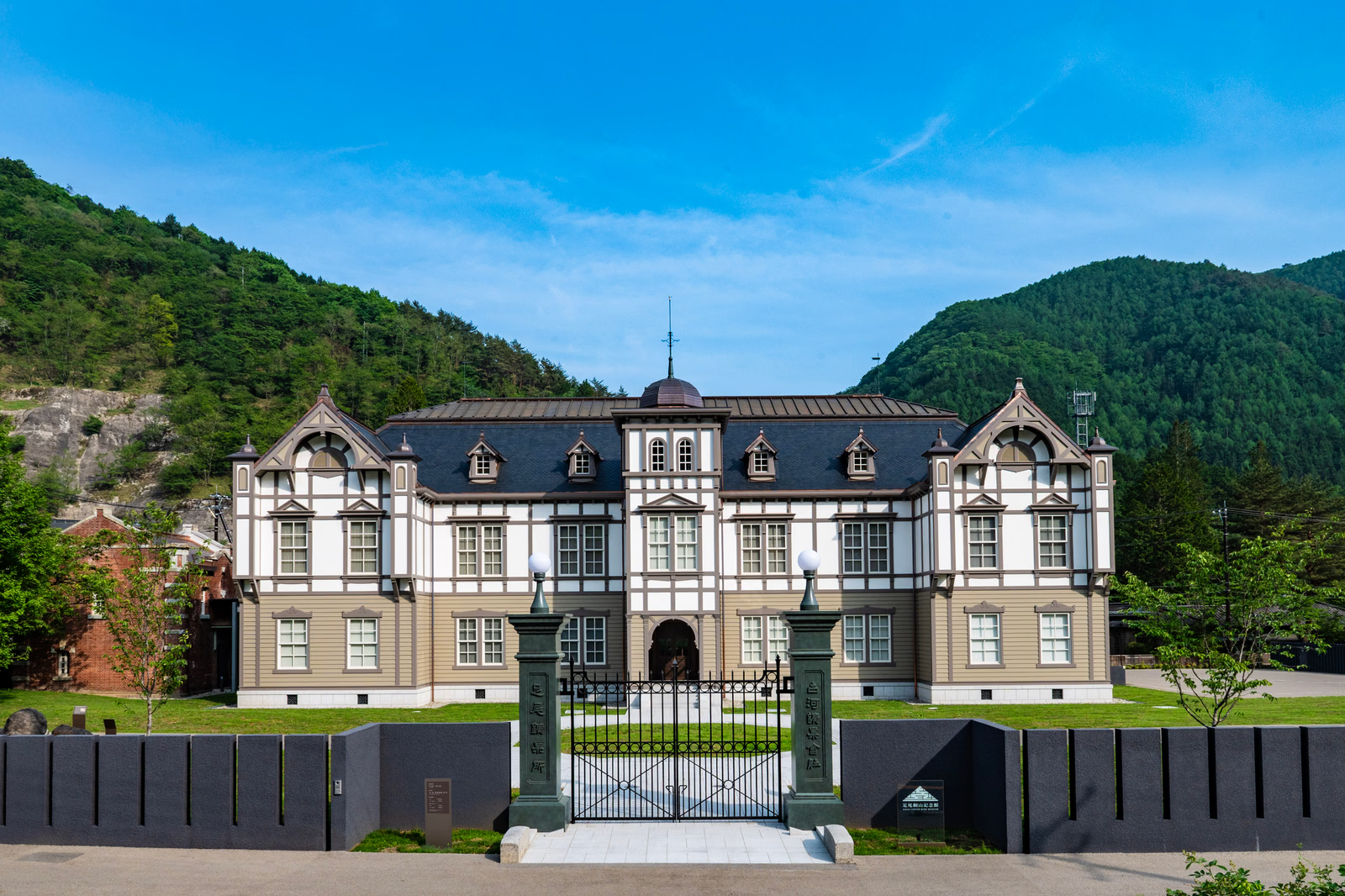
Industrial growth created a mountain city as well as a mine. Ashio's population reached 38,428 in 1916, supported by company housing, a hospital, schools, shops, religious buildings, management residences, and transport. The surviving fabric is uneven: executive houses, workers' rows, a school hall, worship sites, and street patterns occupy different ownership and access regimes. Social hierarchy was built into space and housing quality. In 1907, anger over miners' treatment developed into a large revolt in which company property, including the Honzan manager's residence, was attacked. The conflict prompted relocation of offices and senior housing to Kake-mizu. Ashio's urban remains therefore register both corporate welfare and unequal authority; one should not be used to erase the other.