Read the article below. Interactive reading tools are available when scripts load.
Quick
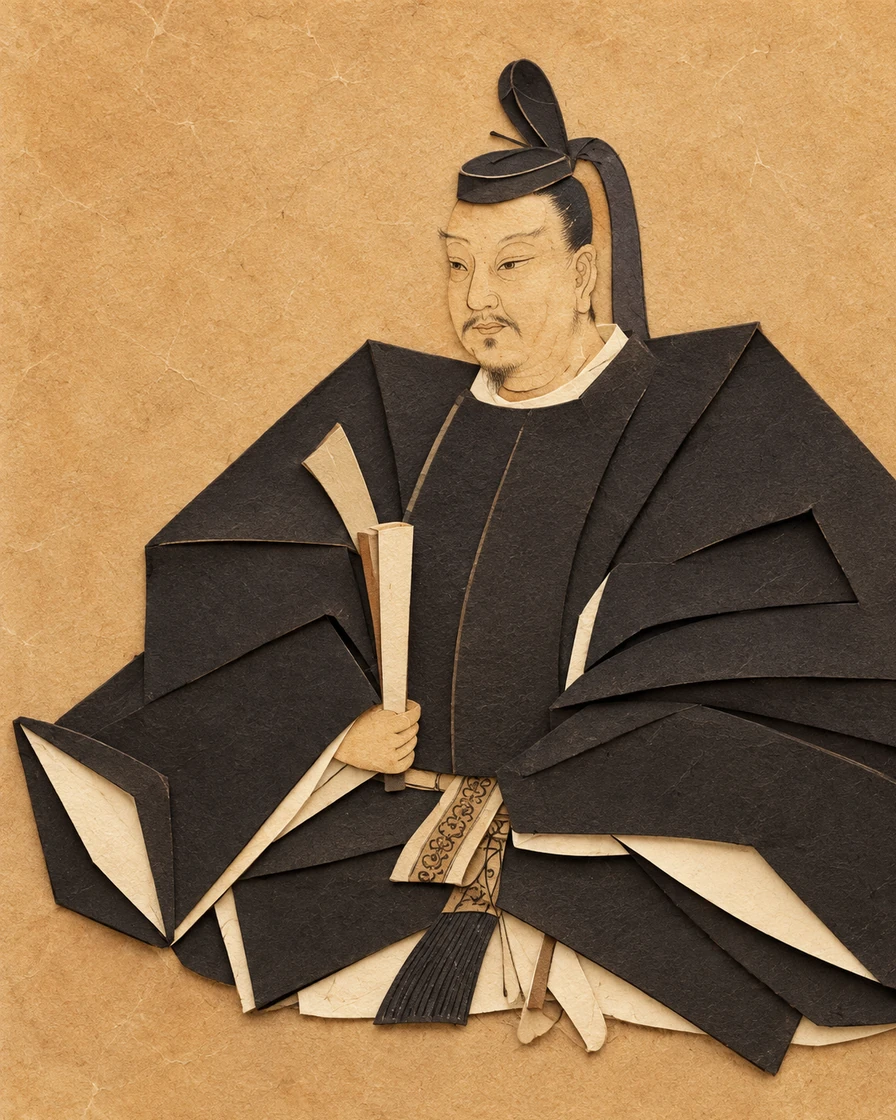
Tokugawa Hidetada was born at Hamamatsu in 1579, the third son of Tokugawa Ieyasu, a territorial lord, and Oai of the Saigō family. The death of his eldest brother Nobuyasu and the placement of his brother Hideyasu in Toyotomi Hideyoshi’s household helped make him the Tokugawa heir. In 1590 he came of age before Toyotomi Hideyoshi, Japan’s military ruler, receiving a character from Hideyoshi’s name. Hidetada spent much of his early adult career at Edo Castle, in present-day Tokyo, supporting his father’s government during absences. His marriage to Gō in the 1590s joined him to the Asai and Oda family connections that also ran through her sister Yodo-dono, the mother of Hideyoshi’s son Hideyori. [1]
In 1600 Hidetada commanded a separate Tokugawa army advancing west along the inland route through Shinano, now Nagano. Sanada Masayuki held Ueda Castle there. Hidetada’s effort to take it delayed his army, which failed to reach Sekigahara before the decisive battle. Ieyasu won with the forces present and was angered by the son’s late arrival. The missed battle was a serious setback in Hidetada’s command experience, but it did not end his place as heir. Five years later Ieyasu transferred the shogunal title to him. His career thus continued through government despite a military episode that later became one of its most familiar stories. [1]
Hidetada became shogun, head of the warrior government, in 1605. Ieyasu retained substantial power and later based his government at Sunpu, now central Shizuoka, while the son worked at Edo. A surviving letter from 1607 answers Hidetada’s question about transferring the retainer Ogasawara Yoshitsugu. It shows the retired father still directing practical matters after the title had passed. Hidetada nevertheless held office and governed in the east. Father and son both took part in the campaigns against Osaka in 1614–1615. The destruction of Hideyori’s household ended a rival center to which Hidetada’s family remained connected through the marriage of Hidetada’s daughter Senhime to Hideyori. [1][2][12]
In 1615 the government issued the first Warrior House Laws, or Buke Shohatto, regulating territorial lords. Ieyasu initiated the settlement, the monk Sūden drafted it, and it was proclaimed as Hidetada’s order before assembled lords at Fushimi. Separate regulations governed the imperial court. After Ieyasu died in 1616, Hidetada’s government enforced the limits on castle work. Fukushima Masanori’s repairs at Hiroshima led to a dispute in 1619. A conditional pardon required dismantling work and other acts of obedience; the failure to satisfy the conditions preceded loss of his Hiroshima domain. The process made control over fortifications effective through demands, judgment and the transfer of a castle. [1][3][4][5]
After Ieyasu’s death in 1616, Hidetada’s government brought foreign affairs more directly under the shogun. That year foreign ships other than Chinese vessels were restricted to trade at Nagasaki and Hirado. The rule controlled the places of exchange while permitting commerce to continue. At the same time, the government strengthened the prohibition of Christianity. In 1622 missionaries and believers, including people who had sheltered them, were executed at Nishizaka in Nagasaki. Trade and religious policy consequently imposed different conditions on ships and communities. The bans on Japanese overseas travel and Portuguese entry associated with the 1630s developed later under his son and successor Iemitsu. [1][6][7]
Hidetada’s daughter Masako became Emperor Go-Mizunoo’s consort in 1620, bringing a Tokugawa woman into the imperial household. In 1626 the emperor visited Nijō Castle for five days at the invitation of Hidetada and Iemitsu. Enlarged buildings, paintings, Noh—a form of masked theater—and poetry marked the encounter. Cooperation did not end conflict over court and religious authority. In 1627 the government challenged imperial permissions for Zen monks to wear purple robes, signs of distinguished status. Protesting monks were exiled in 1629. Go-Mizunoo abdicated that year to his daughter, who became Empress Meishō and was Hidetada’s granddaughter. The dispute formed part of a strained relationship between the court and warrior government. [1][8][9][13]
In 1623 Hidetada passed the shogunal title to Iemitsu and became the retired ruler, or Ōgosho. He continued authorizing land grants and directing major affairs. A grant from 1625 assigns three villages in Ōmi, now Shiga, assessed at three hundred koku of rice yield to the retainer Minobe Shinshichirō. Its seal identifies Hidetada as the issuer, showing that retirement left practical powers in his hands. He died at Edo Castle in 1632 and was buried at Zōjōji, a temple in Edo. Iemitsu built the mausoleum for his father, whose Buddhist name was Taitoku-in. The second transfer had preserved a senior ruler above the shogun; Hidetada’s death ended that arrangement. [1][10][11]
Classic
Tokugawa Hidetada was born in 1579 at Hamamatsu in Tōtōmi, now part of Shizuoka. His mother was Oai of the Saigō family. He was the third son of Tokugawa Ieyasu, then a territorial lord. Nobuyasu, the eldest brother, died, while the second brother Hideyasu entered the household of Toyotomi Hideyoshi. These changes left Hidetada in the position of heir. His childhood names included Nagamatsu and Takechiyo, the latter also associated with the Tokugawa succession. The family arrangement preceded his personal experience in national government. [1]
At his coming-of-age ceremony in 1590, Hidetada received a character from Hideyoshi’s name. The ceremony placed the heir within the ruler’s recognition and patronage. Court appointments subsequently advanced his standing. Before Ieyasu became shogun, the son’s formation therefore belonged to a political order headed by the Toyotomi. He was frequently at Edo Castle, maintaining the household’s base while his father attended to affairs elsewhere. This responsibility gave his early adult career a different shape from that of a commander constantly accompanying his father in the field. [1]
Hidetada’s marriage to Gō joined him to the family of Asai Nagamasa. Gō was also a niece of the military ruler Oda Nobunaga and a sister of Yodo-dono, Hideyoshi’s consort. The daughter Senhime became a further link when she was betrothed to Hideyoshi’s son Hideyori and married him in 1603. These connections increased Hidetada’s place within the Toyotomi order, even as Ieyasu’s resources made the Tokugawa increasingly powerful. Kinship would survive changes in political alignment. Hidetada’s later campaigns against Osaka would confront a household joined to his own through his wife and daughter. [1][12]
The campaign of 1600 sent Hidetada west with an army separate from Ieyasu’s. His route through Shinano brought him toward Ueda Castle, held by Sanada Masayuki. An army moving through the interior had to deal with a fortified opponent whose resistance could interrupt its progress. Hidetada attempted to take the castle and lost time there. His separate force did not arrive for the decisive battle. [1]
Ieyasu’s battle at Sekigahara settled the immediate contest among the opposing coalitions without Hidetada’s army. The father’s victory and the son’s delay were therefore different outcomes within the same campaign. Ieyasu was displeased with Hidetada’s failure to reach him in time. The incident concerns coordination as well as the fighting at Ueda: force under the heir had not become available at the decisive place. The defeat of Ieyasu’s opponents nevertheless left the Tokugawa in a stronger position, and Hidetada continued at the center of the family. [1]
Ieyasu received the shogunal title in 1603 and transferred it to Hidetada in 1605. That subsequent choice shows that the failure of 1600 did not permanently disqualify the son. Hidetada’s earlier responsibility at Edo supplied experience in household government alongside his field record. Hidetada entered office with a record containing both recognized household responsibility and an unsuccessful attempt to bring his army to the final engagement. [1][2]
Ieyasu’s transfer of the shogunal office, leadership of the warrior government, in 1605 made the succession visible during his lifetime. Hidetada’s appointment carried imperial recognition of the second Tokugawa shogun. The son continued at Edo, where his responsibilities included control of territorial lords in the east. Ieyasu’s later base at Sunpu, now central Shizuoka, remained a center for major decisions. The retired founder possessed experience, personal relations and authority that the new officeholder did not simply absorb at investiture. Government continued through consultation and the activities of both households. [1][2]
A letter dated the eleventh day of the traditional third month of 1607 records Ieyasu’s response to Hidetada. The son had asked how to carry out the transfer of Ogasawara Yoshitsugu, a senior retainer of Ieyasu’s son Tadayoshi, from Inuyama. The cultural-heritage catalogue identifies it as a letter in Ieyasu’s own hand. Its subject is the disposition of an actual retainer, giving concrete form to continuing paternal authority. Hidetada asked the question as the active shogun; Ieyasu supplied the answer as the retired ruler. Their respective roles emerge from the business recorded in the document. [2]
The campaigns of 1614 and 1615 brought father and son against the Toyotomi household at Osaka. Hidetada’s daughter Senhime was married to Hideyori, whose mother Yodo-dono was the sister of Hidetada’s wife Gō. Those ties did not remove the dispute over the Toyotomi’s political position. The final Tokugawa victory ended Hideyori’s household as an armed rival. Hidetada participated in this settlement as the shogun alongside the founder. The laws issued afterward likewise involved both rulers and advisers, connecting the destruction of a rival castle with rules governing the resources of other great houses. [1][12][3][4]
The first Warrior House Laws, known as the Buke Shohatto, contained thirteen clauses. Ieyasu ordered their preparation, and Sūden, a Zen monk advising the government, drafted them. At Fushimi in 1615, lords heard the text read as Hidetada’s command. The initiative, composition and promulgation were different parts of the same act. Regulations for the imperial court were also issued that year, with Ieyasu, Hidetada and the former regent Nijō Akizane as signatories. These laws addressed separate ruling groups, rather than turning every subject immediately into the same administrative category. The later regulation of alternating residence in Edo belongs to the revision under Iemitsu in 1635. [3][4]
Hiroshima Castle, in western Honshu, was Fukushima Masanori’s governing base. Its museum history associates Fukushima Masanori’s controversial work with damage after flooding in 1617 and construction in 1618. The lord was expected to report castle work beforehand, but the museum’s account describes an effort to settle the matter afterward. In 1619 Hidetada’s government made a conditional allowance requiring the destruction of repaired sections and further demonstrations of obedience. The dispute therefore passed beyond the existence of damaged walls. It concerned whether a powerful lord had complied with the government’s supervision and then carried out the conditions on which pardon depended. [5]
The conditions were judged insufficiently fulfilled, and the government ordered Fukushima’s removal. Forces went to receive the castle. His retainers initially held positions while uncertain about their lord’s safety at Edo, then surrendered in order after receiving his instructions. The proposed destination for Fukushima was altered before his retirement in Shinano. Asano Nagaakira succeeded to the Hiroshima government. Castle control thus reached through correspondence, retainers and the physical surrender of territory. A major lord’s earlier contribution at Sekigahara did not protect him from this later judgment under Hidetada. The rule changed the conditions on which his household could keep its military base. [5][1]
During Ieyasu’s lifetime, the retired founder had conducted important foreign relations. After his death, Hidetada consolidated those responsibilities under the active shogun. A 1616 order restricted foreign ships other than Chinese vessels to Nagasaki and Hirado, ports on Kyushu’s western coast. The Chinese exception matters: the rule was not a ban on every foreign arrival. It brought selected shipping into places where the government could supervise exchange. Overseas commerce continued within an authority strengthened by the founder’s earlier practice of issuing red-seal permissions to Japanese ships. [1][6][4]
The prohibition of Christianity subjected believers and those sheltering missionaries to punishment. Nagasaki’s municipal account records the execution of fifty-five people at Nishizaka in 1622, including missionaries and members of households that had protected them. This event is remembered as the Great Genna Martyrdom. The people affected were not simply foreign merchants denied a harbor. Religious practice and assistance to missionaries exposed families within Japan to the state’s coercion. Hidetada’s consolidation of authority includes that human cost alongside the administration of shipping and the continuity of office. [7][1]
The port rule of 1616 did not yet contain all the travel and shipping restrictions of the following decades. The municipal chronology places the prohibition of Japanese overseas travel and return in 1635, the exclusion of Portuguese ships in 1639 and the move of the Dutch trading post to Dejima in 1641. These measures belong to government under Iemitsu after Hidetada’s death. Hidetada’s actual contribution combined stronger central supervision of foreign affairs with increasingly severe religious prohibition. Following the separate stages explains how commerce remained possible while the permitted places, participants and religious ties became more tightly controlled. [6][1][7]
Masako, also known by her later title Tōfukumon-in, entered Emperor Go-Mizunoo’s household in 1620. She was Hidetada and Gō’s daughter, so the marriage connected the emperor directly with the Tokugawa ruling family. The relationship was expressed publicly at the imperial visit to Nijō Castle in 1626. Hidetada and Iemitsu invited the emperor, who stayed with Masako and other members of the court for five days. A military household received the imperial family within its Kyoto residence, joining a family encounter with a display of governing resources. [1][8]
Nijō’s official history describes expansion beginning two years before the visit, with new palaces and a tower prepared for the occasion. Paintings associated with the Kanō school accompanied the architecture, while Noh, a form of masked theater, and poetry formed part of the entertainment. The buildings arranged a place in which imperial dignity could be received under Tokugawa patronage. Hidetada had already retired from the shogunate, yet he participated alongside the officeholder Iemitsu. The visit therefore displayed more than one hierarchy: emperor and warrior rulers, a father and son, and families joined through a woman at court. [8][1]
Purple robes marked distinguished religious status, traditionally conferred through imperial permission. The government challenged such permissions in 1627 under regulations developed in 1613 and 1615. Monks who resisted were exiled in 1629. The historian Takano Toshihiko interprets the dispute through the government’s effort to establish the priority of its laws and extend control over temples whose appointments had rested with the court. Go-Mizunoo abdicated in 1629 to his daughter, who became Empress Meishō. The conflict formed part of the strained relations surrounding that decision. The court continued acting within constraints the Tokugawa had enlarged. [9][1][13]
Hidetada’s transfer to Iemitsu in 1623 repeated the pattern through which he had received office from Ieyasu. The son became shogun while the father remained active as Ōgosho, the retired ruler. Hidetada moved to Edo Castle’s western compound and retained substantial authority. Officials and lords had to recognize an officeholder alongside a living predecessor. The continuity of Tokugawa rule therefore did not depend on a succession occurring only after death. It could be established beforehand, with decisions still passing through the senior member of the house. [1][10]
Wakayama Prefectural Museum preserves a 1625 grant to Minobe Shinshichirō, a direct Tokugawa retainer. It assigns three villages in Ōmi with a total assessment of three hundred koku, a measure used to express rice yield. The catalogue describes a folded-paper document and identifies Hidetada through the seal bearing the characters for loyalty and filial piety. The grant belongs to the renewal of territorial confirmations that year. It records a power still exercised after Iemitsu’s appointment: the retired father could authorize the resources supporting a retainer. The museum also notes that the document’s later transmission into the Ashikawa family archive is unknown. [10]
Hidetada died at Edo Castle in 1632 and was buried at the Edo temple Zōjōji under the Buddhist name Taitoku-in. In 1632 the death itself had a direct political effect: Iemitsu no longer governed below the retired ruler who had supervised his first years in office. Iemitsu’s government created a mausoleum for him there. The buildings belonged to the son’s commemoration of his father, rather than Hidetada’s own later acts of government. A model prepared for the 1910 Japan–British Exhibition preserves a scaled record of important buildings. The burial precinct changed much later, in the twentieth century. Most of the complex was destroyed in 1945, and excavation and reburial in 1958 changed the burial precinct. Those different forms of remembrance carry the career beyond its ending. [1][11]