

Nara period
Genbō
玄昉
Overview
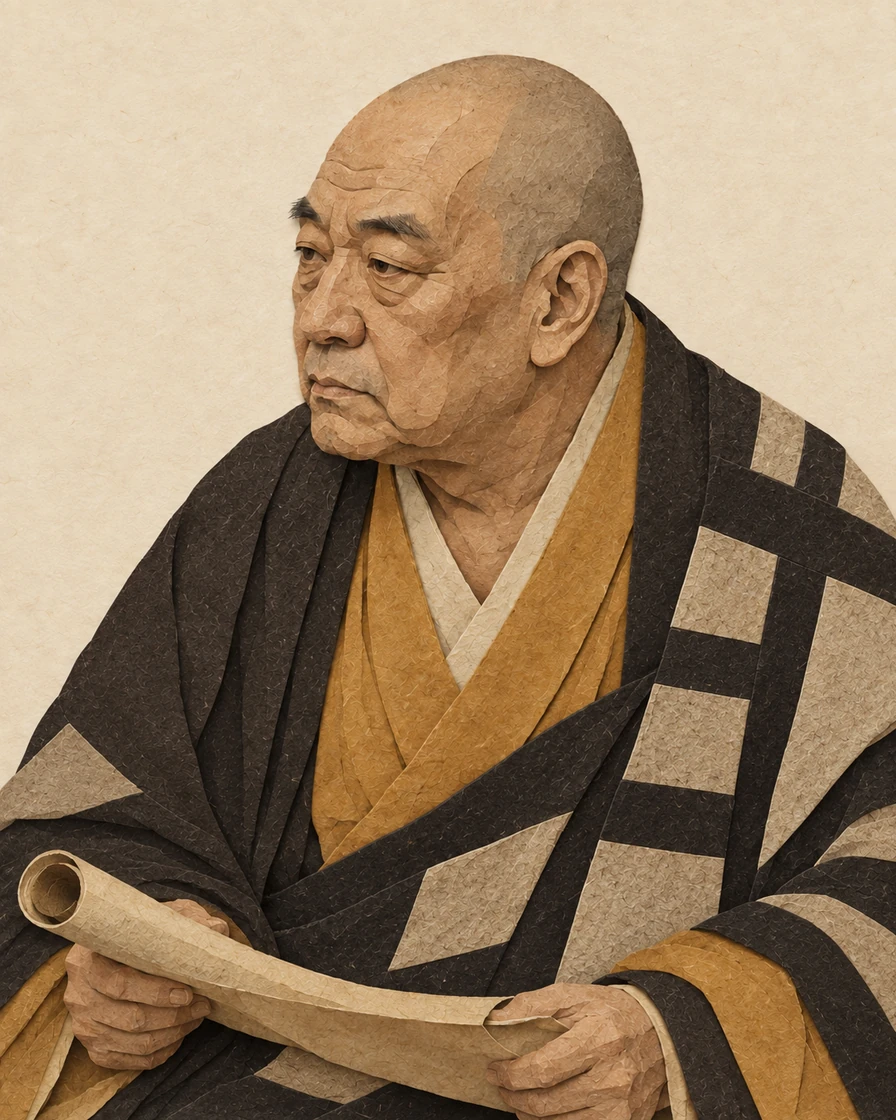
Genbō was a Buddhist monk whose studies in Tang China helped enlarge the religious books available in eighth-century Japan. He travelled in 717 and returned in 735 after studying with the Chinese teacher Zhizhou. At Kōfukuji in Nara, he taught the Hossō tradition, concerned with the workings of perception and mind. Accounts credit him with bringing back more than five thousand scrolls of scriptures and commentaries. [S01, S02, S03]
Those books supplied exemplars for Empress Kōmyō's copying office, where scribes multiplied Buddhist texts. In 737, Genbō became a senior monastic official and served in the palace's Buddhist worship chamber. His care of Fujiwara no Miyako, Emperor Shōmu's mother, also won court recognition. Religious learning now brought him into the circle of chief minister Tachibana no Moroe and scholar-official Kibi no Makibi. In 740, the rebel Hirotsugu explicitly demanded the removal of Genbō and Makibi. [S01, S02]
Genbō survived the rebellion but lost his place at court. He was sent to Kanzeonji in northern Kyushu in 745 and died there in 746. The circumstances of his exclusion have been explained in different ways, including rivalry with Fujiwara no Nakamaro and intervention in the succession. His contribution to the court’s copying work had depended on access to texts acquired abroad. The end of his palace service leaves that earlier scholarly achievement visible alongside the political conflict. [S01, S02]
Sources and notes ViewHide
- [1]
玄昉 — 改訂新版 世界大百科事典井上薫 (Inoue Kaoru)
- [2]
玄昉 — 日本大百科全書田村晃祐 (Tamura Kōyū)
- [3]
興福寺Japan Tourism Agency, multilingual heritage-description database
travelled in 717 and returned in 735 after studying with the Chinese
Genbō became a senior monastic official and served in the palace's Buddhist
the rebel Hirotsugu explicitly demanded the removal of Genbō and Makibi
was sent to Kanzeonji in northern Kyushu in 745 and died there
Connections
Places
Events
The Fujiwara no Hirotsugu Rebellion
藤原広嗣の乱
In 740, Fujiwara no Hirotsugu raised a rebellion in Kyushu after demanding the removal of two court advisers, but imperial troops defeated his forces and he was captured and executed.
Relationships
Topics
No related topics yet.