Iemitsu traveled to Kyoto with Hidetada for the succession of 1623. The court appointed the son shogun, continuing the family’s hereditary office through a third generation. Their journey and court recognition placed the transfer within the established relationship between Tokugawa government and the imperial court.
Fuku, later Kasuga no Tsubone, was born in 1579, the daughter of Saitō Toshimitsu. He was a senior retainer of Akechi Mitsuhide, a military lord serving Oda Nobunaga. Mitsuhide attacked Nobunaga in 1582 and was then defeated by Toyotomi Hideyoshi’s forces. Toshimitsu died during the collapse of Mitsuhide’s side. Fuku’s subsequent life depended upon relatives outside that defeated military establishment. The family loss altered the resources available to a child whose later career would develop under a different ruling house.
Her mother’s Inaba relatives supplied a household in which she could be placed. Fuku became an adopted daughter of Inaba Shigemichi and married Masanari, his adopted son. Adoption linked succession and marriage within that family, making it part of her social position before Edo service. She bore children including Masakatsu and Masatoshi, whose later careers would connect her own family with the Tokugawa. Her marriage to Masanari ended, although brief accounts differ over the sequence in relation to her appointment as nurse.
The reference accounts also differ over birthplace and the number of sons, while the broad relationships remain consistent. They support a family history shaped by military defeat, adoption, marriage and separation. Those changes give the later nurse a life beyond the famous image of a commanding woman at Edo Castle. Existing ties to warrior families could help make a new place possible. Those ties continued to matter when her children entered Tokugawa service.
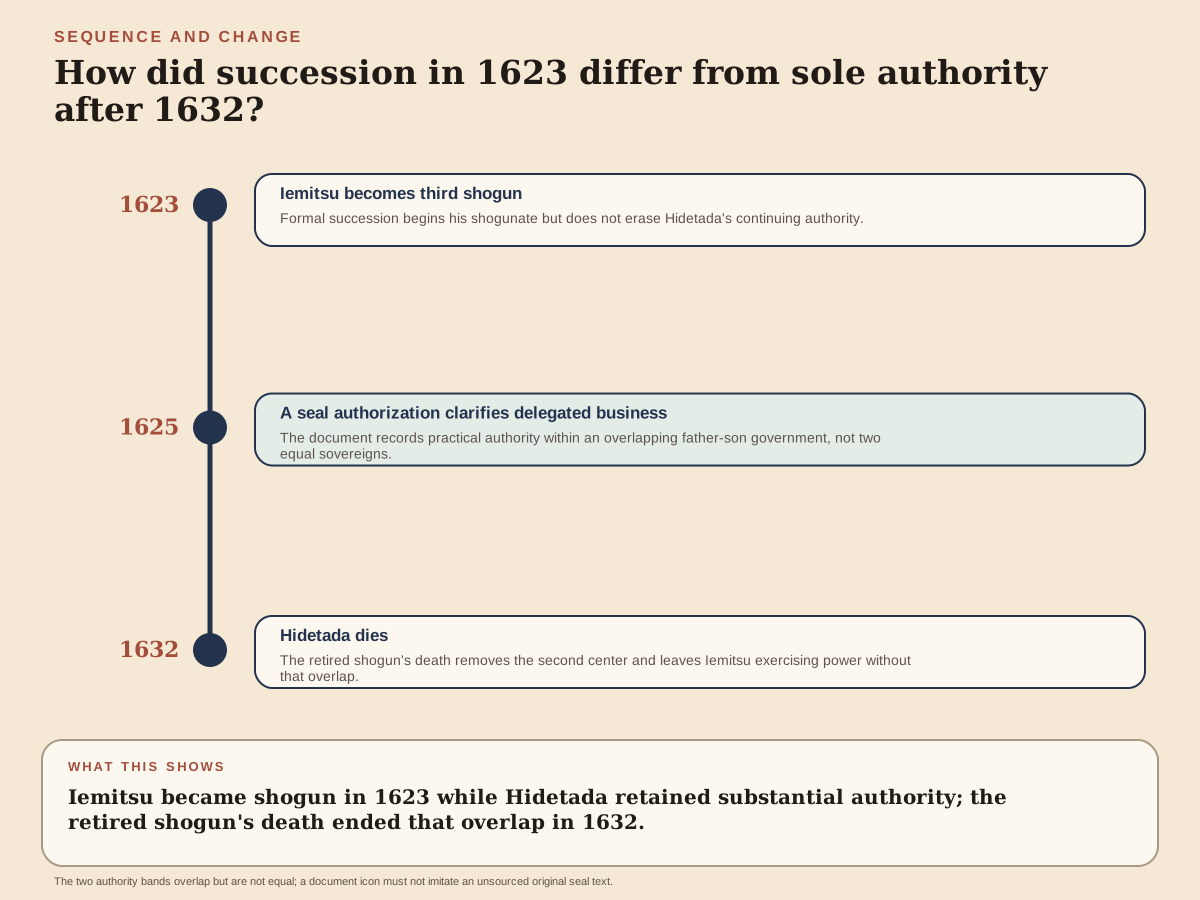
Retirement did not end Hidetada’s authority. A 1625 grant preserved by the Wakayama Prefectural Museum assigned three villages totaling 300 koku in assessed rice yield in Ōmi to a retainer. Its seal identifies the issuer as Hidetada. Territorial grants therefore continued to bear the retired father’s authorization after Iemitsu held the shogunal title.
The succession initially placed the new officeholder alongside a living predecessor. Hidetada’s death in 1632 ended that arrangement. Iemitsu’s accession in 1623 and his later government without his father were distinct stages: the office passed to him first, while significant powers continued to be exercised by the retired ruler.
Takechiyo was born in 1604 within the Tokugawa household at Edo, present-day Tokyo. Fuku became his wet nurse through the recommendation of Itakura Katsushige, the government’s senior Kyoto official, according to reference accounts. Nursing provided bodily care and repeated access to a child whose upbringing mattered to the ruling family. He would later take the name Iemitsu. Fuku’s service therefore placed her within an intimate household relationship that continued to have consequences as the boy entered public office.
Hidetada, the boy’s father, became shogun, head of Japan’s warrior government, in 1605, while his own father Ieyasu continued governing in retirement. A younger brother, later named Tadanaga, also gained a place within the ruling family. Accounts of parental favoritism toward that brother explain Fuku’s supposed appeal to Ieyasu, often dated to 1615 and linked with an Ise pilgrimage. The National Archives marks the narrative as reported. Its displayed story of Ieyasu distinguishing the boys while distributing sweets belongs to the Buya Shokudan, compiled in 1709. That date separates an influential later narrative from a contemporary transcript of the household’s decisions.
Iemitsu became the third Tokugawa shogun in 1623, while Hidetada retained substantial authority as the retired ruler. His appointment made the dynastic outcome public through court recognition. Fuku’s continued service and later influence are attested parts of that career. The famous appeal expresses how a nurse could be remembered as protecting an heir, while its details require separate assessment. Iemitsu’s succession also depended upon the decisions and resources of his father, grandfather, officials and the imperial court. The enduring connection with Fuku gave her a place around the adult ruler as well as the child.
After Gō, Hidetada’s principal wife, died in 1626, Fuku became a leading figure in the women’s household, or Ōoku, at Edo Castle. The early organization developed further under later shoguns; the responsibilities around Fuku need to be followed within her own lifetime. Her connections helped relatives enter government service. Masakatsu, her son, became a senior councillor, and other family-linked men obtained positions. Personal relationships formed within the ruling house could affect appointments outside its inner rooms. The process gave household service consequences for the wider warrior administration.
Hosokawa Tadatoshi, a territorial lord in Kyushu, corresponded with officials and household contacts while judging when to attend the ruler at Edo. The University of Tokyo’s introduction to the edited letters describes him seeking that timing through Fuku, Masakatsu and others in 1632. It also identifies his report to her of Masakatsu’s entry into Kumamoto Castle on official business. These exchanges show information passing between a lord, an official and the official’s mother. The exchanges joined official business with a household relationship maintained through personal contact.