Read the article below. Interactive reading tools are available when scripts load.
Quick
In 587, forces allied with Soga no Umako defeated Mononobe no Moriya in Kawachi, near present-day Yao. Moriya was killed. His defeat changed the balance at the Yamato court and helped Umako’s coalition shape the next enthronement.
Both men were senior court figures with armed followers. Their houses competed over succession and religious patronage. Umako supported Buddhist worship, drawing on connections with the Korean peninsula; Moriya resisted that patronage. Emperor Yōmei’s death left the throne unsettled, bringing these conflicts into a contest over who could secure a successor.
Royal princes and other court leaders joined Umako’s side. They attacked Moriya’s positions in the Shibukawa district of Kawachi. The later Nihon Shoki, compiled in 720, gives Buddhist vows and the young Prince Umayado a prominent place in its account. Those episodes became part of the battle’s religious memory; the principal political outcome was the defeat of Moriya’s coalition.
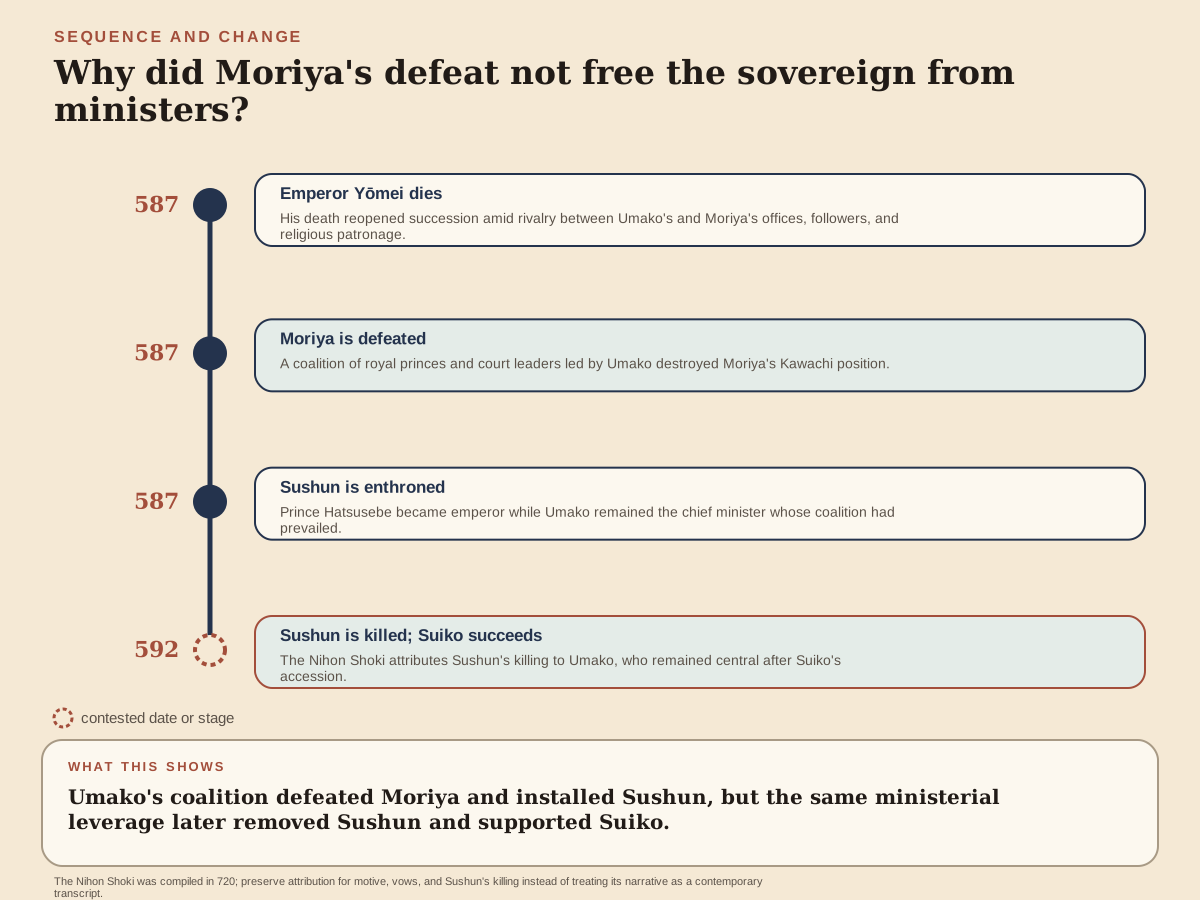
Prince Hatsusebe first took the throne as Emperor Sushun. Five years later, according to the Nihon Shoki, Yamato no Aya no Koma killed Sushun on Umako’s instructions. Empress Suiko then acceded, with Umako and Umayado prominent around her court. The first victory had removed a rival, without making the throne independent of powerful ministerial houses.
Temple building continued after the battle. The Nihon Shoki records Baekje sending monks and building specialists in 588 for Umako’s Buddhist foundation. Victory opened room for patronage, while clergy, materials and construction still had to be assembled. Older court rites also continued.
Classic
The Yamato court governed through royal kin and powerful houses whose leaders held offices, sponsored rites and commanded followers. Soga no Umako and Mononobe no Moriya were senior figures within this order. Their rivalry concerned the people and practices through which a sovereign could rule.
Buddhism had reached the court through contacts with the Korean peninsula. Images, texts and ritual specialists offered patrons new religious resources. Umako’s support for Buddhist worship and Moriya’s resistance became part of their struggle, alongside royal relationships and competing claims to succession. The two houses were connected by marriage as well as divided by political interests.
Emperor Yōmei’s death in 587 reopened the question of the throne. Royal princes and other court leaders supported Umako, while Moriya defended his position from Kawachi. The court’s succession dispute now depended on the followers these alliances could mobilize.
The principal narrative is the Nihon Shoki, completed in 720. Its account links illness, religious conflict, vows and victory. It preserves a later court’s explanation of the struggle, including religious episodes whose detail is less secure than the broad sequence of defeat and enthronement.
The chronicle identifies Umako as ōomi and Moriya as ōmuraji, offices held within the court. Their competing followings mattered because the royal succession required support from such officeholders. Illness added a ritual dispute to that political setting. In its account of Yōmei’s final illness, the Nihon Shoki has the sovereign ask to embrace the Buddhist Three Treasures. Moriya and Nakatomi no Katsumi opposed the proposal, while Umako supported it. The disagreement was over patronage within a court whose ruler also upheld older rites, rather than over replacing every existing cult with Buddhism.
The throne’s candidates and their maternal relationships also belonged to this contest. The chronicle describes Moriya supporting Prince Anahobe’s claim after Yōmei’s death. Prince Hatsusebe, who would emerge from the struggle as Sushun, was a son of a daughter of Soga no Iname. Royal kin and ministerial kin were thus connected; a claimant’s birth did not by itself give him the force to secure the throne.
Before the campaign against Moriya, the Nihon Shoki records a further act against a rival claimant. In the sixth month of 587, Umako and others, acting under the authority of the former empress Kashikiyahime, ordered Prince Anahobe’s killing. The seventh-month entry then describes Umako gathering royal princes and other court leaders against Moriya after Emperor Yōmei’s death. Prince Hatsusebe and Prince Umayado joined the coalition. Their followers attacked Moriya’s regional base at Shibukawa in Kawachi, near present-day Yao, while succession remained unresolved at the Yamato court. The account has contingents led by Ōtomo, Abe and other court figures approach Moriya’s residence from Shiki district.
The Nihon Shoki, compiled in 720, describes Moriya assembling his sons, armed dependants and enslaved followers behind a fortified enclosure. He resisted with archers, and the attacking forces withdrew three times. These are details preserved by the later court chronicle, rather than a contemporary campaign diary.
The chronicle then associates Prince Umayado’s vow to the Four Heavenly Kings, Buddhist protectors, with the renewed attack. It also records Umako promising a temple if his side won. Such vows linked the coalition’s success to subsequent temple patronage in the history’s account.
The archer Atomi no Ichibi is credited with killing Moriya. The chronicle describes his following breaking and relatives fleeing, some concealing their family identity. The immediate military change was the collapse of the force that had defended his Kawachi base.
The same account records the reassignment of dependants and property to a Buddhist foundation after the defeat. Victory therefore affected the people and resources attached to Moriya’s household as well as the standing of its leaders. No complete casualty roll or independent account of every transfer survives in the material used here.
Prince Hatsusebe was then enthroned as Emperor Sushun, with Umako remaining chief minister. The coalition had won the succession struggle by force. The new ruler entered a court whose leading minister retained the household connections and followers behind that victory.
The immediate result was Moriya’s death and the strengthening of Umako’s coalition. Prince Hatsusebe became Emperor Sushun. Umako remained a central minister, linking the new sovereign to the alliance that had won the military contest.
This arrangement did not secure the ruler against his minister. In 592, according to the Nihon Shoki, Yamato no Aya no Koma killed Sushun on Umako’s instructions. Suiko then acceded. She possessed royal standing and close ties to the Soga, and her court included both Umako and Prince Umayado.
Temple patronage continued through specific exchanges after the battle. The Nihon Shoki records a Baekje mission in 588 bringing monks and building specialists, including tile makers and painters, for the Buddhist foundation associated with Umako. Such personnel and materials helped turn a patron’s support into an institution. Construction continued over subsequent years, while older court rites also remained in use.
The sequence exposes a continuing constraint on kingship: an enthronement depended on ministerial houses and their followers. Umako’s victory expanded his leverage within that system. Sushun’s subsequent killing shows how dangerous the relationship could remain for a reigning sovereign.
The foundation known as Hōkōji, later Asukadera, required work extending beyond the victory. The chronicle places the cutting of construction timber in 590 and the building of its main hall and covered walkways in 592. In 596 it records completion, appointment of Umako’s son Zentoku to administer the temple, and the residence of the monks Hyeja and Hyechong there. These entries give the building effort personnel, stages and continuing management. They also show that patronage was sustained through the same ministerial house that had backed the enthronements.
Later accounts made the battle a test of Buddhist protection. Vows attributed to Umako and Umayado connected military victory with temple foundations and the religious image of Prince Shōtoku. The story helped later institutions explain their patrons and origins.
The Yao traditions preserved this memory near the fighting landscape. Hōryū-ji, traditionally founded around 607, belongs to the later institutional world associated with Suiko and Umayado. Its connection to them differs from the battlefield’s location in Kawachi.
At court, Buddhist patronage continued to bring continental texts, images and specialists into institutions supported by royal and ministerial resources. These practices developed alongside older rites and lineage power. The succession from Sushun to Suiko also preserved the importance of the alliances formed around 587.
The event’s political and religious legacies therefore followed identifiable paths: defeat removed Moriya, subsequent enthronements reflected Umako’s influence, and temple narratives turned the conflict into sacred history. Those paths developed over different periods and survive in different kinds of evidence.
Royal support did not end older worship. The Suiko chronicle records a 607 order to honor the indigenous deities, followed by Umayado and Umako leading court officials in that worship. Buddhist foundations and other rites remained activities of the same court. Their coexistence limits what can be inferred from a battle remembered as a victory for Buddhism.
The surviving story therefore preserves two related histories. The armed contest removed an officeholder and advanced a coalition’s candidate; later foundations organized land, skilled work and religious service under powerful patrons. The vows in the chronicle made these developments part of a sacred account of victory. They cannot supply an independently witnessed explanation of every participant’s belief or every battlefield action.