The Confucian Precinct Established at Yushima
Attraction
In 1690, the fifth shogun Tokugawa Tsunayoshi transferred the Hayashi family's Confucian sacred images from Ueno to Yushima and enlarged the new Taiseiden precinct. The move made ritual architecture part of shogunal policy: honoring Confucius and the Four Sages gave a visible center to a tradition of learning closely connected with government service. The present courts, walls, and axial arrangement preserve that institutional idea, but they should not be mistaken for an untouched seventeenth-century ensemble. Fires and the 1923 earthquake repeatedly broke the architectural continuity.
Current visibility
The precinct layout is visible, but most standing architecture is reconstructed; opening of inner areas varies.
Nyūtoku-mon, the Surviving 1704 Gate
Attraction
Nyūtoku-mon is the precinct's crucial piece of surviving early fabric. Built in 1704, the black-lacquered wooden gate endured the losses that removed the other Edo-period buildings and is identified by Bunkyō City as the site's oldest and only wooden structure. Its name, commonly rendered as the Gate for Entering Virtue, turns movement into an ethical statement: passing inward meant approaching both ritual and disciplined study. Because the surrounding halls are later reconstructions, the gate also provides the clearest material benchmark for distinguishing an original element from historically informed replacement.
Current visibility
The gate remains standing in the precinct and is normally visible from the public approach; temporary site restrictions remain possible.
The 1935 Taiseiden Reconstruction
Attraction
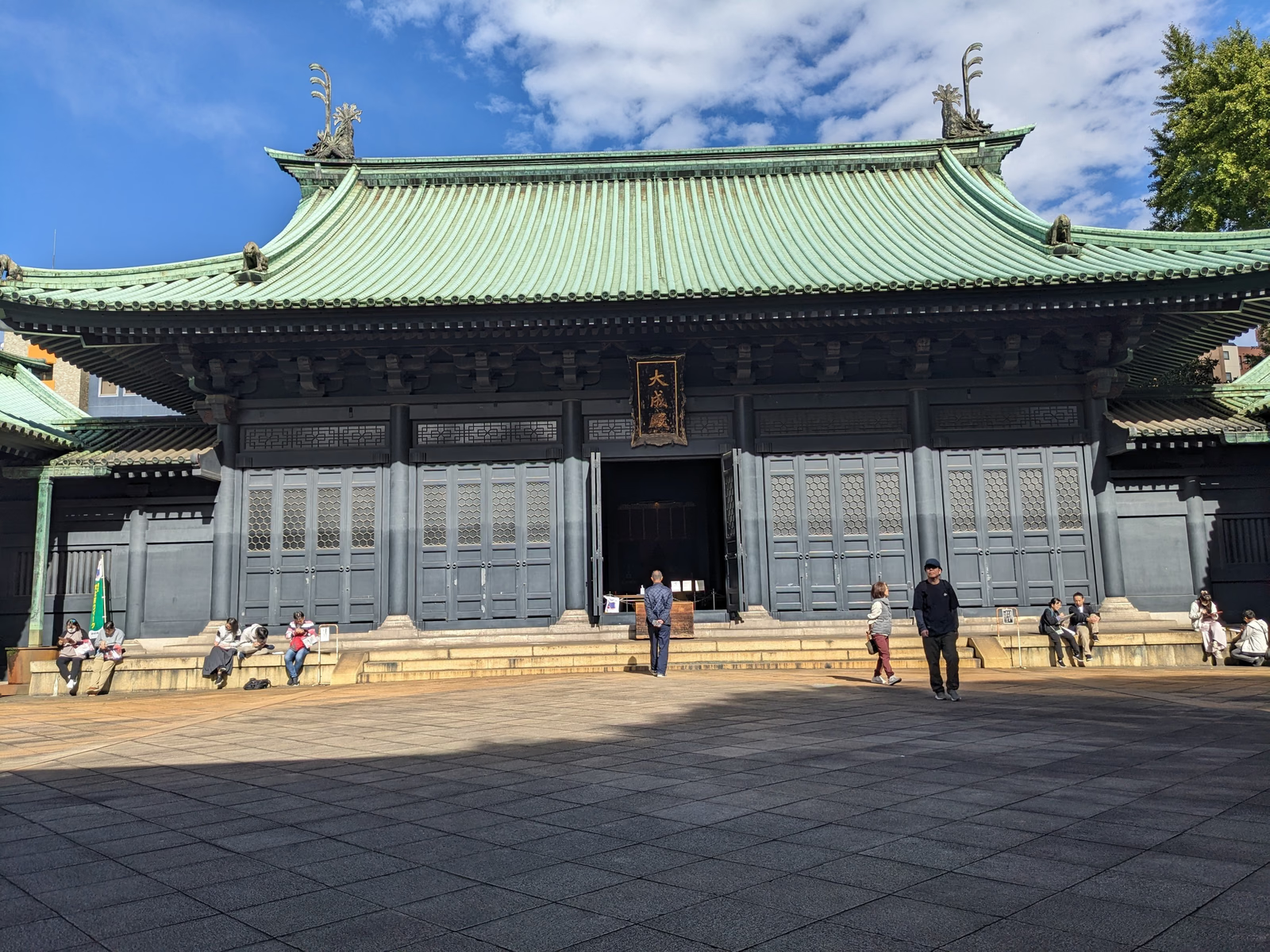
The imposing black Taiseiden seen today is a reconstruction, not the hall completed under the Tokugawa shogunate. The Great Kantō Earthquake destroyed the earlier building in 1923, and the present reinforced-concrete structure was completed in 1935 with reference to its predecessor. Its roofline, dark surfaces, gates, and enclosed court deliberately recover the visual authority of a Confucian temple while using modern fire-resistant construction. Reading both dates together avoids a false choice between authenticity and imitation: the building is authentic evidence of twentieth-century heritage reconstruction applied to an institution founded in the Edo period.
Current visibility
The exterior is visible within the precinct. Interior opening is limited to designated days and may change, so current official information governs access.
The Shōheizaka Gakumonjo Footprint
Attraction
In 1797 the shogunate placed the Shōheizaka Gakumonjo under direct control beside the Confucian temple. The academy trained and examined men within the Tokugawa governing order, giving the site an administrative as well as ceremonial purpose. Its classrooms do not survive as a complete visitable school, so the most accurate object is the academy footprint and its relationship to the Taiseiden. After the Restoration, the grounds also hosted institutions ancestral to modern teacher-training and women's higher education. Yushima thus connects shogunal scholarship to the later state's effort to organize education, without making them identical systems.
Current visibility
The academy is understood through the historic site and interpretation; a complete Edo-period school building does not survive.
Confucian Images and the Periodically Open Interior
Attraction
The Taiseiden was created to enshrine Confucius with the Four Sages, making images and ritual placement the conceptual center of the complex. When the interior is open, the hall clarifies why Yushima Seidō is neither a Buddhist temple nor simply a former school: veneration, ethical cultivation, and official learning occupied adjoining spaces. The current images and reconstructed hall belong to the site's long custodial history rather than forming an untouched seventeenth-century installation. Since interior viewing is limited, the exterior courts must carry much of the interpretation on ordinary days.
Current visibility
The Taiseiden interior is opened only on designated days under current management; no daily access is implied.