Attraction
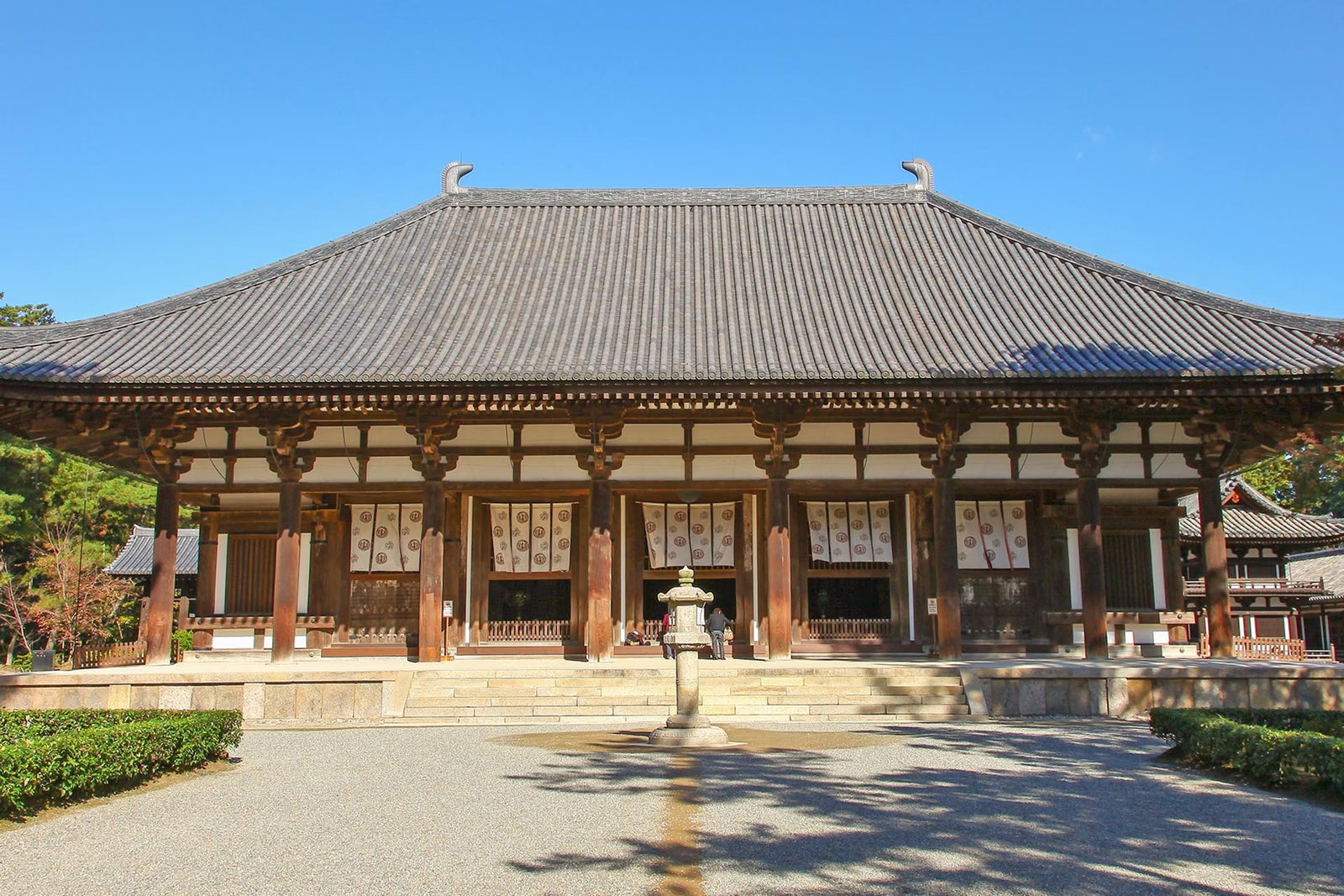
The Lecture Hall, or Kōdō, began not as temple architecture but as the eastern assembly hall of Heijō Palace. It was transferred from the palace and adapted for Tōshōdai-ji, giving the new community a substantial teaching and ritual space before its Golden Hall was complete. This reuse was more than thrift. A court building physically entered a private Vinaya institution, binding the temple's early material history to the Nara capital that had invited and supported Ganjin. The standing hall is not an unaltered palace fossil. Its present hip-and-gable form owes much to medieval, especially Kamakura-period, remodeling. The temple nevertheless identifies it as the only surviving building that retains the appearance of a structure from Heijō Palace, making it a rare bridge between an excavated political center and an active religious precinct. The interior adds further chronological layers. Its principal seated Maitreya image belongs to the Kamakura period, while guardian figures preserve earlier sculptural work. Architecture, ritual use, and image dates therefore do not coincide neatly. Read the hall as a reused framework repeatedly fitted to new purposes. From outside, compare its more open spatial character with the heavier frontal authority of the Golden Hall. Inside, where viewing is permitted, do not assume that the images reproduce the hall's eighth-century arrangement. What survives is more historically valuable than a hypothetical untouched original: it shows a palace component relocated, reworked, and kept in service as the temple itself changed.