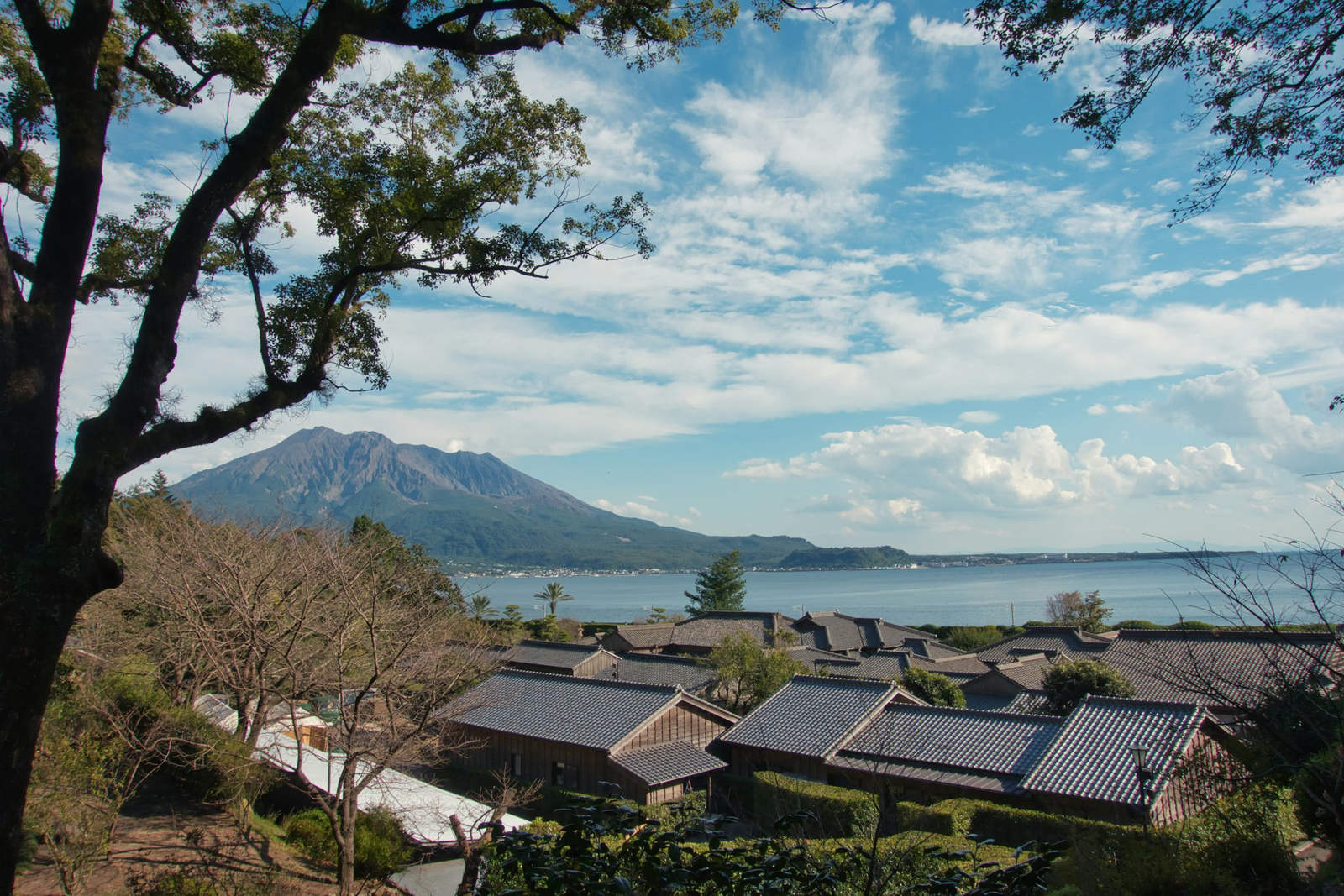
Borrowed Scenery: Sakurajima and Kinko Bay
Attraction
Sengan-en was founded in 1658 by Shimadzu Mitsuhisa, and its most famous view is not simply fortunate geography. The garden deliberately uses Sakurajima and Kinko Bay as borrowed scenery, making the distant volcanic landscape part of the composition. That principle immediately enlarges the Place: the garden does not end at the property boundary. Sea, mountain and residence form one visual system. The Shūseikan industrial complex at Sengan-en is a component of the UNESCO World Heritage property Sites of Japan’s Meiji Industrial Revolution, inscribed in 2015. The view changes with volcanic weather, tide and light, so the borrowed landscape never behaves like a fixed painted backdrop. Garden paths alternately conceal and reveal the bay, while the residence frames selected prospects from its rooms. This controlled sequence turns a vast active landscape into part of an intimate daimyo garden and links aesthetic design to the Shimadzu domain’s maritime setting. Sengan-en is also a nationally designated Place of Scenic Beauty, recognition that applies to the designed landscape rather than only to the industrial remains.
Current visibility
The garden frames Kinkō Bay and Sakurajima as borrowed scenery; bay, volcano, paths, and selected residence views form the visible system.
Attraction
The residence was not a private retreat in the modern sense. Official Sengan-en interpretation emphasizes its role as a reception space for important domestic and foreign guests, and it later served for a period as the Shimadzu main residence. Room sequence, decoration and framed views therefore belong to political hospitality. The garden's beauty was one instrument through which the family represented status and cultivated relationships. Move between the formal rooms and veranda views to see how architecture choreographed a visit. The residence could receive members of the imperial family and foreign dignitaries while presenting the Shimadzu lineage through furnishings, decoration and command of the landscape. Its domestic scale should not hide this representational role: hospitality here was part of political performance.
Current visibility
“The Iso Residence” is materially legible at Sengan-en, especially through the garden and the performance space described in the Highlight.
The Shuseikan Industrial Complex
Attraction
Under Shimadzu Nariakira in the 1850s, the Shuseikan program brought industrial experiments directly beside Sengan-en. This physical proximity is the site's strongest interpretive insight. Modernization was not happening in a separate 'Western district' far from elite rule; it was being organized by a daimyo government next to its own villa. Garden, statecraft and industry occupied one landscape.
Current visibility
“The Shuseikan Industrial Complex” can still be read at Sengan-en through the present landscape and the garden; the visibility claim concerns that setting, not a past moment preserved intact.
Attraction
Shoko Shuseikan occupies a surviving stone industrial building from the Shimadzu modernization program and now serves as the site's principal museum. Its heavy masonry and arched openings should be read before the displays: the container is itself evidence of an attempt to establish Western-style industrial production in Satsuma. Inside, objects and documents connect the garden estate to shipbuilding, armaments, glass and technical experiment. Exhibitions may rotate, so the permanent highlight is the relationship between industrial fabric and the museum's interpretive role. Verify current admission and photography rules.
Current visibility
At Sengan-en, visitors can identify the material focus of “Shoko Shuseikan Museum” through the museum display, the surviving building, and the documentary evidence; this does not promise unrestricted handling or close viewing.
Satsuma Kiriko Glassworks
Attraction
The Satsuma Kiriko glass tradition turns industrial policy into a close, hand-held object. Thick colored glass is cut to expose contrasting layers, creating gradations unlike a painted surface. Production associated with Shimadzu Nariakira's program was disrupted after his death and later revived through historical research and skilled practice. At the working or retail interpretation area, compare raw thickness, cut facets and finished color rather than treating the glass as a souvenir category. Demonstrations, workshop access and available designs are current operations and may change.
Current visibility
“Satsuma Kiriko Glassworks” can still be read at Sengan-en through the workshop; the visibility claim concerns that setting, not a past moment preserved intact.
Attraction
Bogakuro is a small pavilion tied to the garden's history of elite reception and views toward the bay. Its compact form offers a human-scale counterpoint to Sakurajima's immense borrowed scenery. Observe openings, roof and placement rather than expecting monumental decoration. Interior use varies, so its lasting value lies in how the pavilion frames social viewing.
Current visibility
Bōgakurō's roof, openings, compact exterior, and placement within the garden frame elite viewing toward the bay; routine interior access is not implied.
Attraction
The winding stream garden is associated with a poetry custom in which cups float downstream as participants compose verse. Even without an event, the channel's curves and seating relationship reveal the gathering's designed pace. Festival reenactments are scheduled activity; the durable highlight is a landscape shaped for literary sociability rather than distant viewing.
Current visibility
The place-specific feature discussed as “Kyokusui Garden” is anchored by the garden and the pond and water system, but today's access or operating condition at Sengan-en requires a current official check.
The Main Gate and Tin Gate
Attraction
Sengan-en's gates distinguish arrival, rank and historical phase within the estate. The Main Gate presents a formal entrance, while the smaller Tin Gate uses metal roofing associated with elite access. Compare scale, materials and route rather than treating both as decoration. They show how an apparently open garden once regulated movement toward residence and authority.
Current visibility
The present precinct at Sengan-en still carries “The Main Gate and Tin Gate”; visitors can ground the text in the gate sequence and the garden.
Foreign Engineers' Residence
Attraction
The nearby Foreign Engineers' Residence, or Ijinkan, housed British technicians connected with the Kagoshima spinning mill. Its Western-style rooms and verandas materialize the movement of people, skills and machinery behind Satsuma industrialization. It is a separate component rather than part of the garden walk, so travel time and opening conditions must be checked independently.
Current visibility
The Foreign Engineers' Residence is a separate site with Western-style rooms and verandas; its own opening conditions and travel time should be checked independently of the Sengan-en garden walk.