An Abandoned Castle Becomes a Rebel Stronghold
Attraction
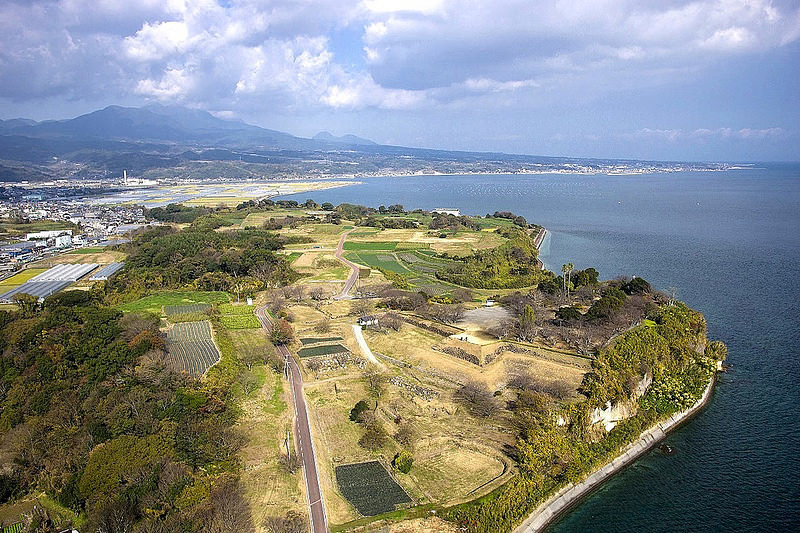
Hara Castle had been abandoned before insurgents occupied it during the Shimabara-Amakusa uprising of 1637. Peasants, masterless warriors and many Christian inhabitants from the peninsula and Amakusa gathered behind its defenses under the symbolic leadership of Amakusa Shiro. The site was chosen because an existing castle landscape could be repaired and defended, not because it was an active lordly residence. From the upper bailey, the sea and approaches help explain both protection and encirclement. The revolt grew from intersecting pressures that included harsh taxation, famine and Christian persecution; reducing it to either faith alone or economic grievance erases the coalition visible in the archaeology and records. The reused fortress makes emergency organization tangible.
Current visibility
“An Abandoned Castle Becomes a Rebel Stronghold” is materially legible at Hara Castle Ruins, especially through the castle compound, the administrative landscape, and the documentary evidence described in the Highlight.
Siege, Defeat and Deliberate Destruction
Attraction
Shogunal and domain forces besieged the rebels through the winter and overwhelmed Hara Castle in 1638. The killing that followed and the castle's deliberate destruction were intended to erase both resistance and a defensible site. Collapsed stonework is therefore not ordinary decay. Excavations have found human remains, weapons and Christian objects within layers associated with the final battle, giving material specificity to accounts of mass death. Visitors should not imagine intact walls or a restored keep. Open ground, broken defenses and reconstructed lines must be read with archaeological plans. Destruction is the principal surviving historical form: the state transformed a battlefield into a warning and ensured that the stronghold could not be reused.
Current visibility
The historic feature discussed as “Siege, Defeat and Deliberate Destruction” no longer stands at Hara Castle Ruins; the battlefield terrain, the castle compound, and the stone walls preserve its location or interpretive context without recreating lost fabric.
Christian Evidence and the History of Suppression
Attraction
Crosses, medals and other excavated objects support the presence and organization of Christian rebels at Hara Castle, but they should be interpreted alongside the site's political and social causes. After the uprising, authorities intensified systems designed to identify Christian affiliation and prevent renewed collective action. The ruins consequently belong to the history of both open revolt and the communities that later practiced in concealment. Memorials to Amakusa Shiro and the dead are modern acts of remembrance, not surviving features of 1637. Keeping those layers separate allows the Place to do more than illustrate tragedy. It shows how archaeological discovery altered recognition of persecuted people whose own buildings and public institutions were largely denied survival.
Current visibility
“Christian Evidence and the History of Suppression” is carried by archaeological evidence at Hara Castle Ruins, chiefly the excavated remains, the castle compound, and the memorial; no intact structure from the historical phase is claimed.