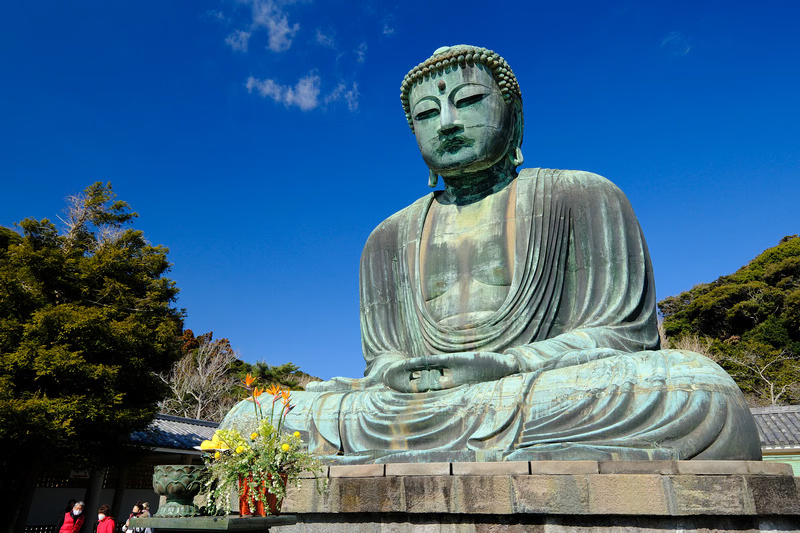
Map: GSI Japan The Great Buddha of Kamakura is a monumental bronze image of Amida at Kōtoku-in. Its casting is conventionally dated to begin in 1252, and its position and orientation have remained essentially unchanged. Its open-air setting, now treated as the monument's natural image, is the outcome of repeated hall destruction rather than the original design. Casting seams, the hollow interior, traces of gilding, surviving foundation stones, and archaeological evidence for a vast timber hall connect devotional ambition to medieval engineering. Centuries of exposure, earthquake repair, conservation, and active worship have made the statue both an exceptional survival and a continually maintained religious object. Precise claims about its makers and the final loss of the hall remain limited by the evidence.
A bronze Amida cast from 1252
Attraction
Casting of the present bronze Amida began in 1252 and was substantially complete by the 1260s. The seated image is about 11.3 meters high and weighs roughly 121 tons, yet documents do not securely identify its sculptor or foundry masters. A priest named Jōkō appears in fundraising traditions, but the project was larger than one known biography. The statue's scale, calm proportions, and largely original bronze body preserve the devotional and technical ambition of Kamakura society while leaving important questions about patronage and manufacture explicitly open.
Current visibility
The bronze image is visible outdoors in its historic position within the managed Kōtoku-in precinct.
Casting seams and a hollow interior
Attraction
The Great Buddha was cast in successive horizontal stages rather than poured as one enormous piece. Joins, repairs, and differences in the interior surface let technical study reconstruct how molds and bronze sections were assembled. Entry into the hollow body, when officially available, makes the statue an unusually legible work of medieval engineering and also reveals later reinforcement. Interior access is optional and operationally fragile: heat, maintenance, crowding, or temple decisions can suspend it. The external image remains fully meaningful when the interior is closed.
Current visibility
Casting evidence is visible on the statue, but interior entry can be suspended for heat, conservation, or other operational reasons.
The vanished great hall beneath the open sky
Attraction
Archaeology has identified foundations for a timber hall roughly forty-four by forty-two meters around the statue, together with casting-related remains and fifty-three foundation stones. The Buddha has remained in essentially the same position and orientation even though the enclosure disappeared. Those traces correct the modern visual assumption that the image was designed as an outdoor monument. Foundation evidence, spacing, and the statue's scale allow the absent architecture to be imagined without reconstructing it, making the ground around the bronze part of the historical object rather than empty foreground.
Current visibility
The great hall is gone; foundation stones and archaeological interpretation provide partial evidence of its scale and position.
How the Buddha became an outdoor image
Attraction
Historical records describe damage or collapse of successive halls in 1305, 1334, and 1369. By 1486, a visitor's account already placed the Buddha outdoors, and no secure record shows that the hall was rebuilt after the later medieval destruction. Popular retellings often make a 1498 tsunami the single decisive cause, but the surviving chronology does not justify that certainty. The open-air condition emerged through repeated disaster and failed replacement. Its familiarity today is therefore a long historical afterlife of architectural loss, not the monument's original state.
Current visibility
No medieval great hall survives; the exposed statue and archaeological traces testify to repeated loss rather than a single certain destruction event.
Gilding, weather, earthquake, and conservation
Attraction
Traces around the face and ears show that the bronze image was once gilded, creating an appearance very different from its present green surface. Centuries outdoors exposed it to salt air, rain, wind, earthquakes, and repeated repair. Edo-period work renewed the neglected monument; modern interventions addressed earthquake damage, structural stability, and conservation, including major investigation and reinforcement around 1960 and a detailed two-month program in 2016. The statue is therefore both substantially medieval and continuously maintained. Patina, seams, supports, and repaired areas record survival rather than diminish it.
Current visibility
The conserved bronze, weathered surface, gilding traces, and repair evidence are visible, while conservation can temporarily limit proximity.
An active Jōdo temple, not an isolated sculpture
Attraction
The Great Buddha is the principal sacred image of Kōtoku-in, a Jōdo temple where Amida devotion, memorial practice, offerings, and visitor attention continue around the same bronze figure. The open precinct makes it globally recognizable, but photography and scale should not erase religious use. Temple management balances worship, conservation, admission, interior viewing, and safety, and those priorities can change the visitor experience without changing the site's historical identity. Reading the image as both National Treasure and active object of devotion keeps institutional life connected to art and archaeology.
Current visibility
The outdoor image is normally visible under temple admission, while observances, conservation, weather, and safety notices can alter access.