Read the article below. Interactive reading tools are available when scripts load.
Quick
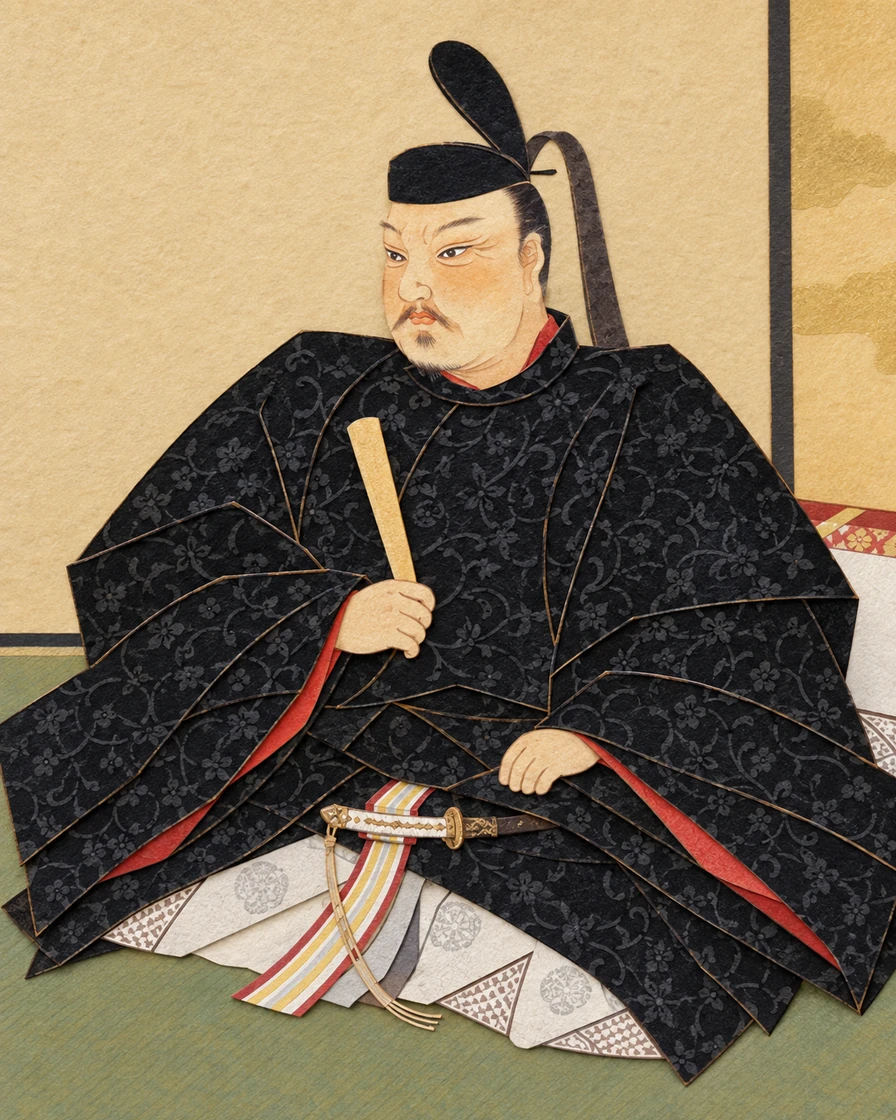
Toyotomi Hidenaga, also called Hashiba Hidenaga, was born around 1540 in Owari, in present-day Aichi. He became a commander in the service of his elder brother Hideyoshi. In the campaigns of the late 1570s, he worked in Tajima and Harima, regions of western Honshu where Hideyoshi was advancing toward the Mōri territories under Oda Nobunaga. His holdings and castle commands gave him responsibilities beyond accompanying his brother. Following Nobunaga’s death in 1582, he fought in Hideyoshi’s struggles against rival claimants to Oda power. His subsequent prominence grew from that military work and a relationship of trust with the man who would become Japan’s ruler. [1][2]
In 1585 Hidenaga commanded the invasion of Shikoku as Hideyoshi’s representative, defeating the Chōsokabe house. Two years later he led the Hyūga approach in the campaign against the Shimazu of Kyushu. Lords could also seek his help before armies moved. In 1586 Ōtomo Sōrin came to Osaka appealing for support against the Shimazu and reported visiting Hidenaga after meeting Hideyoshi. The letter recommends maintaining close relations with Hidenaga and the tea master Sen no Rikyū. Hidenaga’s usefulness combined recognized command with access to the ruler and the ability to help outsiders secure political support. [2][8]
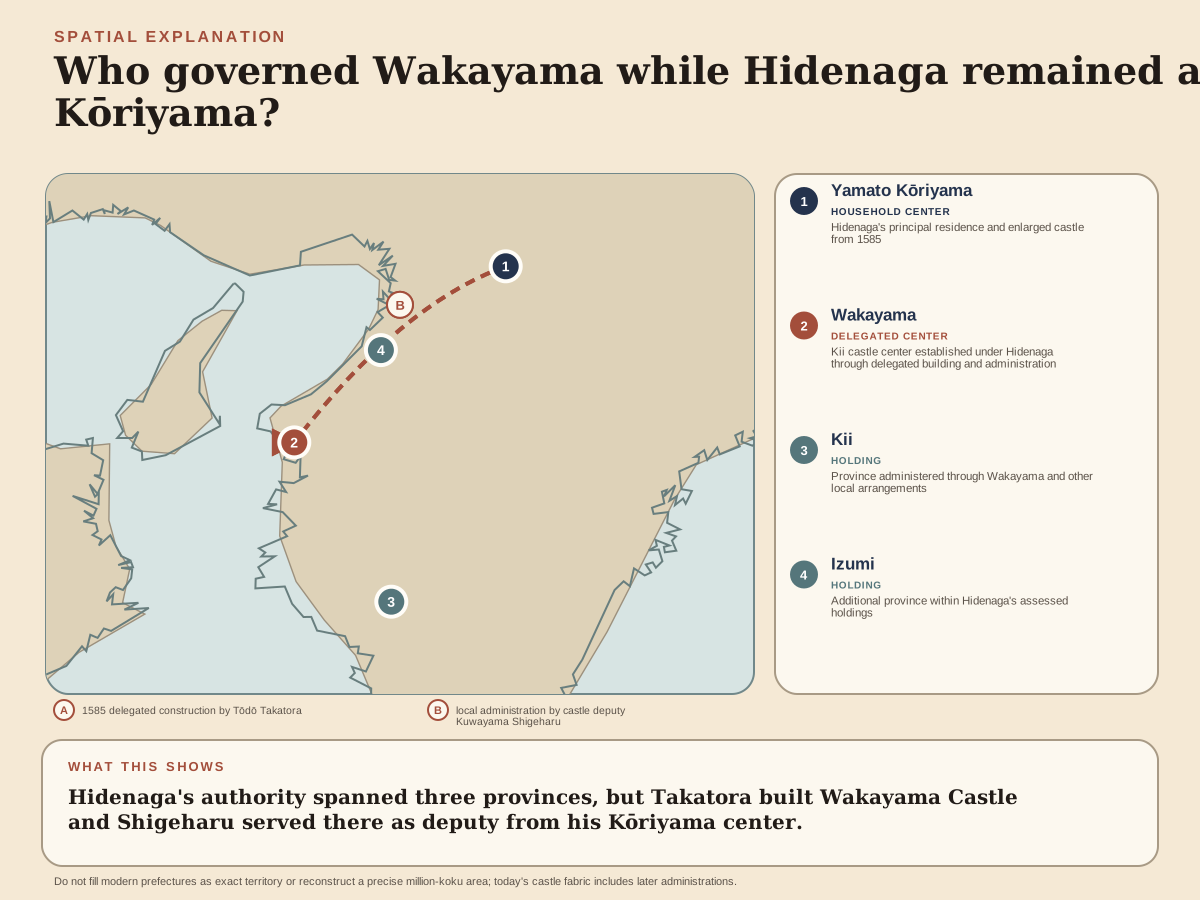
Hidenaga moved into Yamato Kōriyama in 1585 after receiving extensive holdings in Yamato, Kii and Izumi, regions now within Nara, Wakayama and Osaka. Their assessed yield is often summarized as about one million koku, a measure of agricultural yield used to rate lordly resources, although references give different totals. He enlarged Kōriyama Castle and organized the new territorial government through retainers. In Kii, Hideyoshi ordered him to build Wakayama Castle; Tōdō Takatora supervised construction and Kuwayama Shigeharu served as deputy. At Kōriyama, stone gathered from religious sites supplied the works. The castles made lordship visible while officers connected the principal residence with lands the lord could not govern by personal presence everywhere. [1][2][6][7]
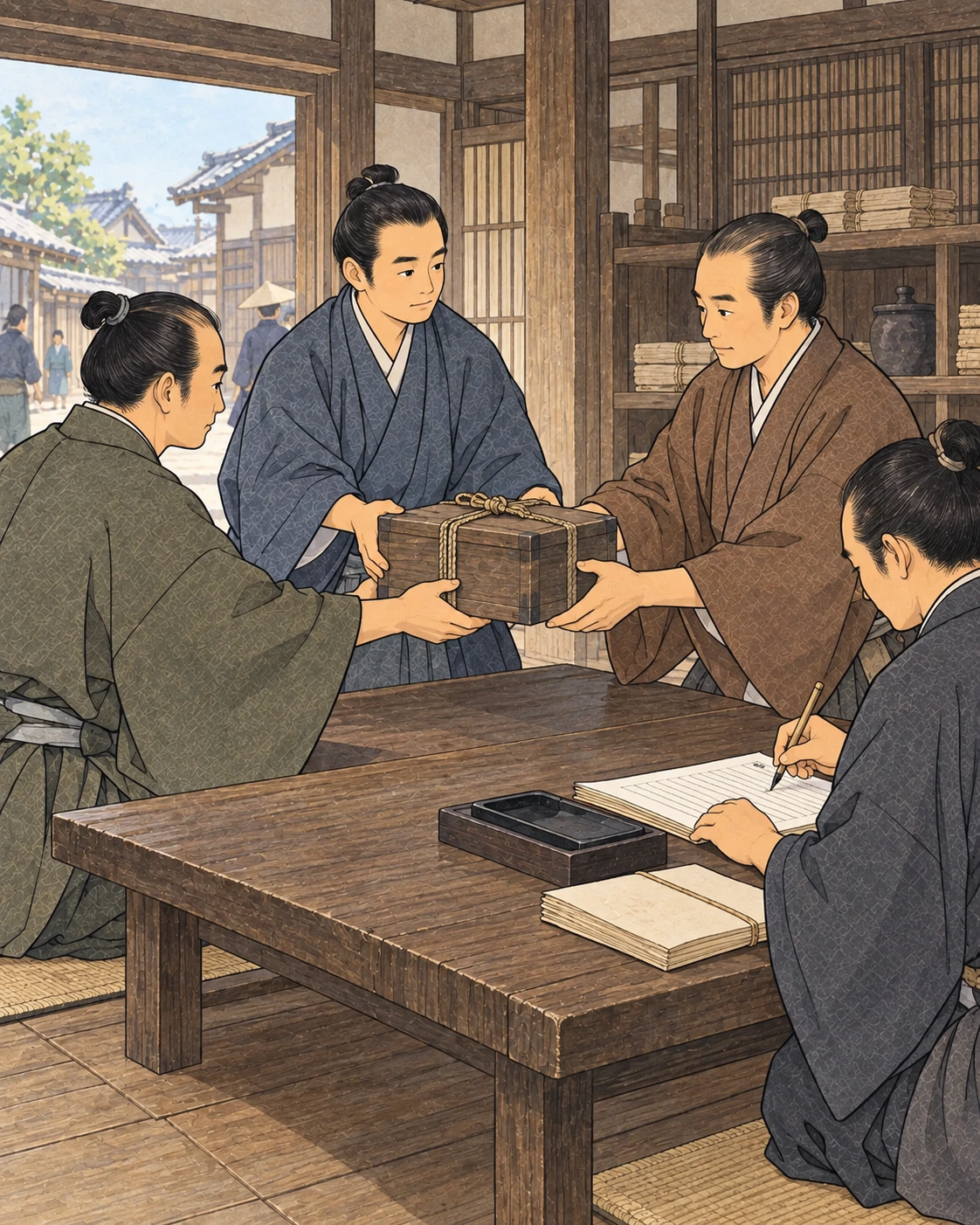
Hidenaga encouraged Kōriyama’s growth by assembling merchants of the same trades and granting protected commercial rights. Towns received charters that supported their privileges. A 1588 district record identifies the basis of the thirteen inner towns later known as the hakomoto. Important documents were kept in a sealed box that rotated among the towns; the town holding it assumed responsibility for common affairs. The developed system combined privileges with duties in policing, fire response and official transport. Its later form survived under successive rulers. Hidenaga’s policies provided an early foundation, although the surviving records do not establish every later rule as his personal creation. [5][6]
Hidenaga’s government extended land surveys into the mountains of Yoshino and Kumano in 1587, using Kobori Masatsugu as an official. Surviving documents concern exemptions for Tamaki Shrine lands and instructions that unauthorized demands should be refused unless backed by Hidenaga’s written warrant. Nearby Kitayama communities resisted the survey, and a letter described in the village archive orders preparations for military action. Another museum record concerns Hidenaga’s commendation for pursuing opponents in the mountains and presenting heads. Territorial organization thus included negotiated protection and coercion. Exemption depended on authorized decisions within the government, while resistance could bring the threat of armed suppression. [3][4]
Illness curtailed Hidenaga’s later career. The municipal chronology records serious sickness in 1589 and a visit from Hideyoshi in 1590; he did not join the Odawara campaign that year. He died at Kōriyama in 1591 and was succeeded by his nephew and adopted heir Hideyasu. The young successor died in 1595, after which Masuda Nagamori took over the castle government. Town privileges continued, and later rulers added to the castle. Hidenaga died before Hideyoshi’s invasions of Korea. His work remained in the institutions and relationships he had helped establish, but the later course of the ruling house cannot show that his survival would have prevented its crises. [1][2][3][9][6]
Classic
Toyotomi Hidenaga came from Owari, in present-day Aichi, and was the younger brother of Hideyoshi, who became Japan’s military ruler. His birth is placed in 1540 or 1541, and reference works differ over his father. Hidenaga served in the campaigns through which Hideyoshi acquired lands, officers and command experience under Oda Nobunaga. The family relationship gave him a place close to Hideyoshi, while his own military responsibilities made that proximity useful. [1][2]
An uncertain birth year and father
Hashimoto Masanobu’s Nipponica entry gives 1540 and names Yaemon as his father, questioning the Chikuami attribution on chronological grounds. Katō Masumiki’s World Encyclopedia entry gives 1541 and names Chikuami, describing Hidenaga as Hideyoshi’s maternal half-brother.
These reference accounts agree on his place as the younger brother but do not settle the disputed parentage. [1][2]
From 1577 Hidenaga took part in Hideyoshi’s advance through the Chūgoku region, the western part of Honshu. His commands at Takeda and Izushi in Tajima brought him into the management of Tajima and Harima, in western Honshu. These commands lay within an expanding military front against the Mōri sphere. Holding castles and administering territory required more continuing work than a single successful engagement. Hidenaga’s growing position belonged to the establishment of Hideyoshi’s authority along that front. [2]
Nobunaga’s death in 1582 removed the superior under whom the brothers had served. Hidenaga followed Hideyoshi in the battle of Yamazaki, the struggle around Shizugatake and the conflict known as Komaki–Nagakute. Hideyoshi’s rise was still contested among commanders and Oda relatives. Hidenaga’s service in these campaigns placed his resources alongside his brother’s claim. That experience preceded the larger representative command he received when Hideyoshi turned against the lords of Shikoku. [2][1]
Hideyoshi entrusted Hidenaga with command of the Shikoku campaign in 1585. Acting as his brother’s representative gave Hidenaga authority in a major operation involving other military forces. The defeat of the Chōsokabe house helped extend Hideyoshi’s settlement beyond the main island. Hidenaga subsequently received extensive territorial holdings and made Kōriyama his residence. Military service and regional government were joined in his position: he carried the national ruler’s authority into a campaign and exercised lordship within the resulting order. [1][2]
Access to Hideyoshi and the later image of government
Ōtomo Sōrin ruled in northeastern Kyushu and faced the advancing Shimazu. His 1586 letter, discussed by the historian Kotake Fumio, describes his journey to Osaka to seek Hideyoshi’s military support. After receiving assurances, he visited Hidenaga. Sōrin reported words directing private matters toward the tea master Sen no Rikyū and public affairs toward Hidenaga, and urged his retainers to cultivate both men. The letter gives the approaching lord’s view of access and assistance.
Its language records a political encounter and reported speech, rather than a formal chart dividing all government between two men. [8]
In 1587 Hidenaga commanded the route through Hyūga on Kyushu’s eastern side in the war against the Shimazu. The campaign made military support for opposing lords effective through force. His earlier dealings with Sōrin and his campaign position show different parts of the same political role: receiving an appeal, connecting it with Hideyoshi’s authority and undertaking command. The title Yamato Dainagon by which he became known combined his regional base with advancement to the court’s Senior Counselor rank that year. His standing rested on several forms of recognition rather than one modern ministerial office. [2][1][8]
Hidenaga’s work continued when fighting gave way to territorial arrangements. Kotake’s study follows the paperwork by which Akizuki Tanezane, previously based in Chikuzen in northern Kyushu, received a new holding at Takanabe in Hyūga. Hideyoshi’s order of the third day of the traditional seventh month of 1587 told Tanezane to obtain the list of his holdings from Hidenaga. The ruler authorized the transfer; his brother supplied the record defining what was to be received. For a defeated lord entering a new province, access to Hidenaga now concerned the practical terms of continued lordship as well as access to Hideyoshi. [8]
Yamato Kōriyama lay in the Nara basin, close to established religious centers and routes into the central region. Hidenaga entered in 1585 and undertook major castle enlargement. His holdings also extended through Kii and Izumi. A figure of approximately one million koku expressed assessed agricultural resources rather than money in a treasury; some reference accounts give a lower total. The extent of those holdings made his house an important base for Hideyoshi’s government in the central provinces. Their administration required deputies, local negotiations and records across varied landscapes. [1][2][6][3]
How large were Hidenaga’s holdings?
Hashimoto Masanobu summarizes the award after Shikoku as more than 700,000 koku. Katō Masumiki gives one million koku for holdings in Yamato and Kii together with parts of Izumi and Iga.
These are differing reference summaries, not a matched set of assessment records that permits a single exact total to be reconstructed here. [1][2]
The prefectural history of Wakayama Castle describes Hideyoshi ordering Hidenaga to establish the castle in 1585. Tōdō Takatora handled the building, while Kuwayama Shigeharu entered as Hidenaga’s castle deputy. Hidenaga’s main residence remained at Kōriyama. Such appointments show the division of responsibilities within a territorial house: the lord held authority over the province while another man supervised the local center and its garrison. The castle’s later history under other houses added buildings and arrangements of its own, so its surviving appearance cannot all be assigned to this first phase. [7][6]
Kōriyama’s municipal history describes stones collected from religious sites around Nara for Hidenaga’s works. It cites the monk Eishun’s Tamon-in Diary for complaints about those demands. Reused religious stonework in the walls preserves part of the material setting, though the exact attribution of every stone is not established. Building the ruler’s center could place costs on institutions already rooted in the region. The present castle layout also developed under Hidenaga’s successor and Masuda Nagamori during the following years. The result belongs to a sequence of administrations rather than one completed design delivered by Hidenaga alone. [6]
After entering Kōriyama, Hidenaga concentrated trades in designated towns and granted commercial privileges through written charters. These policies attracted merchants, including men from Nara and Sakai, to the castle settlement. Protected business gave favored groups a reason to build their activities around the new center. The advantage depended on the lord’s recognition and excluded competing arrangements elsewhere. The municipal chronology records restrictions on commerce in Nara as part of the effort to favor Kōriyama. Town growth therefore joined opportunity for the protected trades with the exercise of territorial authority. [5][6][9]
A 1588 record lists towns whose trades included fish and salt, timber, cloth, tea, dyeing and tofu. Thirteen principal inner towns became the basis of the hakomoto arrangement. Their privilege documents were sealed in a box that moved from one town to another each month. The town holding it handled common affairs, with its predecessor and successor joining it for important matters. Documentary custody and public responsibility were linked: the object containing the grounds of the towns’ rights traveled with the office that represented their shared obligations. [5]
How much of the later town system dates to Hidenaga?
In its developed form the hakomoto town organization supplied policing, fire response and horses for official transport. Duties and town boundaries changed under later lords. Kōriyama’s historical explanation notes that a major fire in 1680 destroyed many older records and that documents from 1724 give a particularly detailed account of the system.
This survival limits how precisely its mature rules can be projected back to Hidenaga’s time. [5][9]
A tea-quarter history records a 1591 exemption continued under Hideyasu after Hidenaga’s death. Privileges endured through new confirmations, while the towns carried obligations that developed beyond the founding lord’s lifetime. [5][9]
In 1587 Hidenaga appointed Kobori Masatsugu to survey the deeper Yoshino and Kumano districts. Totsukawa’s archive explanation identifies ten surviving land ledgers from this work. Land surveys brought information about holdings into records controlled by the lord’s government and supplied a basis for assessed resources and claims. Local religious figures also petitioned through Kobori. The archive interprets a letter as conveying Hidenaga’s exemption for Tamaki Shrine lands. The arrangement joined central record keeping with decisions negotiated through men familiar with the locality. [3]
A second Kobori letter transmitted instructions that demands should not be obeyed merely because someone claimed authority: an agent had to carry Hidenaga’s written authorization. Such a warrant made the difference between a recognized obligation and an unauthorized levy. The archive also describes wider Totsukawa exemptions, though parts of that reconstruction are expressed as probable. Exemption did not place the communities outside political rule. It made their treatment depend on a protected arrangement that the lord’s officers and local representatives had to maintain. [3]
A mediator whose government also used force
The neighboring Kitayama districts resisted the surveys. A letter attributed to Hidenaga orders preparations for an armed response, countering rumors that his officials had granted exemptions. Wakayama Prefectural Museum separately describes an original commendation to Tamaki Naokazu for mountain pursuit and the presentation of heads. The museum’s displayed item is a modern reproduction, and it does not fix the original letter’s year.
These documents qualify the familiar image of a purely gentle mediator. Hidenaga’s territorial government could protect selected lands and demand obedience through force; people facing that extension of authority did not all receive the same settlement. [3][4]
The Kōriyama chronology records Hidenaga’s serious illness late in 1589. Hideyoshi visited him in 1590, while the national ruler’s campaign against Odawara proceeded without Hidenaga’s field command. His absence interrupted a career that had combined major military service with territorial government. He died at Kōriyama on the twenty-second day of the traditional first month of 1591. The title Yamato Dainagon remained associated with his memory, but illness and death brought his personal role in the political settlement to an end. [1][2][9]
Hideyasu, Hidenaga’s nephew and adopted heir, succeeded him. The tea-quarter history records the continuation of commercial protection under the new lord. Hideyasu served in the Korean-war mobilization after 1591; these duties belong to the successor’s career. His death in 1595 brought another change, with Masuda Nagamori entering Kōriyama. Construction and town administration continued across those transfers. The survival of particular policies depended on successor governments and local institutions, while the family’s headship was less durable. [2][3][9][6]
Hidenaga was buried at the site now called Dainagon-zuka. The municipal history describes deterioration after the fall of Hideyoshi’s ruling house and a rebuilding of the enclosure and memorial tower in 1777 through monks and the town community. That later work preserved a local remembrance of the lord whose charters and commercial settlement had shaped the town. His life ended before the invasion of Korea in 1592. Later admiration for his mediation can explain why he was remembered, but it cannot recover the choices he would have made during wars and succession conflicts he did not live to face. [6][9][1]