Read the article below. Interactive reading tools are available when scripts load.
Quick
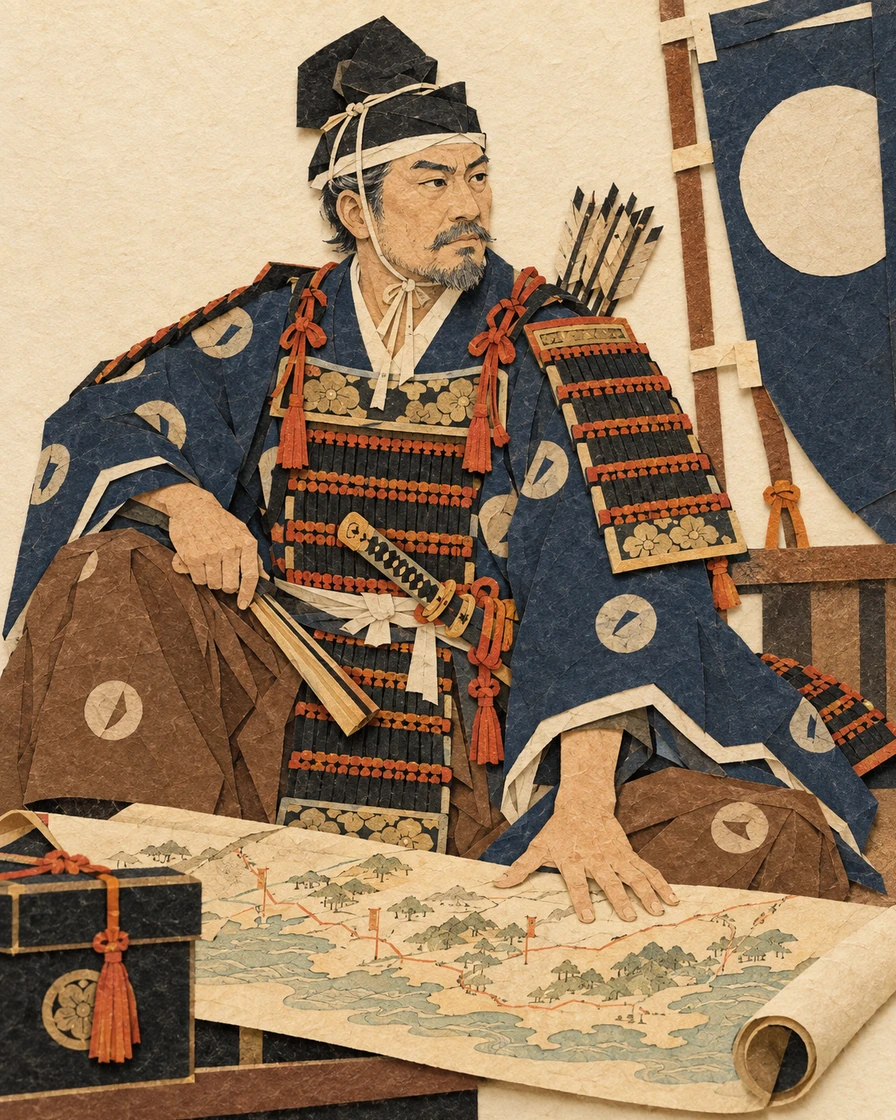
Takezaki Suenaga was born in 1246 and belonged to the Kamakura government’s warrior retainers in Higo, now Kumamoto on Kyushu. Such retainers served the government through military duties and depended on recognized rights to land. Suenaga had lost his earlier holdings before the Mongol invasion of 1274. When the invaders reached Hakata Bay in northern Kyushu, he joined defenders under Shōni Kagesuke. Success in battle could support a request for new estate rights. It also required other people to recognize his service and carry the claim toward officials in Kamakura. [1][2][3][4]
In the first invasion of 1274, Suenaga sought credit for advancing against the enemy around Hakata. His later account describes asking Shōni Kagesuke to report his service and going forward with a small party. He was wounded in the fighting. The narrative connects the advance with a request for recognition, rather than presenting victory as the achievement of one warrior. Suenaga’s name was recorded among the wounded, but that record did not by itself settle his reward. He would have to take the claim to the government’s eastern center. [1][3][4][2]
In 1275 Suenaga traveled from Kyushu to Kamakura to press his reward claim before Adachi Yasumori. His commissioned account says he sold a horse to pay for the journey. Yasumori questioned whether the fighting described merited a reward, and Suenaga pressed his appeal. He received a horse and the jitō position at Kaitō in Higo. A jitō was an estate steward, with rights and duties concerning revenues and local administration. Suenaga entered Kaitō in 1276. Recognition of service had given him a new footing in a district whose shrine and temple would later receive his support. [1][2][3][5][6]
Suenaga returned to fighting when the second Mongol invasion reached Kyushu in 1281. He took part in defense around Hakata Bay and attacks on the invaders’ ships. His account presents improvised means of boarding and describes using a shin guard as a substitute helmet. It also credits him with taking enemy heads, a form of service that reward officials had earlier treated as significant. The expedition failed after combat and a destructive storm. Suenaga’s record preserves individual participation within that larger outcome, alongside the local authority he had obtained after the first campaign. [1][2][3]
After obtaining Kaitō, Suenaga supported the district’s shrine and Tōfuku-ji through estate revenues. Instructions written in 1293 and revised in 1314 allocated resources for observance and repairs. He took the Buddhist name Hōki. A further grant dated 1324 is attributed to him and provided land and rice-loan revenues for repairs. The arrangement put income from cultivation and lending into religious maintenance, while reinforcing his household’s local connections. His death year is unknown. These documents extend his life beyond the battles and show the authority behind his commemorative undertaking. [5][6][1]
The Mongol Invasion Scrolls were commissioned around Suenaga’s experiences and claim for recognition. Their main surviving parts date to the late thirteenth century, but the object was made and adjusted in stages. Concluding texts remember Yasumori’s help and shrine protection; scholars debate their dates and relationship to the pictures. Losses, rearrangements and later additions changed how Suenaga’s fighting appeared. The scrolls passed through later owners and were purchased for the imperial collection in 1890. They remain a rare participant-centered record whose present form also preserves centuries of changing historical memory. [3][8][7][4][9]
Classic
Suenaga was born in 1246 and emerged as a warrior of Higo province, in present-day Kumamoto on Kyushu. Biographical references associate his name with Takezaki in the Toyofuku estate.
Which family network did Suenaga come from?
His deeper ancestry has been described differently, through either an Aso-related line or kinship with the Kikuchi.
Those alternatives place him among regional warrior and religious networks without establishing a detailed childhood biography. [1][2]
His best-documented life begins where regional ties met service to the distant Kamakura government. [1][2][4][3]
Suenaga was a gokenin, a warrior retainer whose service was recognized by the Kamakura regime. The relationship connected military obligation with rights from which a household could obtain support. Earlier landholdings did not guarantee a secure future: Suenaga had lost his before the first invasion. The surviving outline leaves the precise circumstances of that loss uncertain. A successful claim for reward could consequently change the resources available to him and those who followed him. [1][3][2]
In 1274 the Yuan-led invasion reached the coast around Hakata Bay in northern Kyushu. Suenaga joined warriors defending the area under Shōni Kagesuke. The encounter placed a Higo retainer in a campaign whose command and reporting depended on people from several regional households. The account commissioned afterward makes advancing into combat and having that advance recognized central concerns. The danger of fighting was immediate, while access to a reward would require a second struggle through reports and officials. These connected tasks shaped the earliest events for which Suenaga left a substantial record. [1][8][4][3][2]
The commissioned narrative places Suenaga before Shōni Kagesuke as he prepares to move against the invaders. He asks the commander to report his leading advance if he achieves it. Hashimoto’s discussion identifies a party of five horsemen in the transmitted account. Conlan’s retelling describes an order to wait for reinforcements before Suenaga advanced. A commander’s testimony could carry more weight than an isolated fighter’s account of himself. Suenaga’s concern therefore joined the physical movement toward the enemy with the movement of information toward government. [4][3]
Suenaga went forward and was wounded in the 1274 campaign. The scrolls made a wounded horse and its rider central to the remembered action. That representation brought bodily danger into the record on which his reputation would rest. His brother-in-law Mii Saburō Sukenaga also appears in the scrolls, complicating the later prominence given to Suenaga alone. The pictures were commissioned afterward and altered in transmission, so their present arrangement combines remembered fighting with later choices about its presentation. [3][4][1][7][8]
Suenaga’s name was entered on a list of wounded warriors. Being recorded established one kind of service, but officials could still distinguish wounds from other measures of accomplishment. A warrior could survive the encounter yet remain uncertain of the household resources that service would bring. Suenaga chose to pursue his claim at Kamakura rather than leave its fate to the existing report alone. [3][2]
Suenaga went to Kamakura in 1275, the year after the first invasion. The journey took him away from the Kyushu battlefield to the eastern center where senior officials could decide rewards. His narrative describes receiving little support from relatives and selling a horse to finance the trip. A horse was both a valuable possession and a resource for a mounted warrior. The expense of seeking recognition therefore consumed part of the means through which he had performed service. The petition added financial risk to the bodily danger already recorded in his wounds. [1][2][3]
The petition as Suenaga remembered it
Adachi Yasumori, a senior official handling appeals, received the claim. In the commissioned account, Yasumori questioned whether Suenaga deserved compensation when he had taken no enemy head and none of his men had died. Suenaga continued to insist on the significance of his advance. The same account gives him a threat of suicide before Yasumori relented.
That dramatic detail belongs to Suenaga’s retrospectively presented petition, rather than an independently recorded conversation. The practical result is clear in the biographical and estate record: Suenaga obtained a horse and new estate rights. [2][3][4][1][5]
The reward was the jitō position at Kaitō in Higo. An estate steward could exercise recognized duties and draw revenues within a district, while other religious or estate rights continued to exist there. Kaitō was associated with the Kōsa shrine’s lands, making Suenaga’s position part of an overlapping local order. The appointment consequently provided more than a commemorative acknowledgment of valor: it supplied an institutional basis for income and local authority. [1][2][5][6][4]
Suenaga entered Kaitō in 1276. His later instructions concerning shrine and temple revenues show how the reward became a continuing arrangement of land, dues and religious support. Yasumori’s role remained prominent in accounts of the recognition he had received. The petition’s successful outcome also distinguishes him from warriors whose service brought little reward. A new estate position strengthened the resources around Suenaga before another invasion called him back into fighting. [5][6][2][4][3]
The second invasion of 1281 again brought Suenaga into the defense of northern Kyushu. He now held the Kaitō estate position secured after his earlier service. Conlan’s account describes nearby warriors accompanying him, indicating the wider following available around his new local foothold. The campaign included defense around Hakata Bay and operations against ships, with fighting also extending toward Takashima. Warrior households whose revenues lay inland had to supply people for danger on the coast and water. The relation between landholding and service continued even after one successful petition. [1][2][3]
The commissioned account presents Suenaga boarding a vessel for an attack on the invaders. It describes him gaining passage by presenting himself as a commander and using a shin guard where a helmet was needed. The improvised equipment gives this episode a different character from the mounted advance in 1274. He is also credited with taking enemy heads, which supplied a recognized measure of military accomplishment. The episode emphasizes access to a boat and usable equipment alongside the act of taking enemy heads. [3][1]
The invasion failed after fighting and the destructive storm that struck the expedition. Suenaga’s own record devotes attention to actions, companions and recognition within that much larger event. The two campaigns supplied different episodes for the scrolls he commissioned: mounted danger, a petition in the east and fighting around enemy ships. Together they linked his changing position as a warrior to the development of his local household. The revenues of Kaitō and its religious institutions supplied another means through which his standing could endure. [3][4][8][2][7][5][6]
Suenaga’s Kaitō position gave him access to revenues within a district whose religious rights also mattered. He supported the local Kaitō shrine and the nearby Tōfuku-ji through grants and designated income. Religious observance and maintenance required recurring resources, rather than a single act of generosity. Instructions written in 1293 and revised in 1314 addressed those continuing needs. The document arrangements connect his estate authority to institutions through which villagers’ dues and religious activities were organized. They add a local lord’s administrative work to the warrior’s record of combat. [5][6]
The surviving instructions specify revenues and their distribution for shrine and temple purposes. The revised text contains eighteen provisions and an acknowledgment of its rewriting and changed signature mark. The 1314 temple grant designated rice and cash payments from fields for repair expenses. Cultivators’ production thus supplied part of the religious institution’s recurring support.
Religious support and the preservation of rights
Hashimoto interprets these arrangements as also helping preserve the Takezaki household’s rights amid pressures to restore shrine lands.
That interpretation explains a possible political function of religious grants without reducing devotion to a securely known private calculation. [5][6][4]
The 1314 provision made that support calculable. For each tan, a unit of field area, it assigned three shō of rice, measured by volume, and thirty mon in cash to repair expenses and related uses. A specified obligation attached the temple’s upkeep to the fields’ administration. The later seed-rice arrangement used another route: rice received as dues became loan capital, and interest was earmarked for building work. In both cases the gift concerned a continuing source of support, rather than simply the transfer of an object. The surviving directions describe the intended funding; they do not provide accounts showing how much was actually collected or lent. [6]
What does the 1324 grant establish?
Suenaga appears under the Buddhist name Hōki in later documents. A donation dated 1324, regarded by the municipal catalogue as probably in his own hand, provided resources for the shrine and temple. It assigned annual rice income as capital for seed-rice loans and directed the interest toward construction and repair.
If this attribution is correct, he was still alive in 1324; the document does not establish when he died. [6][1][5]
His known ending is therefore a late act of institutional support, after decades in which military reward had become household authority. [6][1][5]
Suenaga’s commissioned scrolls joined the two invasions to the petition through which he obtained recognition. Their concluding texts give different forms of gratitude: one emphasizes Yasumori’s help and a horse, while another invokes the Kōsa shrine and the acquisition of Kaitō rights. The late-thirteenth-century core has high-quality painting, but the artists’ identities are not securely known. Official examination distinguishes groups of paper, writing and pictures that reflect production, remodeling and additions. The surviving object consequently records a process of commemoration rather than one unchanged account completed in a single sitting. [3][8][4][7]
Historical disagreement · Which parts of the Mongol Invasion Scrolls are later additions?
The concluding texts bear a date in the second traditional month of the first Einin year, 1293. That era name was adopted only later in the same year, so the inscription cannot itself certify completion on the stated earlier day. Hashimoto also questions the relationship of the conclusions to the pictures, examining later owners’ family claims and the protection of estate rights. Their significance reaches beyond a simple expression of battlefield pride. The familiar scene of Suenaga facing three enemy warriors has also generated disagreement: Conlan and Hashimoto support later alteration, while Hashimoto records Hattori Hideo’s argument for production close to the original period.
The dating of those figures and concluding texts remains disputed even though the late-thirteenth-century core and substantial later rearrangement are well supported. [4][3][7]
The scrolls eventually belonged to the Ōyano family and accumulated missing and displaced sections. Eighteenth- and nineteenth-century copying preserved some earlier arrangements and otherwise missing material. Restoration also fitted scattered sheets into an order that did not always match the earlier narrative. The imperial collection purchased the work from Ōyano Jurō in 1890. Its lasting value joins a provincial warrior’s participation to the work of painters, owners, copyists and conservators who shaped the object that survived. Suenaga’s pursuit of credit is preserved through that object, while his estate documents retain the revenues, religious commitments and local authority behind it. [7][8][3][9][5][6]