Read the article below. Interactive reading tools are available when scripts load.
Quick
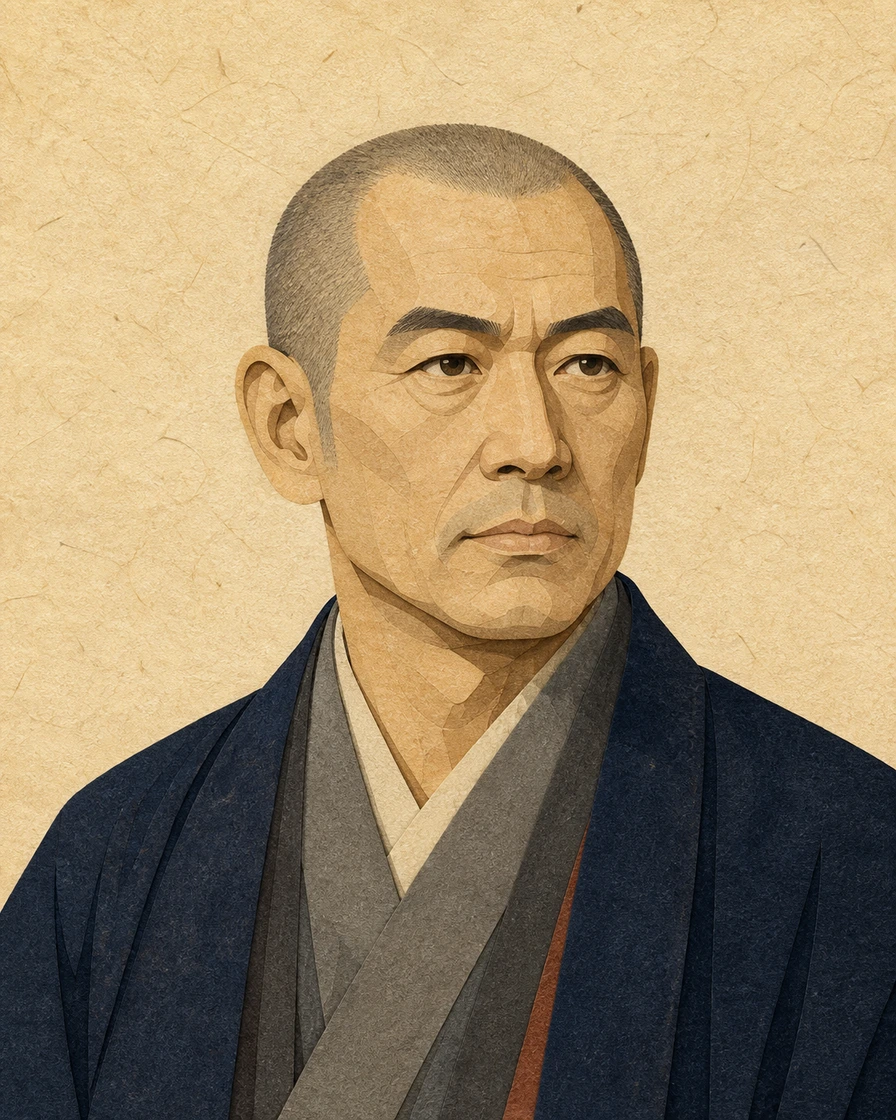
Kitabatake Chikafusa was born in 1293 into a family serving the imperial court in Kyoto. The Kitabatake belonged to the Murakami Genji, descendants of Emperor Murakami. Japan also had a military government at Kamakura in the east. Chikafusa began as a court noble, trained in the ranks and practices of imperial service; his later work in provincial alliances grew out of that starting position. In 1324 Emperor Go-Daigo appointed him dainagon, a senior court counsellor. Chikafusa advanced at the court of Emperor Go-Daigo, who sought to exercise imperial authority more directly. He worked near royal households and the decisions surrounding appointments and succession. Before he became a writer about legitimate government, he had practical experience of how the court prepared a prince’s household and carried out imperial decisions. [1]
Go-Daigo entrusted Chikafusa with the upbringing of his son Prince Yoyoshi. The prince died in 1330, ending an important relationship and its expectations of a future reign. Chikafusa entered Buddhist life, taking the name Sōgen and later Kakukū. His religious status did not permanently end political service: the fall of Kamakura in 1333 would bring him back into Go-Daigo’s government.
After the Kamakura military government fell in 1333, Go-Daigo attempted direct imperial rule in the Kenmu Restoration. Chikafusa’s son Akiie was appointed to Mutsu, a large northeastern province, and traveled there with Prince Noriyoshi, the future Emperor Go-Murakami. Chikafusa accompanied and supported the project. A prince and a court-recognized governor gave the new northern administration an imperial connection; effective control still depended on local warriors. Akiie led northern forces west to fight Ashikaga Takauji; Chikafusa supported the political project, without personally performing his son’s campaigns. In 1336 Ashikaga Takauji’s forces regained Kyoto and supported a rival emperor there. Go-Daigo withdrew to Yoshino, south of Kyoto, maintaining his own claim. These became the Northern and Southern Courts. Chikafusa helped sustain the Southern government through appointments and alliances among scattered regional supporters. Losing the capital did not end the court, but it made protecting and rewarding those supporters harder.
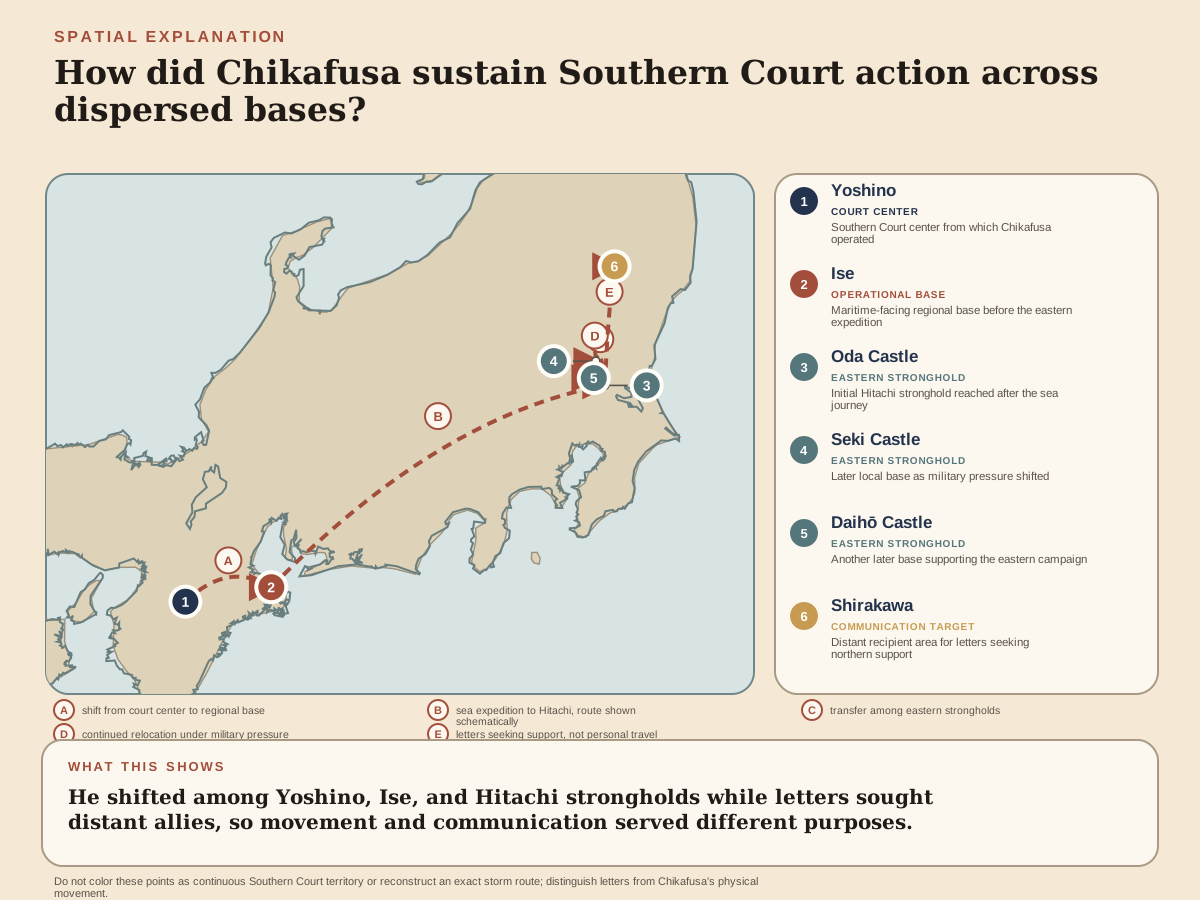
Akiie died fighting Ashikaga forces in the Osaka region in 1338. Accounts identify the precise battlefield differently, including Abeno and Ishizu. In 1338 Chikafusa joined a sea mission from Ise, a coastal province on Honshu, to recover imperial support in eastern Japan after Akiie’s death. A storm dispersed the expedition. Noriyoshi’s vessel was driven back toward Ise, while Chikafusa reached Hitachi, in present-day Ibaraki Prefecture. He had arrived in the east without the prince whose presence was meant to strengthen the mission. Local allies would now determine where he could work.
The local warrior Oda Haruhisa received Chikafusa at Oda Castle in Hitachi. From there he sought Southern support through letters, including appeals to Yūki Chikatomo of Shirakawa. Ashikaga pressure under Kō no Morofuyu threatened nearby positions, while Chikafusa’s letters also report disaffection among his allies. His history of imperial succession took shape inside this struggle for a secure base.
At Oda Castle in 1339, Chikafusa wrote the Jinnō Shōtōki, a history defending rightful imperial succession; he revised it in 1343. Its intended novice reader is disputed. Kokugakuin University’s library commentary favors the young Emperor Go-Murakami. Another interpretation, discussed in the World Encyclopedia, sees eastern warriors such as Yūki Chikatomo as its audience. These readings emphasize educating a sovereign or winning military allegiance. Both place the book within the Southern Court’s wartime effort.
Chikafusa defended the Southern imperial line but also judged the conduct of rulers. He praises retired Emperor Tsuchimikado’s character and his warning against the 1221 Jōkyū conflict with Kamakura. The book also discusses regalia, the sacred imperial objects associated with succession. Dynastic legitimacy was tied to duties of rule, not presented as a guarantee that every ruler behaved well.
In 1341 Oda Haruhisa moved toward the Ashikaga side, forcing Chikafusa from Oda Castle to Seki Castle. Appeals for assistance continued, but Southern positions became isolated. Seki and Daibō fell in 1343, ending his effort to maintain a durable eastern base. An imperial claim and persuasive letters could not replace reinforcements that failed to arrive.
After the eastern defeat, Chikafusa returned west to serve the Southern Court under Go-Murakami. Around 1350–1352, conflict between Ashikaga Takauji and his brother Tadayoshi offered a new opening. Takauji temporarily recognized the Southern Court in the Shōhei Reunification, suspending its northern rival. The arrangement soon broke down. Recognition gained through an opponent’s division had not produced a durable settlement. Chikafusa received jugō, a distinction of elevated court status, around this settlement; reference accounts differ between 1351 and approximately 1352.
Chikafusa died in 1354 without seeing the Southern Court establish lasting authority. His eastern base had been lost and the temporary reunification had failed. The courts’ eventual reunification in 1392 came decades after his death. His surviving history and letters preserve the efforts of a court organizer whose political claims exceeded the military support he could secure.
The Jinnō Shōtōki outlived the Southern campaign. Later scholars and advocates of imperial authority used its dynastic arguments for purposes far removed from Chikafusa’s defended castle in Hitachi. The work’s endurance was a different kind of success from the provincial mission. Its original setting shows history being written as political action, alongside letters, appointments and appeals for military support. In 1882 students at the Kōten Kōkyūsho, a school of Japanese classical learning, read it together; its use in modern teaching differed from its original wartime purpose.
Classic
Kitabatake Chikafusa was born in 1293 into an aristocratic family serving the imperial court in Kyoto. The Kitabatake belonged to the Murakami Genji, a lineage tracing its descent to Emperor Murakami. Such ancestry gave the family a recognized place among court nobles, though ancestry alone did not determine which offices an individual would hold. [1]
Japan also had a military government at Kamakura in the east. Court nobles and provincial warriors exercised different kinds of authority within this divided political order. Chikafusa’s early training belonged to the court: rank, precedent, and the work of royal households shaped the world in which he first advanced.
In 1324 Chikafusa became dainagon, a senior counsellor in the court government, under Emperor Go-Daigo. This was a substantial appointment within the aristocratic administration, before the civil war made him a provincial organizer. [1]
A court appointment involved relationships as well as a title. Households needed attendants, property, and people able to carry out decisions in the emperor’s name. A noble trusted with service to a prince could become responsible for the arrangements supporting a possible future reign.
Chikafusa’s later writings emerged from this practical background. The question of legitimate rule was not an abstract subject he discovered after leaving politics. He had seen how imperial authority worked through particular people, offices, and family expectations. When the court lost secure control of the capital, those same arrangements had to be recreated elsewhere.
Go-Daigo entrusted Chikafusa with the upbringing of Prince Yoyoshi, one of his sons. The prince’s household placed the noble within a prospective line of succession. Service to a young royal heir meant helping sustain the people and arrangements gathered around his future. [1]
The prince died in 1330. Chikafusa then entered Buddhist religious life, taking the name Sōgen and later Kakukū. This was a substantial change in status, though it did not permanently end his political activity.
The loss also disrupted the expectations attached to the prince. A household organized around a potential future ruler could not simply continue unchanged after his death. Chikafusa’s relationship to succession had therefore included both preparation and sudden failure before he wrote his major history of the imperial line.
Soon afterward, Go-Daigo’s struggle with Kamakura brought a wider crisis. The eventual fall of the military government in 1333 opened the way to the Kenmu Restoration, the emperor’s attempt to reorganize government around the court. Chikafusa returned to active service in that new setting. His son Akiie’s appointment in the north gave the family a role that extended well beyond the capital.
After the Kamakura government fell in 1333, Go-Daigo attempted to restore direct imperial government. This short-lived political settlement is known as the Kenmu Restoration. It required the court to establish authority in regions where warriors had long dealt with the military government in the east.
Chikafusa’s son Kitabatake Akiie was appointed to Mutsu, a large province in northeastern Japan. He traveled north with the young Prince Noriyoshi, another son of Go-Daigo who would later reign as Emperor Go-Murakami. Chikafusa accompanied and supported the project. [1]
The presence of a prince gave the northern administration a direct connection to the imperial household. Akiie’s appointment supplied a court-recognized official through whom regional warriors could be organized. Its success still depended on local cooperation and the ability to defend the authority being asserted.
When Ashikaga Takauji broke with Go-Daigo, the northern base became a source of military support for the emperor. Akiie led forces west toward Kyoto and fought the Ashikaga. The army’s movement connected the provincial assignment of 1333 to the struggle over who would govern at the center. [3]
Chikafusa had helped sustain the northern political project. Akiie commanded its campaigns. Their roles were connected, but a family’s shared allegiance did not mean that the father personally carried out his son’s military actions.
Takauji returned to the struggle after retreating west, and his forces regained Kyoto in 1336. Go-Daigo eventually withdrew to Yoshino, south of the capital. Chikafusa’s work now faced a different task. He had to help sustain a court that claimed imperial authority while a rival emperor and the Ashikaga military leadership occupied Kyoto. [1]
Chikafusa helped sustain the Southern government. Its territory was not a continuous block surrounding Yoshino. Supporters held positions in different regions, where princes, nobles, and commanders acted in the court’s name. Appointments and confirmations of rights connected these participants to the sovereign they recognized.
This arrangement allowed the Southern Court to continue despite losing the capital. It also made protection and reward difficult. A document could recognize a warrior’s claim, but the court had to find military support if that claim was challenged. Routes linking the scattered positions became essential to effective government.
Akiie was killed fighting Ashikaga forces in the Osaka region in 1338. Chikafusa lost a son, and the Southern Court lost a commander capable of bringing northern forces into the struggle. The defeat weakened a political and military project on which the Kitabatake household had invested heavily. [3]
Historical disagreement · Where did Kitabatake Akiie die?
The precise battlefield has been interpreted differently. Osaka’s municipal library contrasts the Taiheiki chronicle’s Abeno account with historian Hoshino Hisashi’s 1903 argument for Ishizu in Izumi Province.
The regional setting and opposing army are clearer here than a uniquely established modern location.
Ise offered the Southern Court supporters and a coastal route toward eastern Japan. Chikafusa had used Tamaru Castle as a base there. In 1338, he joined a mission intended to carry royal leadership eastward and recover support after the loss of Akiie. [1]
A storm dispersed the expedition. Prince Noriyoshi’s vessel was driven back toward Ise, while Chikafusa reached Hitachi, a province in what is now Ibaraki Prefecture northeast of Tokyo. The separation changed the mission’s political resources. Chikafusa had arrived in the east, but the prince whose presence was meant to strengthen the project had not arrived with him.
He continued through local bases and eventually established himself at Oda Castle. His activity there depended on the cooperation of eastern warriors rather than on direct control of a regional government.
This was a concrete limitation on the Southern Court’s reach. It could authorize a mission and send important people, yet the journey itself could transform what they were able to do. Chikafusa’s later writing took shape inside the resulting struggle for support, while military pressure and unreliable alliances threatened the base from which he worked.
The local warrior Oda Haruhisa received Chikafusa at Oda Castle in Hitachi. The castle became a base for the Southern cause in the east, supported by warriors whose local positions differed considerably. Chikafusa tried to strengthen their commitment through correspondence and the authority of the court he represented. [4]
Ashikaga forces under commanders including Kō no Morofuyu increased pressure on these positions. Chikafusa repeatedly asked Yūki Chikatomo of Shirakawa for assistance. The requests did not bring the support he sought.
His letters, as presented by the Ibaraki Prefectural Museum of History, also report disaffection among allies and inside the castle itself. These documents show a specific political problem: Chikafusa’s base depended on men who could reconsider their allegiance as nearby Southern positions fell. The threat came from within the alliance as well as from the opposing army.
Amid this insecurity, he composed the work for which he is best known. Its argument about imperial succession was part of his attempt to sustain a contested government. Understanding the castle and its vulnerable alliance helps explain why the history places such weight on legitimate authority and the responsibilities of rulers and servants.
At Oda Castle in 1339, Chikafusa wrote the Jinnō Shōtōki, a history and argument about rightful imperial succession. He later revised it, in 1343. The work traced the imperial line and used judgments about earlier rulers to defend the Southern Court’s claim. [2][8]
Historical disagreement · Who was Jinnō Shōtōki written for?
Its stated audience includes a novice reader, whose identity has been debated. Kokugakuin University’s library commentary favors Emperor Go-Murakami: the history would educate a young sovereign while explaining the Southern claim more widely. The World Encyclopedia discusses another interpretation, that it sought eastern warriors’ allegiance, including Yūki Chikatomo’s. The explanations place different weight on instruction at court and persuasion in the provinces.
The recipient remains disputed; these institutional summaries do not establish a single national consensus.
The setting matters. Go-Daigo died in 1339, and Noriyoshi succeeded him as Go-Murakami. The cause now needed continuity under a new emperor while its eastern position remained precarious.
Chikafusa’s work supplies direct evidence of how he argued for that continuity. It is not an impartial judgment between the rival courts: he was a participant seeking recognition for one of them. The book’s political purpose is therefore part of what makes it important, rather than a reason to treat all of its statements as neutral facts about the war.
Chikafusa’s argument gave imperial descent a unique authority. The Southern line, in his account, possessed the rightful succession. This position explained why military weakness did not necessarily invalidate its claim and why warriors should continue to recognize a court that had lost Kyoto.
One example is the retired emperor Tsuchimikado, son of Go-Toba. Chikafusa describes him as a rightful heir of upright character who warned against the 1221 Jōkyū conflict with Kamakura, yet suffered its consequences. The book distinguishes his conduct from the failed undertaking associated with his father. This is Chikafusa’s judgment within a partisan history, not a neutral verdict supplied by the present narrator. [6]
That combination gave the book more than a single slogan of loyalty. It connected inherited authority to obligations that a ruler had to fulfill. In its wartime setting, the connection was pressing: rival courts sought support from people who needed protection and credible decisions, not merely assertions of ancestry.
The argument did not solve the military imbalance. It gave the Southern cause a way to explain its legitimacy and to judge the service being offered to it. Chikafusa used historical learning to make an immediate political case. The actions of potential allies would show how far such a case could carry a government without dependable force.
In 1341, Oda Haruhisa moved toward the Ashikaga side, and Chikafusa left Oda Castle for Seki Castle. His principal eastern base had become unsafe. Nearby Southern positions faced the same pressure from Kō no Morofuyu’s forces. [4][5]
Chikafusa continued to appeal for assistance. Seki and Daibō castles sustained resistance, but their position deteriorated as support failed and provisions became scarce. In 1343, the castles fell. Chikafusa’s attempt to establish a durable eastern base ended, and he returned west.
The sequence gives substance to the changing allegiance described in his letters. Losing a host could force a move; losing neighboring positions could isolate the next base. Recognition from Yoshino could not replace reinforcements that did not arrive.
The failure also qualifies the reach of his political writing. A strong argument for legitimacy did not ensure that local warriors would put their households at risk for it. Chikafusa had to persuade and organize within a region where the opposing side could bring military pressure to bear. His surviving letters and the Jinnō Shōtōki arose from this effort, but the text’s endurance should not be confused with success in the eastern campaign.
After returning from Hitachi, Chikafusa again worked near the Southern Court’s leadership. Go-Murakami had succeeded Go-Daigo, and the government had to continue under a new generation. Chikafusa brought experience of court administration and of the difficulties encountered in the east. [1]
The Southern position remained vulnerable. It also gained opportunities when the Ashikaga leadership divided. The Kannō Disturbance, the conflict involving Takauji, his brother Tadayoshi, and their supporters around 1350–1352, disrupted the government that had sustained the Northern Court.
Takauji temporarily recognized the Southern Court in the arrangement known as the Shōhei Reunification. The Northern Court was suspended, opening a prospect that Chikafusa’s long political effort might produce a wider settlement. The arrangement did not last. Military alignments shifted again, and the rival court system resumed.
Chikafusa’s work in this period was recognized with jugō, a distinction of elevated court status rather than a new military command. Atsuta Tadashi’s reference account dates it to the temporary settlement of 1351; Kasamatsu Hiroshi’s World Encyclopedia account places it approximately around the 1352 recovery of Kyoto. The dating of this honor is less precise than the wider sequence of reunification and renewed fighting.
This late episode differs from the failure at Oda and Seki castles. Here the opening came from conflict inside the opposing government rather than from a secure new Southern territorial base. Chikafusa’s court could negotiate and claim recognition, yet it still lacked the means to make the resulting settlement durable. That limitation remained unresolved at the end of his life.
Chikafusa died in 1354 without seeing the Southern Court establish lasting authority over the country. The eastern campaign had failed, and the temporary reunification produced during the Ashikaga split had broken down. The war between the courts continued. [1]
His death ended his own work as adviser and organizer. It did not end the Kitabatake family’s regional activity or the circulation of his writing. Different parts of that inheritance followed different paths: descendants sustained provincial positions, while readers copied a history written to defend the court he had served.
The eventual reunification of the rival courts in 1392 took place decades later, in circumstances Chikafusa could not direct.
His career nevertheless helps explain how the Southern Court survived repeated setbacks. He used court appointments and personal relationships to seek support outside Yoshino, reorganized after the loss of a son and an eastern base, and supplied a sustained argument for the cause. The same record shows the limits of that effort. A court could continue to claim rightful succession while lacking sufficient military support to make the claim prevail.
The Jinnō Shōtōki survived the political emergency in which Chikafusa wrote it. Manuscripts transmitted its account of imperial succession to readers who did not share the circumstances of a defended castle in fourteenth-century Hitachi. The history became part of later debates about the imperial line and rightful government.
A specific later setting was the Kōten Kōkyūsho, an institution for Japanese classical learning opened in 1882. Saitō Kōta’s 2017 study records collective reading of the Jinnō Shōtōki in its first courses, followed by its use in history instruction. A text composed during the Southern Court’s struggle had become material for modern teaching. That use belongs to its reception, not to a political program directed by its medieval author. [7]
His original setting remains visible in the book’s combination of dynastic argument and judgments about conduct. He was trying to sustain a court whose claim to legitimacy exceeded its capacity to protect and reward supporters. Historical writing offered an explanation of why its cause should continue.
That joining of learning and political action is his most distinctive historical contribution. It can be understood alongside the provincial campaign, the letters seeking aid, and his service to royal households. The text’s later influence was substantial, but the life behind it was a succession of practical efforts to make a displaced government work.