Read the article below. Interactive reading tools are available when scripts load.
Quick
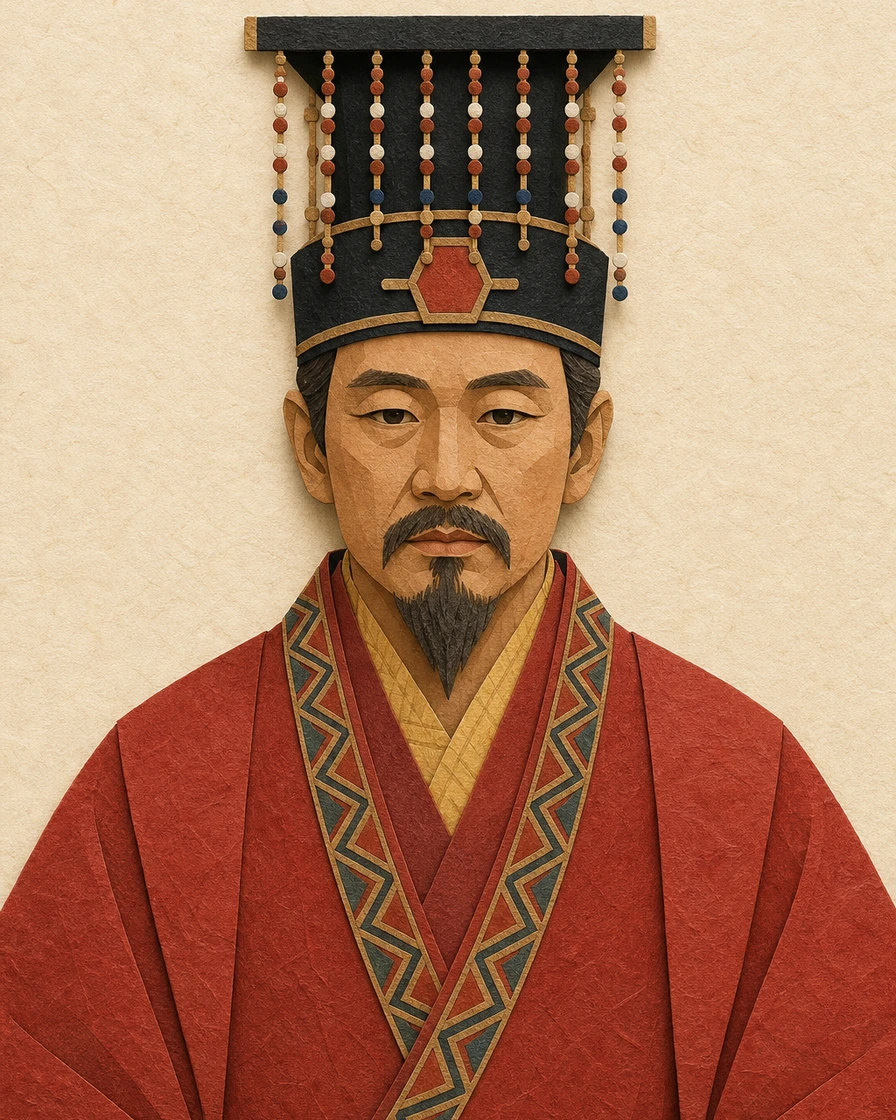
Shō Nei was born in 1564 into a branch of Ryūkyū's Second Shō royal house. Ryūkyū was an island kingdom centered on Okinawa, between Japan and China, governed from Shuri. Royal kinship placed him among possible successors. Naha, its port, connected the court to overseas exchange. It was not a Japanese domain, and its king was not a daimyō, a Japanese territorial warrior lord. Shuri also imposed tribute on outlying islands, whose residents did not share the king's privileges. [1][5]
After King Shō Ei died without a son, Shō Nei succeeded through descent and marriage to the king's daughter. Urasoe's chronology dates accession to 1589; historian Gregory Smits's 2010 article gives 1587. These differing dates both place domestic rule years before Ming China's formal recognition in 1606. Offices at Shuri and the highest royal priestess sustained authority within the kingdom.
Naha remained the port through which Ryūkyū conducted trade and diplomacy as its earlier intermediary advantages changed. European networks and shifting Asian commerce narrowed some routes. Kumemura, a community associated with Chinese learning, supplied interpreters and scribes for missions. Sailors and local producers made exchange possible at considerable cost and risk; activity abroad did not bring equal benefit to every island household. Shō Nei also improved the route between Shuri and Urasoe in 1597, replacing a wooden bridge with stone and paving the road, as a commemorative inscription records.
Toyotomi Hideyoshi, Japan's unifying ruler, demanded support for his invasions of Korea beginning in 1592 and 1597. He acted through the Shimazu family in Satsuma, its domain in southern Kyūshū. Shō Nei's court delayed, negotiated and partly supplied demands while informing Ming authorities. Assistance threatened a relationship with China, whose forces supported Korea; refusal risked military action from nearby Satsuma. Collecting supplies passed the burden to communities within Ryūkyū, while Koreans suffered the war's principal violence.
Hideyoshi's death in 1598 and Tokugawa Ieyasu's victory in 1600 changed Japan's rulers without removing Shimazu pressure. A shipwrecked Ryūkyūan vessel's return brought demands for a gratitude mission; accepting the expected ceremony could acknowledge subordination. In 1606 Ming envoys invested Shō Nei as King of Chūzan, the title used for Ryūkyū's ruler. This supported Chinese relations without making the kingdom a Chinese province. Meanwhile Satsuma sought conquest with permission from the bakufu, Japan's warrior government headed by the shogun, Japan's military ruler.
In 1609 Satsuma invaded through the Amami islands and then Okinawa. Shō Nei sought a ceasefire after the invaders reached Nakijin Castle. His forces repelled the fleet at Naha harbor, but an overland advance through Urasoe reached Shuri. He surrendered and entered custody with leading officials. The invaders seized property but retained a court useful for local government and relations with Ming China. Kian, a servant who accompanied the captive king, later wrote an account. Its earliest surviving copy is from 1820; borrowing from Japanese war tales and scenes beyond his direct experience make it a retrospective narrative, not an immediate diary of every event.
Satsuma took Shō Nei and a Ryūkyūan party from the kingdom. In 1610 he appeared before retired shogun Ieyasu at Sunpu, now Shizuoka, and reigning shogun Hidetada at Edo, today's Tokyo. The audiences displayed Shimazu victory within Japan's warrior-government order. He remained a captive rather than a voluntary visitor and returned only in 1611 under the imposed settlement. His brother Shō Kō, who served as regent, died after falling ill at Sunpu in 1610.
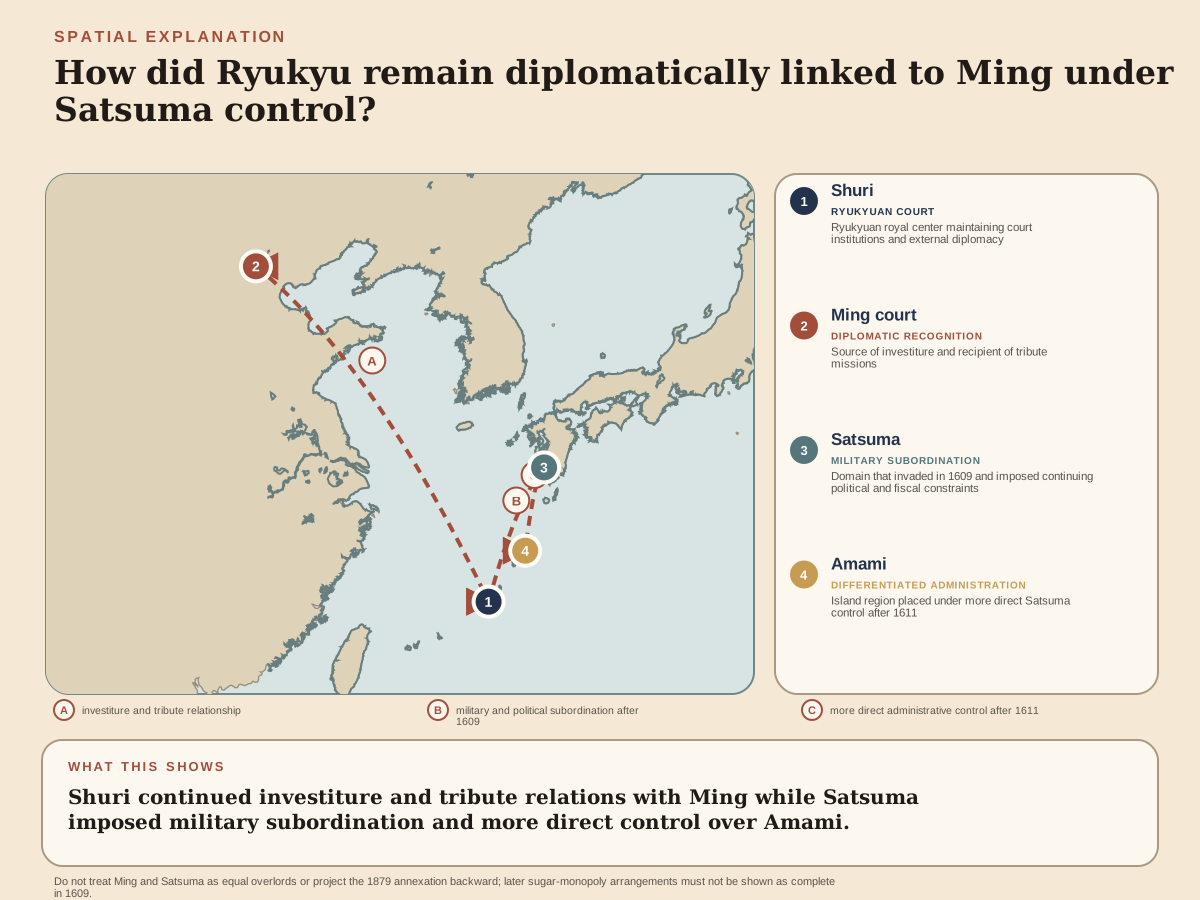
Shō Nei returned in 1611 under an oath of obedience and Satsuma's Fifteen Injunctions, related but separate documents. The rules barred ordering goods from China without Satsuma's direction and admitting unauthorized merchants, according to Okinawa's educational history. The court resumed government but its access to trade now depended on the conqueror's permission. Return preserved the king's office without restoring its prewar freedom.
Shō Nei governed through Ryūkyūan officials who collected resources and maintained local institutions. Satsuma constrained tribute and foreign relations through superior force. Shuri continued Ming-facing diplomacy and trade, which both the court and Satsuma found valuable. Kumemura's Chinese-language specialists helped manage that connection. Ming recognition and Satsuma control were not two identical relationships: one supplied title and access, the other followed conquest. Officials could negotiate particular demands while also passing costs to communities within the kingdom.
After invasion, the Amami islands passed under more direct Satsuma control. Shuri lost territory and resources, while island communities met new authorities and collection demands. Older cultural and commercial connections could continue despite the administrative divide. Severe sugar-centered extraction developed under later policies; its mature form does not belong entirely to Shō Nei's lifetime.
Shō Nei died in 1620 shortly after renovating Urasoe Yōdore, the royal mausoleum where he was buried. The older story connects burial outside the main royal mausoleum, Tamaudun, to shame after defeat. Urasoe's 2018 account instead emphasizes the eligible lineages in Tamaudun's inscription and the Urasoe branch's own tomb. Neither explanation supplies a verified statement of his private feelings. His remaining reign covered the early settlement after conquest, not all the institutions later built upon it.
The earliest surviving copy of Kian's account dates to 1820. British visitors Basil Hall and John M'Leod published peaceful images after visiting Naha in 1816; scholar Basil Hall Chamberlain repeated such claims in 1895. Those accounts had limited access to Ryūkyūan institutions and do not prove the kingdom lacked weapons. Japan's Meiji government designated Ryūkyū a domain in 1872, then abolished it and created Okinawa Prefecture in 1879. This annexation was a later set of state actions, not an unchanged continuation of Satsuma's 1609 settlement.
Classic
Shō Nei was born in 1564 into a branch of the Second Shō royal house of Ryūkyū, the island kingdom centered on Okinawa between Japan and China. His father, Shō I, Prince Yonagusuku Chōken, descended from King Shō Shin. Marriage would later connect Shō Nei to the reigning king's household. His family position made him eligible for succession without making that succession automatic. [1][5]
The royal court governed from Shuri. Ryūkyū was not then a Japanese domain, and its king held authority through institutions different from a Japanese daimyō, or territorial warrior lord. His reign would bring those systems into a coercive new relationship. [5]
Shuri's officials connected royal decisions to local government and revenue. At Naha, the kingdom's port, trade and diplomacy depended on merchants, sailors and interpreters. Kumemura, a community associated with Chinese learning near the port, supplied specialists who prepared diplomatic language and guided missions through Chinese procedures. A royal order to send an embassy still depended on their knowledge and work.
The kingdom reached beyond Okinawa to Amami, Miyako and Yaeyama. These island communities had different local institutions and unequal relationships with Shuri. The court's own authority could impose tribute and obligations even before conquest brought another superior power. [8]
Ryūkyū's autonomy operated through relationships abroad. Its kings sought recognition within the Ming Chinese imperial order and maintained maritime connections with Japan and other Asian ports. Domestic rule had been built through conflict and hierarchy as well as exchange. Shō Nei's royal privilege was therefore one position within the kingdom, not an experience shared equally by every islander.
Shō Ei's death without a son opened the succession through the king's wider family. Shō Nei was connected to that house by descent and marriage to Shō Ei's daughter. Recognition at Shuri made those connections usable as authority. [5]
Urasoe's chronology and Okinawa's cultural-property account date accession to 1589. Historian Gregory Smits's 2010 article gives a reign beginning in 1587. The dates differ; neither should be confused with Ming investiture in 1606, years after domestic rule began. [1][4][8]
Ritual authority also had its own offices. The Kikoe-ōgimi was the highest-ranking royal priestess, whose role helped sustain legitimacy without simply duplicating the king's administration. Kingship depended on cooperation among authorities with different responsibilities.
Orders from Shuri had to cross sea routes and pass through local officeholders. Succession at the capital did not instantly alter every island's government. Outside powers also tested the new reign. Communications from the Shimazu rulers in southern Japan and demands from the unifying Toyotomi regime increased pressure near the transition, while Ming recognition was delayed. Shō Nei entered office as the kingdom's diplomatic options were becoming harder to maintain.
Naha remained essential to Ryūkyū's trade and diplomacy during Shō Nei's reign. The kingdom's fifteenth-century intermediary role had relied on Ming-regulated commerce and connections with Southeast Asian ports. By the late sixteenth century, European networks and changing Asian trade conditions reduced some of those opportunities. Contraction varied across routes rather than arriving on one date.
The port retained knowledge and facilities built through earlier exchange. Missions could continue even when their scale and profitability changed.
Kumemura specialists maintained Chinese literacy and the procedures required for diplomatic missions. Sailors and navigators faced storms, damaged ships and the risk of detention abroad. Cargo reached Naha through production, tribute and purchase, tying royal exchange to households beyond the court. [6]
Tribute and commerce could travel together without being identical. A voyage carried official gifts and permitted trade, while the expense of fitting ships and receiving envoys could burden the treasury. Activity at the port did not guarantee prosperity for everyone supplying it.
Japanese merchants and officials were part of these networks before 1609. Connections with Satsuma, the Shimazu family's domain in southern Kyūshū, included commercial dealings and the return of shipwrecked crews as well as political messages. The invasion would change the power behind those relations rather than create first contact. Shō Nei sought to preserve exchange within conditions neither his court nor the port could control alone.
Local works show another use of royal authority. An inscription commemorated Shō Nei's 1597 improvement of the route between Shuri and Urasoe, including a stone bridge and paving. Movement between the royal centers mattered to government and the transfer of goods. The reign involved such domestic projects alongside the pressure on overseas trade. [1][5]
Japanese unification under Toyotomi Hideyoshi concentrated the pressure on Ryūkyū during the 1590s. Hideyoshi's demands, transmitted through Shimazu intermediaries in Satsuma, linked the kingdom to his invasions of Korea beginning in 1592 and 1597. Supplies requested from Shuri would support a war in which Koreans bore the principal violence. [5]
Compliance threatened Ryūkyū's Ming relationship, since Chinese forces supported Korea. Refusal risked enforcement by nearby Satsuma. Shō Nei's court confronted obligations that pulled in different directions under a severe imbalance of force.
The court delayed and negotiated, partially supplied demands and informed Ming authorities. The familiar description of simple refusal compresses these responses into one decision. Officials had to preserve trust abroad while determining what could actually be delivered under pressure. Supplies or payments promised at Shuri also had to be collected from the kingdom's resources, passing the burden to communities.
Reports to Ming explained Ryūkyū's conduct under Japanese coercion and sought to protect investiture and trade. Satsuma later used alleged disobedience to justify invasion. Earlier court choices supplied arguments for enforcement, but did not make war inevitable. Delay and partial compliance were ways to preserve room for action; their protection was limited by military distance and strength.
Hideyoshi's death in 1598 and Tokugawa Ieyasu's victory at Sekigahara in 1600 changed Japan's rulers without removing Satsuma's interest in Ryūkyū. The Shimazu retained their southern territory and sought to strengthen their control of relations with the island kingdom. Older correspondence and delayed responses could be presented as evidence of disobedience under the new order. [5]
The return of a shipwrecked Ryūkyūan vessel under Tokugawa authority brought demands for a gratitude mission. What one side treated as courtesy could establish a precedent of subordination for the other. Shuri's response therefore concerned the political channel and meaning of a mission as well as gratitude for rescue.
In 1606 Ming envoys invested Shō Nei as King of Chūzan, the established diplomatic title used for Ryūkyū's ruler. Investiture formally recognized him within a hierarchy headed by the Ming emperor. It completed an external layer of legitimacy after years of domestic rule. Recognition supported communication and tribute trade, but did not put Shuri under a Chinese provincial administration. Kumemura's interpreters and scribes prepared documents and ceremony; hosting the envoys required accommodation and supplies. [6][8]
By the end of this prewar decade, Tokugawa authorization made a Satsuma expedition possible within Japan's emerging order. It did not make every operational decision a direct instruction from the shogunate, or bakufu, the warrior government headed by the shogun, Japan's military ruler. Shimazu authorities prepared the force and pursued the invasion. Ryūkyū possessed defenses and armed personnel, but Satsuma could draw on the organization and experience of prolonged warfare in Japan. Concentrating troops across the island chain was harder for the kingdom's dispersed communities. [5]
In 1609 Satsuma forces crossed the Amami islands before reaching Okinawa. Landings brought soldiers into inhabited places where local authorities had to decide whether to resist, negotiate or submit. The expedition took provisions and disrupted movement while pressing toward the royal center. Amami's communities were part of the campaign, rather than an empty route on the way to Shuri. [5][8]
The campaign reached Nakijin Castle in northern Okinawa. Urasoe's account describes Shō Nei sending envoys to seek a ceasefire, which did not secure peace. Ryūkyūan defenders repelled the Satsuma fleet at Naha harbor, but another force landed and advanced overland through Urasoe toward Shuri. The route Shō Nei had improved in 1597 now helped the invaders reach the royal center. Defending the port did not protect every approach to the capital. [5][8]
Satsuma's advance brought Shō Nei and leading court figures into custody. Control of Shuri Castle placed the kingdom's institutional center in the invaders' hands. Seizure of court property added material loss to political defeat. Keeping the captured king alive also gave Satsuma a recognized title through which to impose a new hierarchy. Shuri's officials and its Chinese diplomatic standing gave Satsuma reasons to retain the court rather than replace every local institution. [5][8]
A rare account associated with the conquered side is the Kian Nikki. Kian served Shō Nei and accompanied the captured king; his retrospective account follows events that Satsuma records describe from another position. His association with the court makes the work important without making every passage an immediate diary entry. The University of the Ryukyus identifies the earliest surviving copy of Kian's account as 1820 and notes borrowing from The Tale of the Heike, a Japanese medieval war narrative, and other military literature. Literary construction shaped how defeat was told. Comparisons with the Satsuma campaign diary can support particular events while retaining differences in viewpoint. [3]
Shō Nei was taken to Satsuma with officials and attendants. His continued royal title did not give him control over the journey or permission to return. In 1610 the captive party appeared before Tokugawa Ieyasu at Sunpu and the reigning shogun, Hidetada, at Edo. Sunpu, now Shizuoka, was the retired shogun's seat; Edo was the center of Hidetada's government. [1][3][5]
Tokugawa recognition strengthened Satsuma's claimed authority to the south without requiring immediate direct annexation by the shogunate. Shō Nei's presentation served that political purpose. The court's continued title and foreign connections made a captured ruler useful in ways that replacing him would not.
The party's royal appearance could preserve distinction while displaying subordination. Kian's accompanying account follows the itinerary, although its retrospective construction remains important. These audiences were part of captivity, not ordinary voluntary diplomacy. Later Ryūkyūan missions to Edo would develop more regular ceremonial forms under a hierarchy this journey helped make visible. [5]
The journey also cost the court a senior figure. Shō Nei's brother Shō Kō, Prince Gushichan and his regent, fell ill at Sunpu and died in 1610. His burial at Seiken-ji, a Buddhist temple near Sunpu, left a family loss along the route on which Shimazu displayed its victory. Shō Nei did not regain the freedom to return home until the following year.
Shō Nei returned to Ryūkyū in 1611 under oaths of obedience and regulation imposed by Satsuma. The king's oath and the Fifteen Injunctions were related but distinct documents. Okinawa's educational history summarizes one rule as forbidding orders for goods from China without Satsuma's direction, and another as excluding merchants lacking its permission. Shuri could no longer decide those transactions independently. These provisions constrained a kingdom that still needed overseas exchange. [2][5][7]
Satsuma found government through Shuri more useful than continued royal detention. Ryūkyūan officials sought survival of the court for their own purposes. Their reasons for accepting continuity differed, and the military origin of the agreement limited the king's freedom to refuse.
Satsuma could supervise trade and relations abroad while requiring tribute through Shuri. The king still appointed officials and exercised domestic authority, now within superior external constraints. Court officers negotiated demands and translated them into local orders. Communities met the settlement through obligations collected by authorities they already knew.
Control did not require a Satsuma official in every village. Dependence on approved trade and court compliance extended supervision through existing channels. Shō Nei's government could petition or negotiate implementation, but such action did not make the relationship voluntary. The early settlement would be elaborated under successors rather than arrive in its mature form at once.
Shō Nei again presided over a functioning court. Its officials collected resources, maintained rituals and communicated across the islands. Residents still encountered Ryūkyūan authorities directly, while Satsuma held superior force and imposed tribute and supervision. The loss of Amami's revenue narrowed the resources available to meet these demands. Retaining familiar officials made control possible without stationing a conqueror's agent in every village. [5][8]
After conquest, Shuri continued to present itself to Ming as an established invested kingdom. Satsuma benefited from preserving a relationship that Japan could not simply inherit by annexation. Ryūkyūan officials also needed recognition and trade, now while communicating under constraints from the invaders. [8]
Reports selected language suited to their audience and sought to protect the diplomatic connection. What Chinese officials knew about the invasion or subsequent control cannot be inferred from silence alone. Satsuma's preference for keeping its control out of Chinese-facing presentation developed through later rules. Kumemura specialists maintained the diplomatic language and procedures on which that separation relied. Their expertise supplied Shuri with room to negotiate while also making them useful to the system of supervision.
The two external relationships had different contents. Ming investiture supplied a title and access within an imperial hierarchy; Satsuma's supervision followed military conquest. Ryūkyūan officials could negotiate implementation, but could also pass the costs of maintaining the court to communities with less power. Shō Nei's remaining years covered the beginning of this system, which later rulers would change under new conditions in China and Japan. [5][6][8]
The invasion brought the Amami islands under more direct Shimazu control, reducing the territory governed from Shuri. Local officials and collection procedures made that change effective over time. Amami's earlier relationship with Ryūkyū had itself been hierarchical; conquest replaced the superior authority rather than ending obligations. [5]
Loss of island resources weakened Shuri's ability to meet new demands. Families and merchants could still maintain routes across the changed administrative divide, so political separation did not remove every cultural and commercial connection.
Sugar would become central to severe extraction under later Satsuma monopoly arrangements. That mature system should not be placed fully in Shō Nei's lifetime. Earlier tribute and local subsistence already gave administrative control material importance. Amami communities responded within unequal conditions through local negotiation and efforts to preserve livelihoods.
The settlement changed who could collect resources and judge local affairs. For Amami residents, those powers mattered beyond the royal court's loss of territory. Their subsequent history followed a different administrative path from Okinawa, while older language, kinship and exchange could continue across the divide.
Urasoe's chronology describes Shō Nei renovating Urasoe Castle and retiring there in 1617. Okinawa's cultural-property account nevertheless gives his reign through 1620. A change in residence and active duties should not be confused with proof of a different formal accession date for his successor.
Shō Nei died in 1620 after ordering renovation at Urasoe Yōdore, a royal mausoleum associated with the earlier King Eiso. Urasoe's account places his death the following month and burial there. The work connected his own branch family to the site through the movement of relatives' remains. [1][4][5]
Two explanations of his burial recur. An older story attributes his absence from Tamaudun, the main royal mausoleum, to shame after defeat. Urasoe's 2018 historical account instead points to lineage: it says Tamaudun's inscription omitted the ancestral line from which Shō Nei's Urasoe branch descended. This is a named interpretation of eligibility, not evidence of what he privately felt. Urasoe's account describes his 1620 renovation as moving relatives' remains and assigning future care of the tomb to the Urasoe district. [5]
The accession of Shō Hō, whose reign the University of the Ryukyus dates from 1621, continued court government under Satsuma constraints. The Ming–Qing transition and more regular missions to Edo lay ahead, as did later intensification of extraction. Shō Nei had lived through prewar kingship and the first settlement after conquest. His decisions did not encompass every institution that developed during the kingdom's subsequent centuries.
Memory began in unequal archives. Victors produced campaign records and kept documents and objects; Shuri officials preserved different records under a new hierarchy. Survival of a source is not evidence that its viewpoint was socially complete. The Kian Nikki’s combination of retrospective record and literary borrowing makes it valuable for studying both events and how defeat became tellable.
A peaceful image also spread through visitors' accounts. British naval captain Basil Hall and ship's physician John M'Leod visited Naha in 1816 and published admiring descriptions of a society apparently without weapons or crime. Their restricted movements and short stay limited what they could observe. In an 1895 article, scholar Basil Hall Chamberlain developed that image as an example of rule through Confucian virtue. Those claims describe the visitors' interpretation, not the absence of armed forces in Ryūkyū's history.
Amami's more direct incorporation under Satsuma followed a different administrative path from Okinawa. Royal loss of autonomy and reordered island obligations did not produce one uniform memory. In 1759 the remains of Shō Nei's queen, Aoriyae, were moved from her family's tomb to Urasoe Yōdore, adding another act of royal commemoration at the site.
The Meiji state designated Ryūkyū a Japanese domain in 1872, then abolished it and established Okinawa Prefecture in 1879. These were later state actions, different from Satsuma's indirect rule after 1609. By 1912 the setting in which the captive king was remembered had changed. His monarchy's survival after conquest remained part of the history, alongside the unequal obligations imposed through it. [1][5]