

Asuka period
Hyeja (Eji)
慧慈
Overview
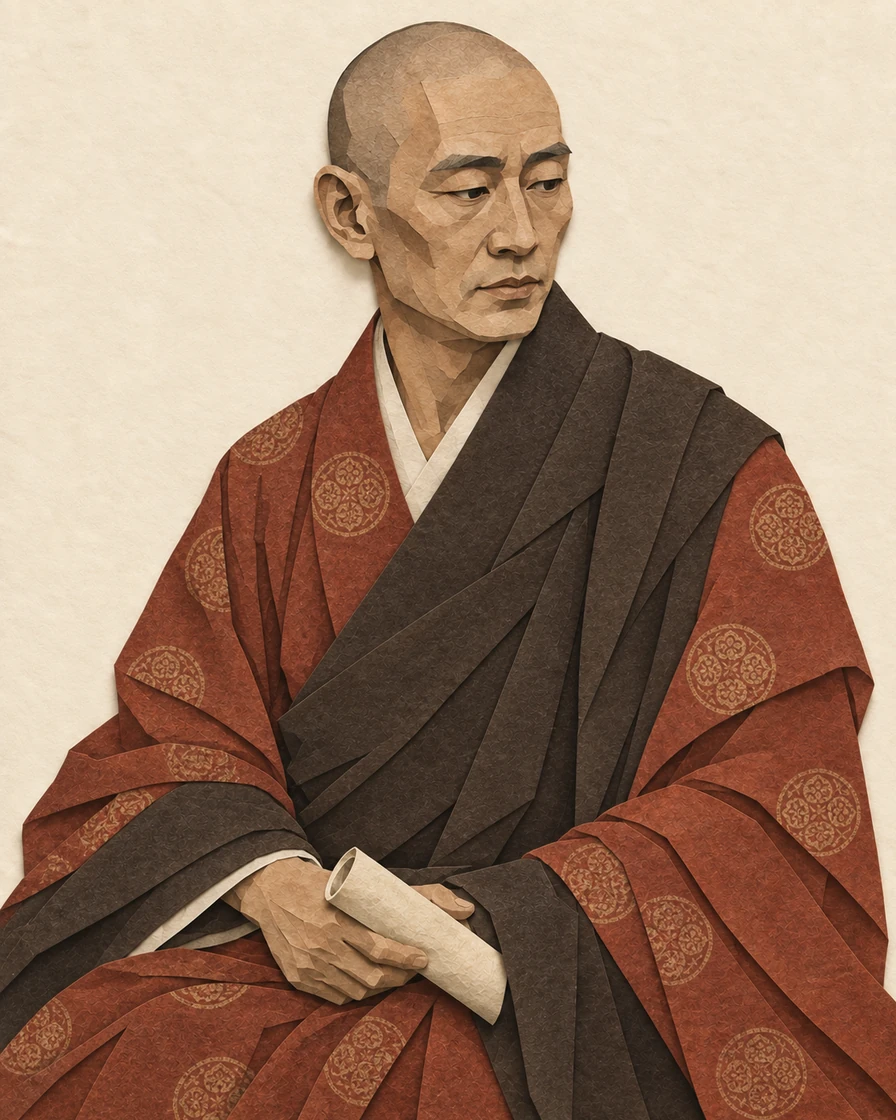
Hyeja, known in Japan as Eji, was a Buddhist monk from Goguryeo, a kingdom in northern Korea and adjacent regions. The Nihon shoki, a Japanese royal chronicle completed in 720, records his arrival in Japan in 595. Prince Umayado, later known as Shōtoku, took him as a teacher. The chronicle distinguishes Hyeja's Buddhist instruction from the prince's study of other classical learning with a different teacher. [S01]
In the same year, the monk Hyechong arrived from Baekje, another Korean kingdom. The chronicle presents the two as active promoters of Buddhism. In 596, both took up residence at Hōkōji, the new temple at Asuka. Their work belonged to a community sustained by royal and ministerial patronage, alongside the priests, builders and other specialists who travelled between the peninsula and the Yamato court. Hyeja's teaching was one part of this exchange. [S01, S02]
Hyeja returned to Goguryeo in 615. A later passage describes him conducting a memorial meal and explaining scriptures after hearing of Umayado's death. It then has him predict his own death so that he can join the prince in the Pure Land, a Buddhist realm of rebirth. This conclusion expresses the chronicle's religious portrayal of teacher and pupil; it cannot independently establish their private thoughts or a miraculously fulfilled prediction. [S01]
Sources and notes ViewHide
- [1]
日本書紀 Book XXII / William George Aston, trans., Nihongi: Chronicles of Japan from the Earliest Times to A.D. 697. London: Kegan Paul, Trench, Trübner & Co., 1896.Nihon shoki compilers; translation William George Aston
- [2]
日本書紀 Book XXI / William George Aston, trans., Nihongi: Chronicles of Japan from the Earliest Times to A.D. 697. London: Kegan Paul, Trench, Trübner & Co., 1896.Nihon shoki compilers; translation William George Aston
both took up residence at Hōkōji, the new temple at Asuka
Hyeja returned to Goguryeo in 615
The Nihon shoki, a Japanese royal chronicle completed in 720, records his
Connections
Places
Events
No linked events yet.
Relationships
Topics
No related topics yet.