

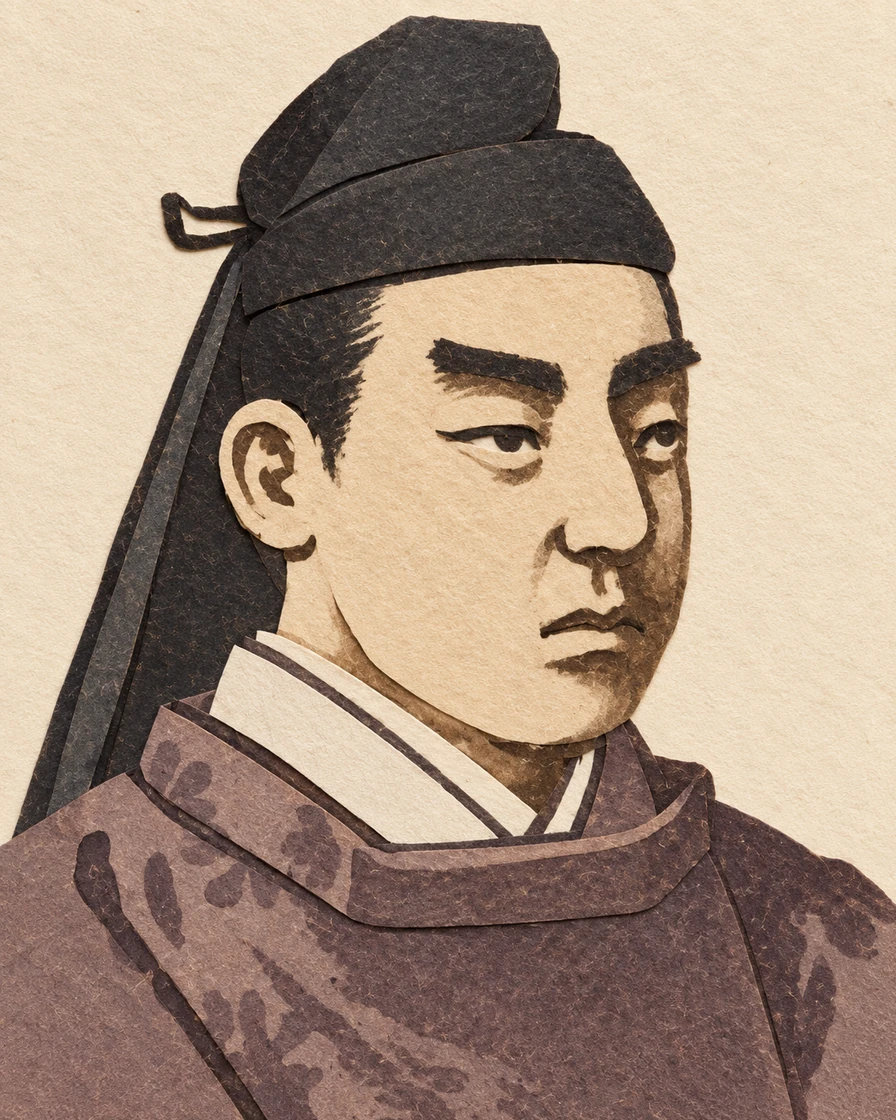
Nara period
Emperor Junnin
淳仁天皇
Overview
Born in 733, Prince Ōi was a son of Prince Toneri and Taima no Yamashiro, and a grandson of Emperor Tenmu. Before his accession, he lived at Fujiwara no Nakamaro's Tamura residence and married Awata no Moroane, the widow of Nakamaro's son Mayori. This household connection helped bring him into the succession. After Prince Funado was removed in 757, Ōi became crown prince; Empress Kōken abdicated to him in 758. [S01]
His reign gave Nakamaro extensive authority under the name Emi no Oshikatsu. Their government gave court offices Chinese-style names, extended provincial governors' terms from four years to six, and introduced new coinages alongside the older Wadō coins. In 762, Kōken took control of major state affairs and rewards and punishments, leaving Junnin routine rites and lesser business. His imperial title continued, but his governing responsibilities had narrowed. [S01]
Nakamaro's armed challenge failed in 764. Junnin was deposed in the tenth lunar month and confined on Awaji. The following year, he attempted to escape, was recaptured, and died the next day. He remained known as the deposed emperor of Awaji. In 1870, he was included in the recognized imperial succession. Three years later, his spirit was brought from Awaji and installed at Kyoto's Shiramine shrine. [S01, S02]
Sources and notes ViewHide
- [1]
淳仁天皇 / Named credited dictionary entries福井俊彦 (Fukui Toshihiko), Shogakukan; 栄原永遠男 (Sakaehara Towao), Heibonsha; Britannica; Kodansha; Yamakawa
- [2]
白峯神宮 由緒Shiramine Jingū
Born in 733, Prince Ōi was a son of Prince Toneri and
After Prince Funado was removed in 757, Ōi became crown prince; Empress
Kōken took control of major state affairs and rewards and punishments, leaving
Nakamaro's armed challenge failed in 764
Connections
Places
Events
Kōken Abdicates and Junnin Accedes
孝謙天皇の譲位と淳仁天皇
In 758, Empress Kōken abdicated to Prince Ōi, who became Emperor Junnin with Fujiwara no Nakamaro's support, while Kōken remained an active retired sovereign.
The Division between Retired Empress Kōken and Junnin's Government
孝謙太上天皇と淳仁天皇の対立
In 762, the retired Empress Kōken declared that she would control major affairs and rewards and punishments, while the reigning Emperor Junnin would handle routine business.
The Fujiwara no Nakamaro Rebellion
藤原仲麻呂の乱
In 764, Fujiwara no Nakamaro attempted to mobilize troops against the retired Empress Kōken, but her forces blocked his routes north and killed him; Emperor Junnin was deposed afterward.
The Deposition of Junnin and Shōtoku's Restoration
淳仁天皇の廃位と称徳天皇の重祚
After Fujiwara no Nakamaro's defeat in 764, Emperor Junnin was deposed and sent to Awaji, while the retired Empress Kōken returned to the throne as Empress Shōtoku.
Relationships
 Succession Throne Transfer · Divided Sovereign AuthorityEmpress Kōken / Shōtoku孝謙天皇/称徳天皇Kōken abdicated in 758 and Prince Ōi acceded as Emperor Junnin. Kōken and Junnin asserted or occupied divided centers of authority from 762 until the 764 settlement.Evidence grade A / B
 Household Residence · Regime Political SupportFujiwara no Nakamaro藤原仲麻呂Prince Ōi lived within Nakamaro's household network before his accession as Emperor Junnin. Nakamaro supported the court order of Junnin's reign until their regime was defeated in 764.Evidence grade B
Topics
Heijō Palace: Governing One Transaction at a Time
Fish labels, food orders, and discarded personnel records reveal how an eighth-century court turned authority into everyday instructions.
Read