Overview
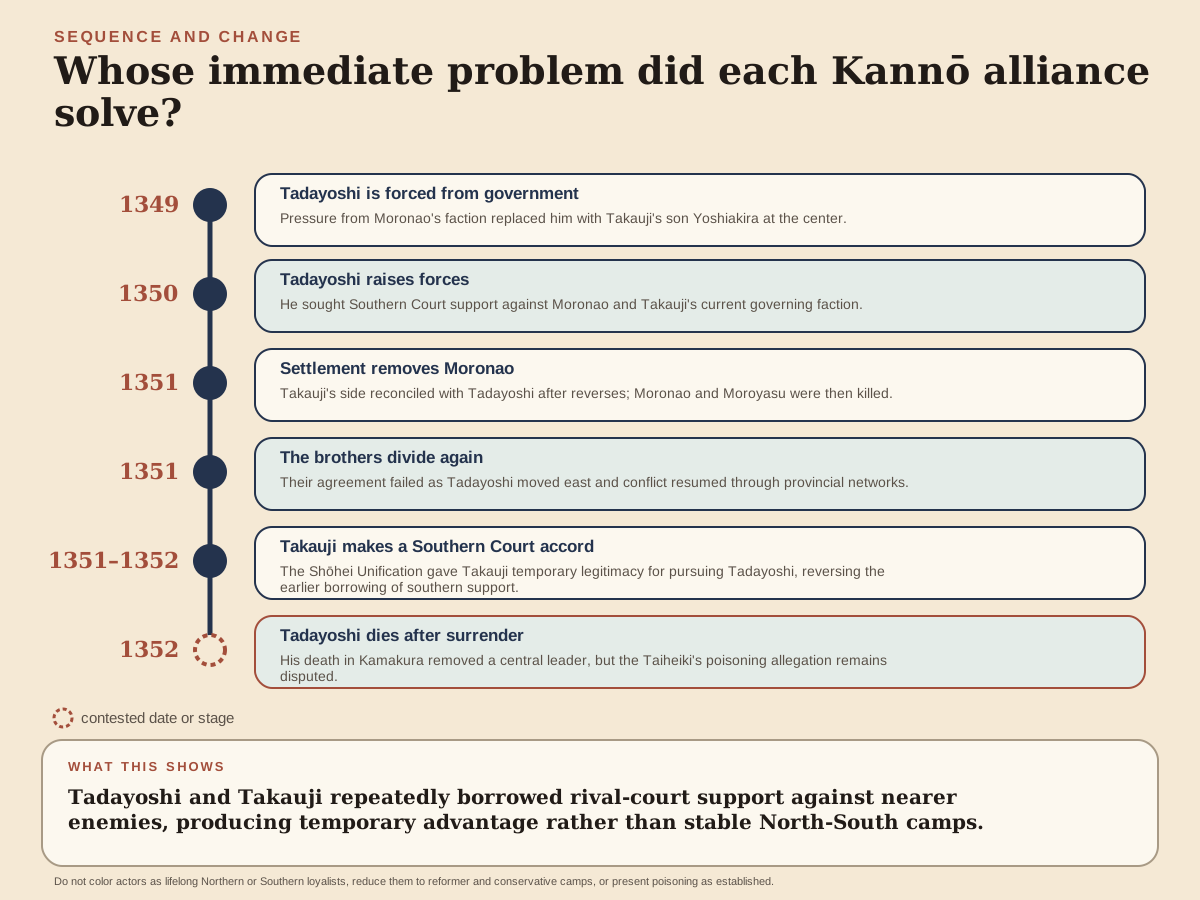
The Kannō Disturbance grew from conflict within the government of Ashikaga Takauji. His brother Tadayoshi administered judgments and confirmations of rights, while the shogunal deputy Kō no Moronao directed military followers. Their responsibilities overlapped over rewards, service and possession during the wider civil war. A simple division into reformers and conservatives cannot account for every participant’s alignment.
In 1349, pressure from Moronao’s faction forced Tadayoshi out of central government. Takauji’s son Yoshiakira took his place. Tadayoshi entered religious life, then raised forces in 1350 and sought Southern Court support. Provincial governors and local warriors joined different camps; Tadayoshi’s adopted son Tadafuyu maintained another important network in western Japan.
After reverses, Takauji’s side reached a settlement in 1351. Moronao and his brother Moroyasu were killed, but the brothers’ reconciliation did not hold. Tadayoshi moved through Tsuruga and continued the struggle before going east. Takauji obtained a temporary accord with the Southern Court, the Shōhei Unification, and pursued him. Tadayoshi surrendered and died in Kamakura in 1352. The Taiheiki’s poisoning allegation remains disputed.
Local conflicts attached themselves to the central division. In 1351, a coalition supporting Tadayoshi expelled a governor’s deputy in Wakasa and intruded into Tara estate. Propertyholders and cultivators faced armed intervention while authority changed hands. Tadayoshi’s death removed a central leader but did not immediately stop his followers’ wars or reunite the imperial courts.