Elite widows could enter religious life while retaining ties to property, memory and political households. Kakusan-ni's position after Tokimune's death placed her at the intersection of Hōjō family commemoration and the growth of Zen institutions in Kamakura.
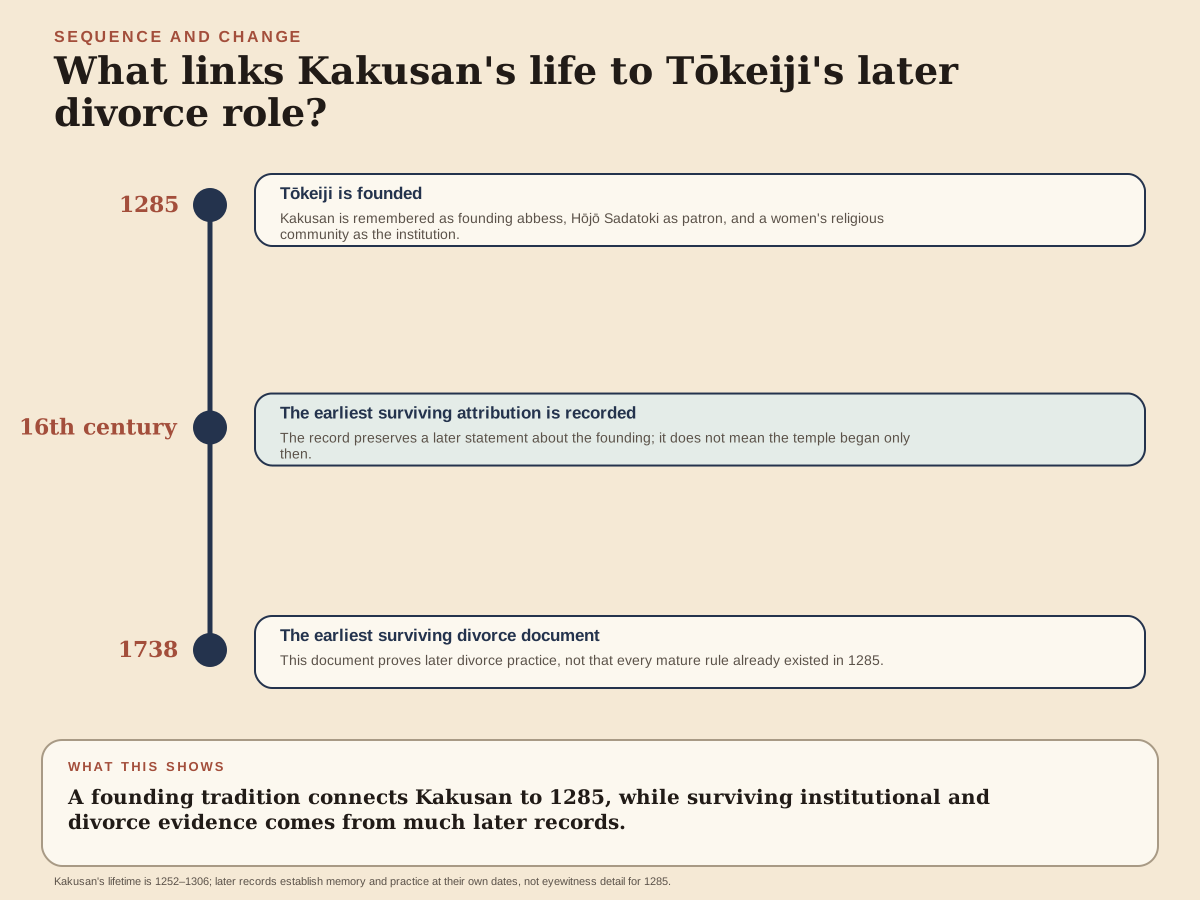
Kakusan-ni was the widow of Hōjō Tokimune and the mother of Hōjō Sadatoki. After Tokimune's death she became a nun. Tōkeiji's own history names her as founding abbess and Sadatoki as patron when the temple was opened in 1285.
The woman later known as Kakusan-ni was born in 1252 into the Adachi family. Her father, Yoshikage, belonged to a household established within the Kamakura warrior regime, while her mother was a daughter of Hōjō Tokifusa. Her elder brother Yasumori became Adachi household head in 1253 and later served in the governing council and judicial administration. Kakusan was also recognized as his adopted daughter. This relationship explains why accounts can describe her connection to Yasumori as that of either sister or daughter, although Yoshikage is identified as her biological father.
In 1261 she married Tokimune, son of Hōjō Tokiyori and heir to the main family line directing Kamakura government. She was known as Horiuchi-dono before her Buddhist name became prominent in accounts of Tōkei-ji. The marriage gave Yasumori a close connection to the next generation of Hōjō leadership. The Adachi supplied experienced officials and followers, while the Hōjō main line controlled the regency and important family resources. The union operated within this unequal but mutually consequential relationship between warrior households.
Tokimune entered the regency in 1268 as envoys of the Mongol ruler pressed Japan for submission and relations. The regent, or shikken, directed decisions beneath the shogun, whose formal title remained separate from the Hōjō family’s leadership. Kakusan bore Sadatoki in 1271, providing an heir to the couple’s household. The boy’s maternal connection also linked him with Yasumori’s political network. The surviving biographical outline places Kakusan through marriage, maternity and subsequent religious affiliation; it supplies little detail about her childhood or domestic decision-making. As military danger and Zen patronage grew around the household, those family relationships remained part of the setting in which she would take religious vows.
The opening of Tōkeiji required patronage, land and a recognized community. Temple tradition distinguishes Kakusan-ni as founder from Sadatoki as patron. That division matters: the institution was not simply a male regent's memorial project with a woman attached to it.
The foundation created an institutional home for a community of women within Kamakura's Zen landscape. Its support came from the ruling Hōjō network, while its leadership belonged to a nun whose authority linked household, memorial and religious roles.
Tōkeiji later became famous as an enkiri or divorce temple, where women could seek release from marriage under practices developed over time. The evidence does not justify treating that later legal function as a fully formed rule written into the foundation of 1285.
The invasions of 1274 and 1281 confronted Tokimune’s government with the mobilization of coastal defenses and warrior service. Officials including Yasumori participated in the governing network around him. Chinese Zen teachers also entered this circle of patronage. Tokimune invited Mugaku Sogen from China in 1279 and established Engaku-ji with him as opening teacher in 1282. The monk’s Chinese name was Wuxue Zuyuan; the name Mugaku Sogen reflects its Japanese reading. Kakusan’s later vows placed her directly within this religious relationship.
A convent took root in the northern Kamakura valley and continued through later political upheavals. Its succession included women connected to elite households, which helped the community preserve standing after the Hōjō regime fell.
In 1284 the husband and wife took Buddhist vows under Mugaku Sogen. Tōkei-ji’s account places the ceremony shortly before Tokimune’s death and gives the wife the religious name Kakusan Shidō. Taking vows established a recognized affiliation with a teacher and religious community. Tokimune’s death closed his personal direction of government, but it left a son within the main Hōjō line. Sadatoki succeeded to the regency while still young, assisted at first by senior figures whose connections ran through both the Adachi and the Hōjō’s own household servants. Kakusan survived as the new regent’s mother as well as a woman who had entered religious life.
In 1285 competition between Yasumori and the powerful household servant Taira no Yoritsuna ended in the destruction of Yasumori’s faction. The fighting is known as the Shimotsuki Incident, after its occurrence in the traditional eleventh month. Charges that Yasumori’s son sought the shogunate through Minamoto descent formed part of the justification transmitted for the purge. Yasumori, relatives and supporters were killed, and Yoritsuna’s position around Sadatoki strengthened. For Kakusan, the defeated household was her own natal family, while the regent in whose government the purge occurred was her son. The record establishes that difficult conjunction of relationships without preserving a secure account of her intervention or personal response. Tōkei-ji’s remembered foundation belongs to the same year, within a governing world that could support religious institutions while destroying leading households.
Over later centuries Tōkeiji became associated with women's refuge and divorce petitions. That reputation gives the founding a powerful afterlife, but the legal procedures must be dated to their own development rather than projected whole into 1285.
The foundation makes women's institutional authority visible within a political history usually narrated through Hōjō men and offices.
Its long afterlife is important precisely because it changed. Separating the 1285 convent from the later divorce-temple system preserves both the founding act and the institution's later social work.
Tōkei-ji dates its foundation to 1285, the year after Tokimune died. Its history distinguishes Kakusan Shidō as kaisan, the spiritual founder, from Sadatoki as kaiki, the founding patron. The two designations separate religious authority from the support associated with a governing household. Kakusan gave the community a founding religious identity; Sadatoki connected it to the Hōjō main line after inheriting his father’s position. That arrangement made room for a woman’s religious standing within the patronage world of Kamakura’s warrior rulers.