Read the article below. Interactive reading tools are available when scripts load.
Quick
The shogunate returned to the Chōshū question after its first expedition ended in 1864. That settlement had punished senior retainers and dismantled Yamaguchi fortifications. Internal fighting then brought a different leadership into power in Chōshū, with armed resistance prepared against another attack.
Ōmura Masujirō reorganized the domain’s forces, introduced Western drill and improved weapons supply. In 1866, fighting developed at four approaches: Geishū, Ōshima, Sekishū and Kokura. Satsuma refused to join the expedition, despite having fought Chōshū in Kyoto two years earlier.
The shogunate’s navy bombarded settlements on Suō Ōshima, and allied troops landed. Takasugi Shinsaku took Heiin Maru against the naval force, while Chōshū units recovered the island. On the Sekishū front, Ōmura’s forces advanced toward Hamada, whose defenders burned parts of their castle and withdrew. Across the strait at Kokura, Chōshū landed near Moji and pushed the fighting inland. Allied withdrawals left Kokura’s defenders to burn their castle and continue resistance farther south.
Iemochi died in Osaka Castle while the campaign was failing. Yoshinobu succeeded to the Tokugawa house and sought an end to the expedition. On October 10, Katsu Kaishū met Chōshū representatives at Daiganji on Miyajima, negotiating a halt and nonpursuit of withdrawing troops. Fighting around Kokura continued into a separate settlement in 1867.
The expedition had failed to impose its demands. Chōshū retained its government and fighting capacity; Hamada and Kokura had suffered displacement and destruction. The result weakened the shogunate’s ability to coerce the domain, while the next form of national government remained contested.
Classic
The first expedition of 1864 followed Chōshū’s defeat near Kyoto’s palace. Its settlement assigned responsibility to three elders and required dismantling fortifications at Yamaguchi. The Mōri domain survived, but disagreement over submission continued within it.
Takasugi Shinsaku’s rising and the ensuing internal war changed the domain government. Its new position combined professions of submission with preparations to resist an attack. By 1866 the Yamaguchi defenses had also been repaired, reversing a visible part of the earlier settlement.
Ōmura Masujirō supervised military reorganization. Dispersed infantry tactics required soldiers to operate apart from dense formations and learn their duties through drill. Weapons purchases and training supported this change; owning imported guns alone did not organize an army.
The diplomatic setting had also changed. Satsuma’s agreement with Chōshū promised contingent support and advocacy at court, including possible conflict with the Ichikaisō network. Satsuma declined to participate in the renewed expedition. The shogunate would fight without a domain that had helped secure the first settlement.
The renewed mobilization had been ordered in 1865. Iemochi went to Osaka, while the government sought forces from domains with different equipment and commitments. Satsuma's refusal mattered because a shogunal army depended on these contributions. Its alliance with Chōshū helped change the available coalition, but the agreement alone cannot explain every domain's calculation or the campaign's finances.
Chōshū also argued its case outside the domain. Shishido's Chōbō shinmin gōgisho described the first settlement's submission and called another attack unjust. Copies were distributed to men of other domains in Hiroshima. The library's account distinguishes the manifesto's claimed print run from a much smaller probable circulation. The appeal and the drill manuals show separate preparations: persuading potential allies and teaching troops how to operate in dispersed formations.
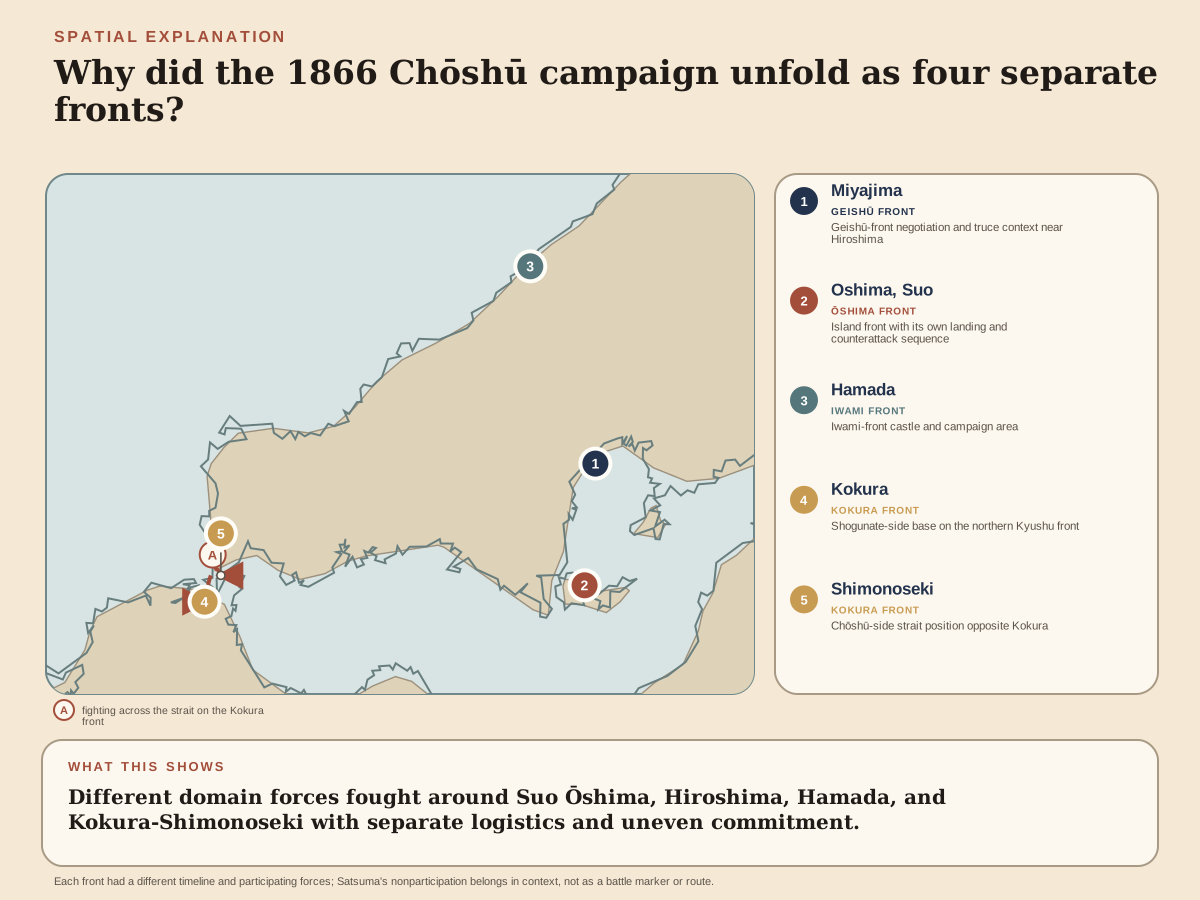
Fighting developed along four approaches to Chōshū: Geishū on the east, Suō Ōshima in the Inland Sea, Sekishū toward the Japan Sea, and Kokura across the Kanmon Strait. These separate fronts gave the war its Chōshū name, the Four Borders War.
The shogunate’s naval force bombarded island settlements and supported a landing on Ōshima. Reports of burned homes and casualties brought requests for reinforcement to Chōshū’s government. The island population experienced the campaign before its counterattack reversed the landing.
Takasugi Shinsaku redirected Heiin Maru toward the island and attacked the naval force. Chōshū land units then combined in the operation to recover Ōshima. The initial landing had produced a foothold, but the attackers failed to retain it.
On the Sekishū front, Ōmura’s army advanced toward Hamada. The domain’s defenders set fire within their castle and withdrew. The abandonment was a defeat for Hamada, though records later retrieved from its keep show that the keep survived the initial burning.
At Kokura, Chōshū troops crossed to the Moji side of the strait and fought toward the castle. Other supporting domains eventually withdrew. Kokura’s defenders burned their own castle and moved south toward Kawara, continuing resistance after losing the principal base.
The shogunate failed to force its way through the Geishū approach as well. Its armies had not compelled Chōshū’s submission, and its isolated success on Ōshima had been reversed. During these reverses, Iemochi’s death at Osaka removed the shogun from a campaign already in difficulty.
Kokura's predicament gives a concrete example of coalition weakness. Forces from Higo, Yanagawa and Kurume had assembled alongside its own troops, but assembly did not mean equal participation. Supporting contingents then withdrew, leaving Kokura to abandon its castle. The city account's totals and its simplified contrast between old and new weapons should not be read as a precise comparison of all forces across four fronts.
Military supply also pressed on communities beyond the battle sites. Fukui's museum chronology links domain purchases of campaign rice to price increases and popular attacks on wealthy households and stores. On the Sekishū front, a Chōshū civil-administration record describes uprisings and rising prices that its headquarters had to address. Fighting, occupation and provision therefore created governing problems for the advancing side as well as for the shogunate.
The expedition ended without Chōshū accepting the renewed punishment through military defeat. Its government remained in place and retained armed forces. This was a different outcome from the deaths of the senior retainers and dismantling imposed in the first settlement.
Iemochi’s death created a succession question alongside the military failure. Yoshinobu initially took responsibility as successor to the Tokugawa house. His imperial appointment as shogun came later in the Japanese calendar’s twelfth month, after the expedition had been halted.
Katsu Kaishū met Hirosawa and other Chōshū representatives at Daiganji on Miyajima on October 10, 1866. Acting for Yoshinobu, he proposed a halt and sought assurance that Chōshū would not pursue the withdrawing forces. Negotiation secured a way to disengage where renewed attack had failed.
The halt did not immediately settle every local conflict. Kokura continued resisting from the south before peace with Chōshū in 1867. A date for the expedition’s ceasefire therefore differs from the end of fighting and settlement on that particular front.
The outcome gave Chōshū's commanders room to preserve their reorganized units, but civilians did not receive that political advantage simply because they had supported or survived the fighting. Burned island homes, departing castle governments and expensive grain were different consequences from a successful defense of domain authority. Rice protests outside the fronts also demonstrate how the expedition used resources that households needed for their own livelihood.
The negotiated withdrawal further limits the meaning of defeat. Katsu secured nonpursuit rather than Chōshū's surrender. Yoshinobu still inherited the Tokugawa house and later became shogun. The government retained offices, troops and diplomatic obligations, while losing the ability to make this particular coalition impose its demands. Neither a single battle nor Iemochi's death alone accounts for that failure.
The result made another attempt to subdue Chōshū harder. Its military organization survived, while the shogunate had failed to translate the expedition’s mobilization into compliance. Satsuma’s refusal also exposed a concrete limit on which domains would support the campaign.
The war changed local government as well as national politics. Hamada’s defenders left their castle; Kokura lost its main base and later part of its territory came under Chōshū administration. These were losses of places and jurisdiction, beyond the campaign’s effect on shogunal reputation.
For inhabitants of Ōshima, bombardment and burned homes were immediate consequences. Soldiers and officials had to operate through occupied settlements, retreating bases and subsequent negotiations. Their experiences differed from the political advantage Chōshū’s leaders gained through the expedition’s failure.
The ceasefire left the question of government unresolved. Yoshinobu still obtained appointment as shogun, and opponents continued seeking influence at court. Chōshū’s survival altered their available military choices; it did not by itself determine the institutions or alliances of the restoration that followed.
Local changes outlasted the ceasefire. Kiku district, including the area of modern Moji and Kokura, came under Mōri administration after Kokura's defeat. Kitakyushu's account also records a castle drum and lanterns taken to the Chōshū side. Territory, displaced administration and transferred objects preserve parts of the war that a narrative of national prestige can overlook.
The political lesson concerned cooperation as much as firearms. Chōshū had joined procurement to training and a government prepared to resist; its opponents had assembled contingents whose participation could weaken or end. The result increased the usefulness of cooperation with Satsuma without making the later Restoration inevitable. It showed why future plans for national rule had to account for domains able to refuse an order or pursue their own agreements.