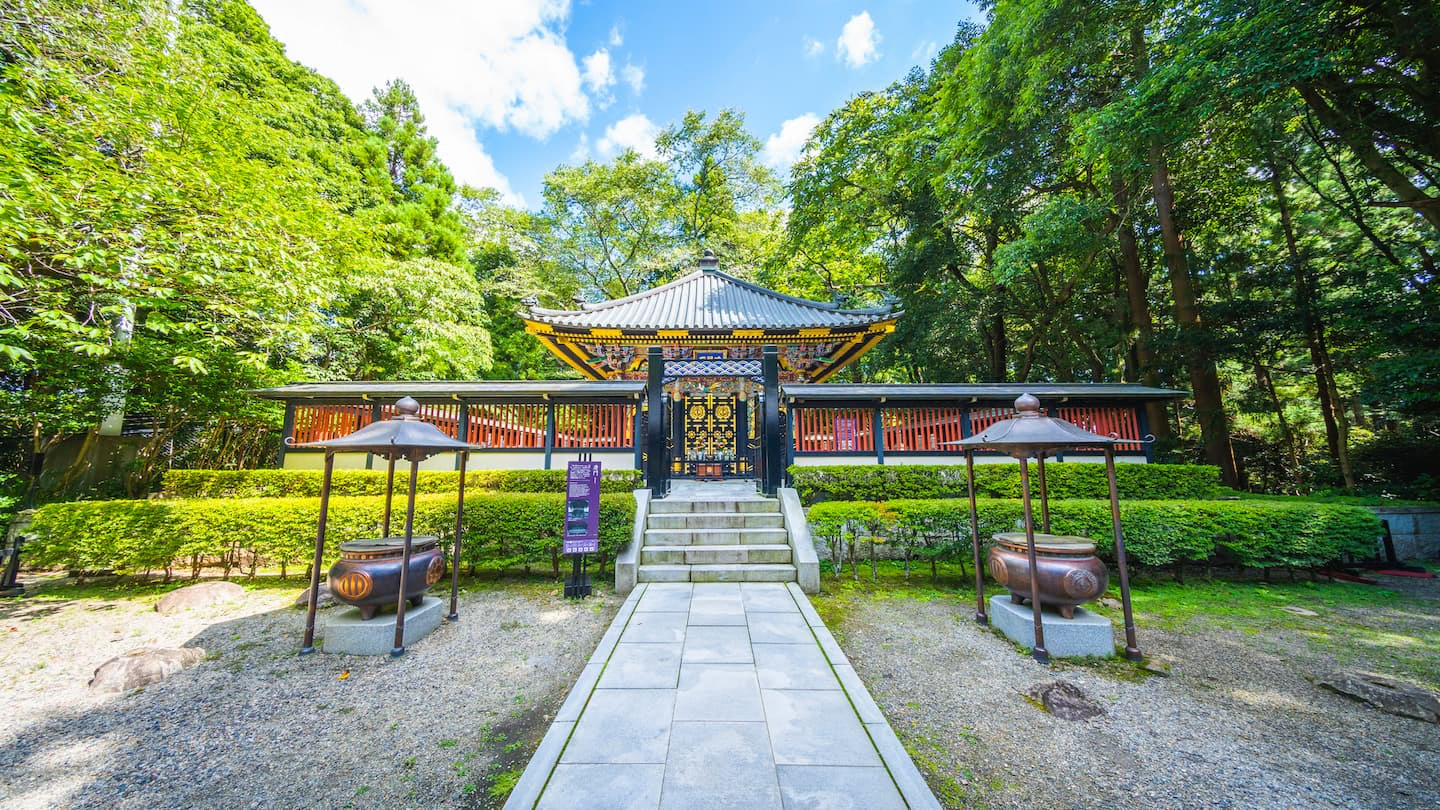
Cedar Approach and Masamune's Burial Site
Attraction
The official site records that Masamune died in 1636 and was buried here at Kyogamine in keeping with his final wishes. The original Zuihoden was built the following year. The most historically continuous element is therefore the burial location itself, not the visible façade. Starting with the ground prevents a common mistake: assuming that because the current mausoleum looks early Edo, its building fabric must also date from 1637. The cedar-lined ascent and terraces reinforce that distinction. Stone steps, gates and subsidiary mausoleums shape a dynastic precinct developed around the graves of Date rulers. The visible sequence is not seventeenth-century fabric throughout, yet it preserves the hierarchy of approach: leaving the city, climbing into Kyogamine and arriving at Masamune’s burial place as the ceremonial focus.
Current visibility
The place-specific feature discussed as “Cedar Approach and Masamune's Burial Site” is anchored by the forest landscape, the burial precinct, and the exterior fabric, but today's access or operating condition at Zuihōden requires a current official check.
Attraction
The original mausoleum was famous for rich Momoyama-style ornament and was designated a national treasure before its wartime destruction. The current building deliberately recreates that visual language. The point is not that Masamune personally chose every visible decorative detail we see now, but that elite funerary architecture used color, carving and gilding to project prestige after death. This is a memorial building designed to represent a ruler as much as to house a tomb. Look closely at the dense surface treatment: carved animals, brilliant pigments, black lacquer and gilded fittings suppress almost every neutral plane. That abundance belongs to the reconstruction’s interpretation of Momoyama taste and was refined after excavation and later repair. The building is best understood as a carefully researched postwar memorial on the authentic burial site, not as untouched seventeenth-century carpentry.
Current visibility
Zuihōden is a researched postwar reconstruction on Masamune's authentic burial site; its ornament interprets Momoyama funerary architecture rather than preserving seventeenth-century carpentry.
The Date Dynastic Mausoleum Precinct
Attraction
Zuihoden is the famous center of the site, but the surrounding mausoleums widen the story from one exceptional daimyo to a ruling house. Later Date lords were buried in their own memorial structures nearby, many of which also suffered wartime destruction and later reconstruction. The precinct therefore works as a dynastic landscape: one founding ruler establishes a memorial center and later generations place themselves in relation to it.
Current visibility
“The Date Dynastic Mausoleum Precinct” is materially legible at Zuihōden, especially through the burial precinct, the memorial, and the surviving building described in the Highlight.
Zuihoden Museum and Excavated Objects
Attraction
The site museum presents objects recovered from the Date mausoleums together with archaeological and scientific evidence used to study the burials. Displays can include personal items, funerary material and facial reconstructions that give a different kind of access from the recreated architecture outside. Treat reconstructions as evidence-based interpretation, not direct portraits made during Masamune's life. Exhibits may rotate, so the lasting highlight is the link among excavation, conservation and modern rebuilding of the mausoleum complex. Verify current display and photography rules.
Current visibility
The present precinct at Zuihōden still carries “Zuihoden Museum and Excavated Objects”; visitors can ground the text in the museum display, the excavated remains, and the burial precinct.
Attraction
Kansenden is the mausoleum of Date Tadamune, the second lord of Sendai. Its presence prevents Zuihoden from becoming a one-person monument and establishes dynastic succession in architecture. Compare scale, color and enclosure with Masamune's mausoleum without assuming identical dates or reconstruction histories. The precinct is a family political landscape built across generations.
Current visibility
“Kansenden” can be assessed from the exterior at Zuihōden; the on-site cues are the burial precinct, the memorial, and the reconstructed building, and routine interior entry is not implied.
Attraction
Zennoden commemorates Date Tsunamune, the third lord, extending the mausoleum group into another generation of domain memory. Read it beside Kansenden rather than as a decorative echo of Zuihoden. Differences and similarities reveal how the Date house repeated mortuary authority while assigning each lord a distinct memorial building. Visible fabric reflects postwar reconstruction and later care.
Current visibility
Zennōden is viewed from its exterior as a reconstructed memorial building within the Date mausoleum group; no original early-modern fabric is claimed.