Attraction
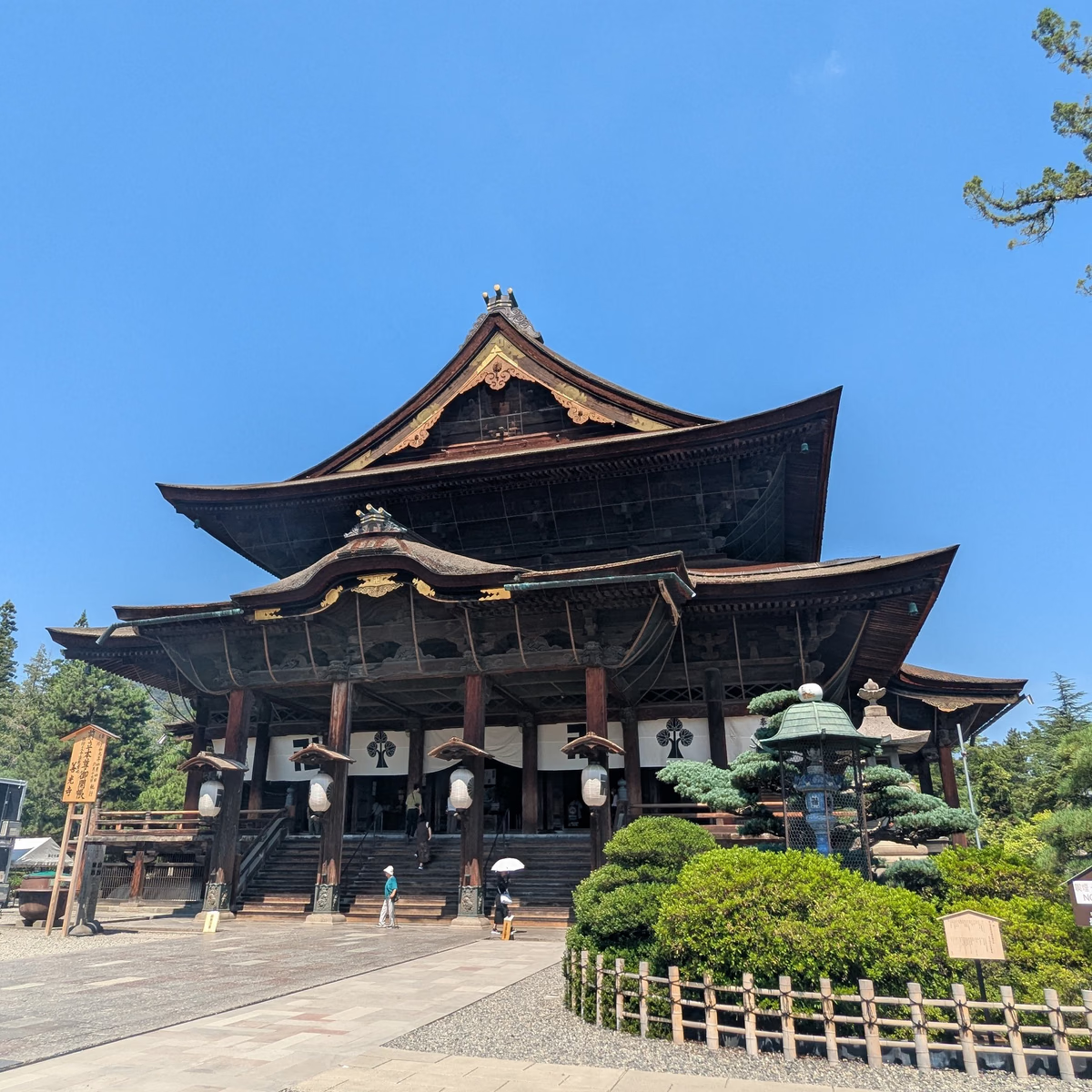
Zenkoji's present Main Hall was completed in 1707 after earlier buildings had repeatedly been destroyed by fire. Designated a National Treasure, it is valuable not because it preserves the temple's legendary foundation period intact, but because it is an exceptionally large surviving expression of Edo-period pilgrimage worship. Its deep plan matters as much as its broad facade. The building had to receive large flows of worshippers, organize movement toward a concealed sacred focus and support several forms of devotion within one timber structure. From outside, walk far enough to perceive the length of the side elevation: the hall extends much farther backward than a frontal photograph suggests. Inside, changes in floor level, enclosure and permitted proximity establish a hierarchy between public worship space and the innermost sanctuary. The principal image is a hibutsu, or hidden Buddha, and is not displayed as an ordinary art object. A replica image shown at the periodic Gokaicho ceremony belongs to a living ritual calendar, not to the building's constant appearance. The hall therefore asks visitors to understand presence without expecting unrestricted sight. Its fabric also records maintenance rather than untouched survival. Repairs, replacement of vulnerable elements and careful conservation are part of the biography of a huge working wooden building. Read the worn thresholds and controlled circulation as evidence of use, while respecting areas closed to photography or entry. The central lesson is scale: architecture here was made not for solitary contemplation alone but for a mass pilgrimage institution able to gather people around an image most of them would never see. During Gokaicho years, an Ekō-bashira pillar stands before the Main Hall and is linked by a cord to the Maedachi Honzon, the public replica of the hidden image. Touching the pillar gives worshippers a physical connection to the revealed image; it is a periodic ritual object, not a permanent fixture.