Attraction
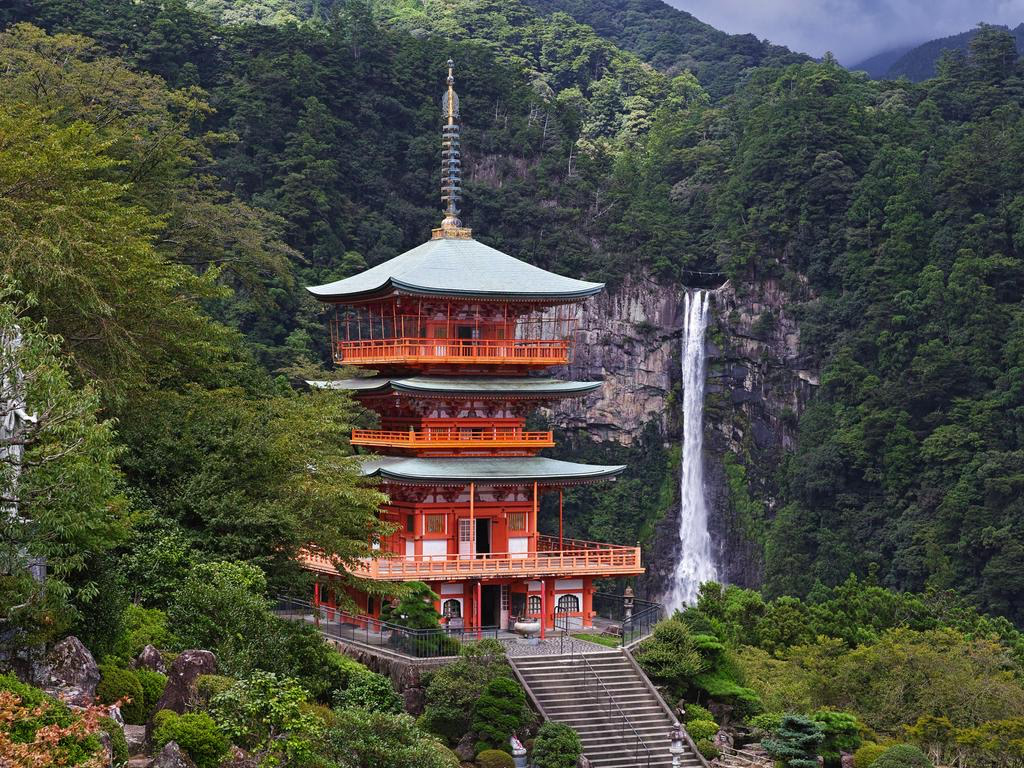
The Nachi area brings route, shrine, temple and waterfall into one steep sacred landscape. Daimonzaka preserves a stone-paved, cedar-lined approach, but it is only one section of the ascent and should not be confused with the whole Nakahechi. Above it, Kumano Nachi Taisha and the Buddhist temple Seiganto-ji occupy neighboring terraces, material evidence of the long interaction of kami worship and Buddhism even though modern institutions are administratively distinct. Nachi Falls forms a further sacred focus rather than a scenic backdrop added to the buildings. Read the complex by changing position. On the ascent, stone, roots, slope and gates make physical approach dominant. From the upper precincts, roofs and terraces show how shrine and temple share limited mountain ground. From established viewpoints, the pagoda and waterfall create the famous composition, but the visible pagoda is not proof that the landscape was designed for a modern photograph. Stairs and road transfers make accessibility uneven, and weather can alter surfaces and views; current official guidance must control the visit. The defining relationship is the clustering of different sacred institutions around a powerful natural feature. Nachi demonstrates most clearly that the Kii pilgrimage landscape cannot be divided neatly into isolated 'Shinto,' 'Buddhist' and 'nature' attractions.