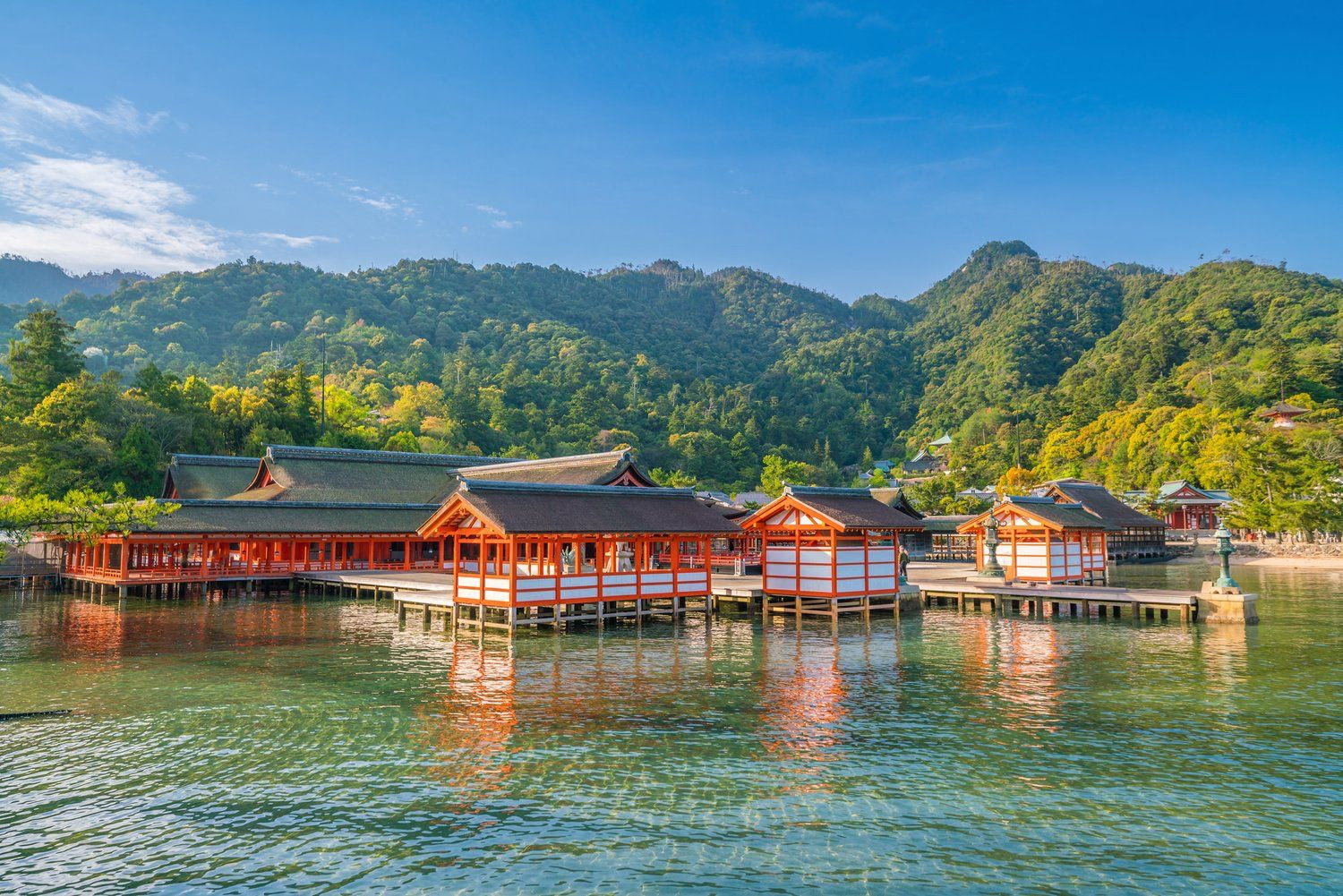
Tidal Forecourt and Sacred-Island Setting
Attraction
Itsukushima makes more sense if you stop treating the shrine as a building dropped onto scenery. Shrine tradition and later interpretation both connect sacredness to the island itself. The waterfront architecture preserves that relationship by occupying the tidal edge rather than dominating the mountain. Taira no Kiyomori's 1168 rebuilding gave the complex an aristocratic shinden-zukuri character, but the underlying spatial idea is broader: water, island and shrine are meant to be read together. The Place is the landscape system, not just the red architecture. Itsukushima Shrine was inscribed on the UNESCO World Heritage List in 1996; the designation encompasses both the shrine architecture and its setting against Mount Misen.
Current visibility
The shrine buildings and tidal waters remain visible within the island and mountain setting; not every historical layer survives as original fabric.
Main Shrine and Hirabutai
Attraction
Kiyomori’s 1168 rebuilding established the celebrated shinden-zukuri plan, but the standing complex largely reflects thirteenth-century reconstruction after fires while preserving that earlier spatial model. That does not mean the shrine is simply a palace on water. What matters on site is the planning habit: separate pavilions linked by corridors and ceremonial open space rather than one massive building. The arrangement made courtly ritual and movement legible in architecture, helping explain why visits by aristocrats and retired emperors became part of Itsukushima's medieval prestige. The main sanctuary enshrines the three Munakata goddesses, while linked halls and platforms organize worship across the tidal edge. At high water, reflections partially conceal the supports; at low water, posts and exposed ground reveal the maintenance required to sustain the floating image. Hirabutai is a ceremonial platform and visual center, not a neutral deck. Trace the axis from sanctuary through platform toward the offshore torii, then turn sideways to understand how corridors connect multiple ritual spaces. Repair after storms and salt-water exposure belongs to the complex's continuing life rather than a single modern interruption. The principal shrine buildings are designated National Treasures, while additional structures across the precinct are protected as Important Cultural Properties.
Current visibility
At Itsukushima Shrine, “Main Shrine and Hirabutai” remains directly identifiable; the visible reading rests on the shrine precinct, the reconstructed building, and the corridor.
Attraction
Itsukushima's performance spaces remind us that shrine patronage was not limited to prayer. Music, dance and Noh formed part of elite religious culture and public display. The stage's position matters because performance happens inside the same tidal sacred landscape as worship. What visitors see today is a living heritage environment in which ritual, art and waterfront space have long overlapped.
Current visibility
The Noh Stage remains part of the tidal shrine setting; watching a performance depends on the announced schedule, and no particular event is guaranteed.
Attraction
The torii is famous enough to distort the whole site. The current structure dates to 1875, so it is not Kiyomori's twelfth-century gate. But that does not make it irrelevant to medieval interpretation. Its real importance is positional: an offshore torii marks entry across water into the sacred island-shrine landscape. The visible gate is comparatively recent; the spatial tradition it expresses is much older. High and low tide reveal different aspects of the same threshold. Its age and its meaning are different questions: the structure is nineteenth-century, while the threshold logic is much older.
Current visibility
The offshore torii and its relationship to the shrine and tidal waters remain visible; current access and site conditions should be checked.
Attraction
Itsukushima does not have one fixed visual state. High tide joins buildings, reflections and water into the famous 'floating' image; low tide reveals supports, seabed, walking distance and construction logic. Neither is the authentic version and neither is secondary. They are two readings of the same architecture. This makes tide a rare case where a live environmental variable changes interpretation without changing the historical content itself.
Current visibility
The structures remain in place, but the view described as “High Tide and Low Tide” changes with the tide; consult current tide and site guidance rather than promising one water level.
Attraction
Marodo Shrine forms a substantial subsidiary complex near the entrance corridor and is dedicated to guest deities. Its position makes hospitality and hierarchy architectural: visitors encounter another sacred group before reaching the main sanctuary. Compare its halls and corridor with the principal complex instead of treating the first vermilion buildings as an undifferentiated foreground.
Current visibility
“Marodo Shrine” is materially legible at Itsukushima Shrine, especially through the corridor, the shrine precinct, and the surviving building described in the Highlight.
Attraction
Takabutai is the raised stage used for bugaku court dance. Its compact platform becomes meaningful beside the open Hirabutai and surrounding corridors: performance occupies a precisely bounded place within the shrine's ceremonial geometry. Even when empty, railings and elevation identify the stage. Festival and performance schedules are live information rather than permanent promises.
Current visibility
The raised Takabutai stage, its railings, and the surrounding corridors remain visible even without a performance; ceremonies and performances follow announced schedules.
Five-Story Pagoda and Senjokaku
Attraction
The five-story pagoda and great hall known as Senjokaku rise above the waterfront shrine, preserving the island's historically interwoven Buddhist and kami-worship landscape. Their elevation changes Itsukushima from a single tidal composition into a layered sacred settlement. The pagoda supplies a vertical landmark; Senjokaku's broad unfinished hall records a different scale and patronage history. Walk uphill if access and time allow, then look back toward the bay. The relationship is the highlight: vermilion corridors at water level, monumental timber space above and mountain forest behind.
Current visibility
The five-story pagoda and Senjokaku remain identifiable above the waterfront shrine, with the bay below and mountain forest behind; uphill access follows current site rules.