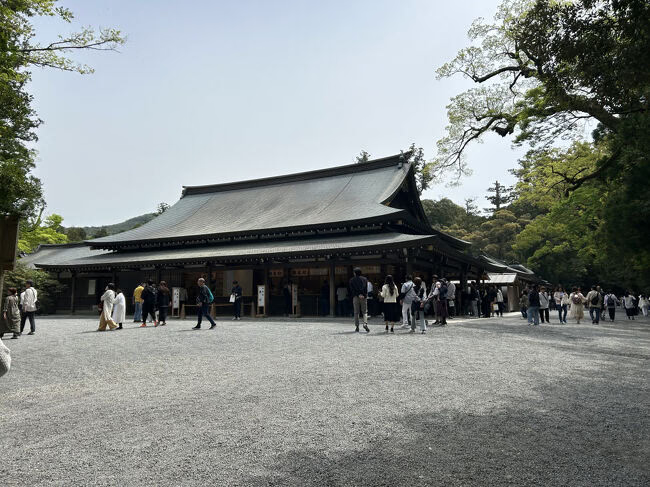
The Forest Approach to Shogu
Attraction
Naiku does not build toward a decorative climax like Nikkō Tōshōgū. Its spatial language works almost in reverse: the visitor moves through forest, gravel and restrained architecture toward a sanctuary whose most sacred interior is deliberately concealed. Sacredness here is produced through distance, sequence and restricted access rather than through visual abundance. The spatial sequence trains the visitor not to expect every important object to be fully visible.
Current visibility
The forest and gravel approach remain visible up to controlled thresholds, while Shōgū's most sacred interior is deliberately concealed and is not offered as an entry cue.
Attraction
The official Naiku map explains that the Holy Mirror is enshrined at the innermost sanctuary and that the main palace is enclosed by four rows of wooden fences. Ordinary pilgrims worship from an outer gate rather than entering or visually inspecting the sacred core. The point is precisely that sacred importance is expressed through controlled access. The sanctuary's restrained form is only partly visible: a raised timber structure, thatched roof and forked chigi rise above the enclosures while most of the building remains screened. This directs attention toward boundary and ritual proximity rather than architectural consumption. The current palace belongs to the latest Shikinen Sengu rebuilding, yet transmits a form through controlled materials, craft and ceremony. Follow photography restrictions at the sacred threshold. Distinguish continuity of deity, site, knowledge and architectural type from the physical age of the present timbers. The limited view is therefore historical evidence, not an obstacle to overcome.
Current visibility
Ordinary pilgrims worship at the outer gate of Shōgū and do not enter its sacred core. Current official notices govern access along the approach.
Attraction
The official shrine identifies Kodenchi as the site where the previous divine palace stood and where a future palace will be built at the next transfer. One site is occupied while the other waits; after the next Sengū, their roles reverse. The empty ground therefore carries institutional meaning. It is not leftover space beside the 'real' shrine but a visible component of cyclical renewal.
Current visibility
Kodenchi is visible beside the current sanctuary as the reserved ground for a future Shōgū rebuilding; it is sacred renewal space, not a public interior.
Shikinen Sengu and Architectural Renewal
Attraction
Ise is a direct challenge to a museum-centered idea of authenticity. The current structures are not ancient untouched originals, yet the institution intentionally preserves form, ritual sequence, sacred location, craft knowledge and cyclical transfer. That does not mean nothing changes; it means the category of continuity is different. This distinction helps users understand many Japanese religious sites where maintenance, renewal and ritual use matter more than untouched material age. Jingu describes these ceremonies as imperial rituals: the priesthood performs them under the Emperor’s direction, and an imperial envoy presents offerings at certain major rites.
Current visibility
Shikinen Sengū is a continuing institution expressed through renewed buildings, craft, and ritual transfer, not a museum display; particular ceremonies and viewing conditions require current official information.
Attraction
Aramatsuri-no-miya is the highest-ranking subsidiary sanctuary within Naiku and enshrines the vigorous aspect of Amaterasu. Its quieter setting beyond Shogu rewards visitors who continue rather than turning back at the main sanctuary. The building participates in the same culture of periodic renewal, while its smaller precinct makes the relationship between stair, fence, roof and forest easier to grasp. Approach it as a place of worship, not an architectural annex. Current ritual restrictions apply, and its significance lies in the differentiated divine presence recognized within the larger institution. Compare its threshold with Shogu's more elaborate sequence; rank is expressed through relationship and ritual status as well as visible size.
Current visibility
Aramatsuri-no-miya is visible as a periodically renewed subsidiary sanctuary; its stair, fence, roof, and forest setting can be observed while sacred thresholds and ritual restrictions remain in force.
Attraction
Takimatsuri-no-kami is a small riverside worship place associated with the waters of the Isuzu River. Its modest form matters: sacred importance at Naiku is not measured by monumental architecture. Pause after purification to notice how river, stone and forest define a ritual place with minimal building fabric. Give offerings and prayer activity space.
Current visibility
“Takimatsuri-no-kami” can still be read at Ise Jingū: Naikū through the ritual setting, the pond and water system, and the forest landscape; the visibility claim concerns that setting, not a past moment preserved intact.
Attraction
Kaguraden supports formal offerings and commissioned kagura rites within the living shrine. Its function differs from the screened main sanctuary: visitors interact here with an institution that organizes prayer, performance and amulets. Observe circulation and roof form without confusing public service areas with unrestricted interiors. Ceremony schedules and participation rules are current information.
Current visibility
The place-specific feature discussed as “Kaguraden” is anchored by the shrine precinct, the performance space, and the interior, but today's access or operating condition at Ise Jingū: Naikū requires a current official check.
Attraction
The Isuzu River is more than scenery beside Naiku. It forms a natural boundary, supplies the Mitarashi purification place and shapes the forested approach from Uji Bridge. Compare the broad river view from the bridge with the intimate bank used for purification. Water, movement and ritual are joined without requiring one monumental object.
Current visibility
“The Isuzu River” is encountered across the present Ise Jingū: Naikū landscape, with the pond and water system, the bridge, and the ritual setting carrying the reading rather than one uniformly accessible object.