Attraction
Dazaifu Tenmangu does not begin at the honden. The approach from the station passes under several torii before the inner precinct. That matters because the shrine sits inside a living town: shops, food and crowds do not suddenly stop where religion starts. The repeated gates slowly reframe the same path as sacred approach.
Current visibility
The approach from the station, successive torii, and street make the relationship between the town and shrine precinct visible.
Attraction
The ox is where legend becomes visible behavior. Shrine tradition says the ox carrying Michizane's remains stopped and refused to move, leading his followers to bury him at this spot. Visitors now touch the ox's head in hopes of wisdom, polishing the bronze through repeated contact. There are several ox statues in the precinct, all donated as offerings to Tenjin. The worn metal on the most frequently touched figures records present practice as clearly as the inscriptions record dedication.
Current visibility
The donated bronze Shingyū statues stand outdoors in the shrine precinct, and worn surfaces record the touching practice; only current condition or handling restrictions require checking.
Taiko Bridges and Shinji-ike
Attraction
The shrine gives the bridge sequence a Buddhist-inflected interpretation of past, present and future. Whether or not a visitor knows that symbolism beforehand, the physical design already does something important: it slows the approach, carries you over water and breaks the movement toward the inner sanctuary into stages. This is not merely a photo spot: movement itself is part of the shrine's interpretive architecture.
Current visibility
At Dazaifu Tenmangū, “Taiko Bridges and Shinji-ike” remains directly identifiable; the visible reading rests on the bridge and the shrine precinct.
The Main Sanctuary (Honden)
Attraction
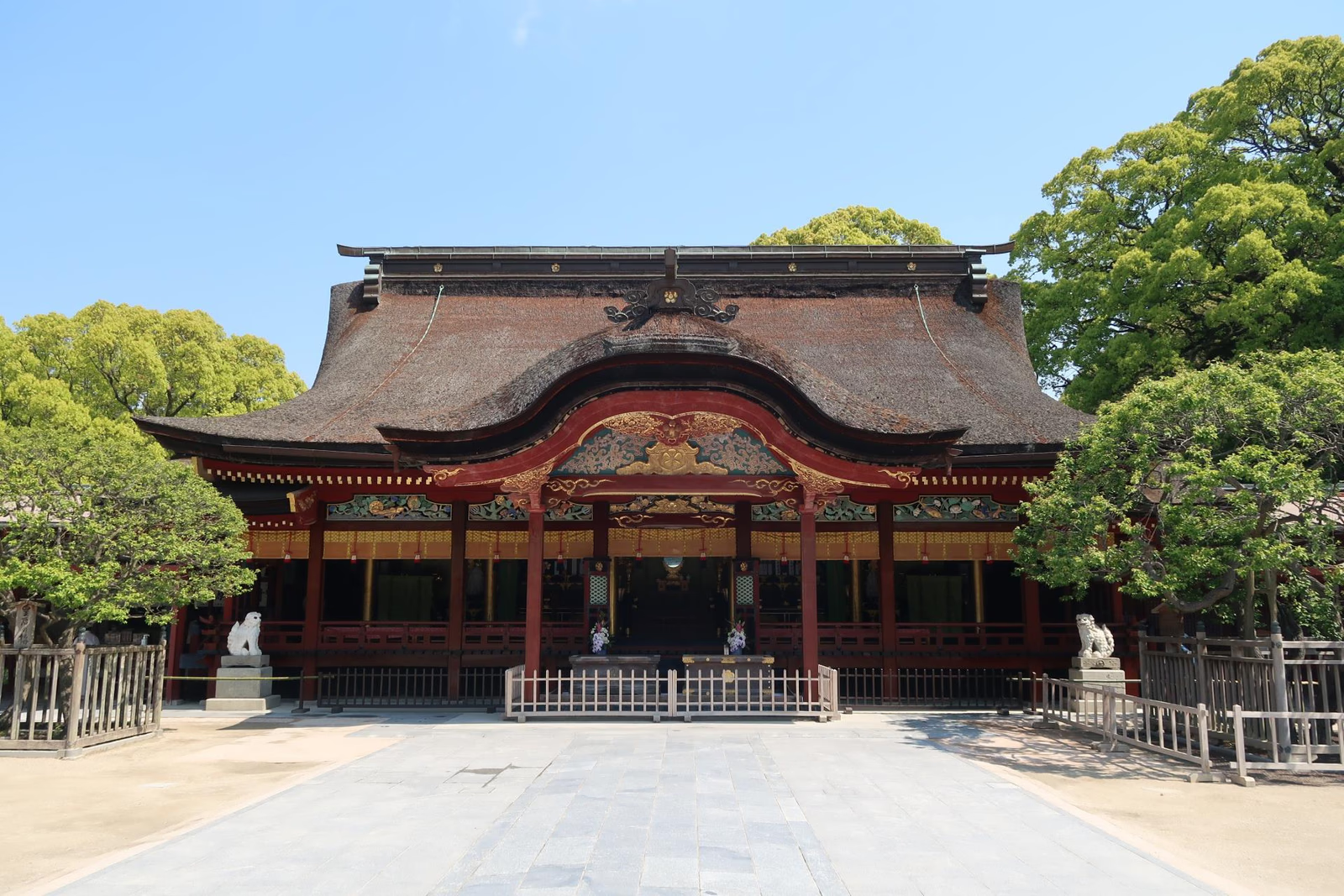
This is the single most important distinction at Dazaifu. Michizane died in 903 and was buried here. A small shrine followed in 905; an earlier sanctuary was built in 919. The present honden, however, was built in 1591 under Kobayakawa Takakage. The sacred location is Heian-period; the building is Momoyama-period. Recent conservation replaced and repaired material layers such as cypress-bark roofing, lacquer and metal fittings without turning the historical building into a modern replica. The sanctuary's placement over the traditional burial mound affects the arrangement of worship space and distinguishes it from a conventional sequence of separate halls. Its cypress-bark roof, lacquer and metal fittings also make conservation visibly dependent on specialist craft. A temporary hall has carried ritual functions during the latest major works, but its availability and removal are operational facts. In permanent interpretation, keep the ninth-century person, the tenth-century institution, the 1591 structure and later repairs as related but separate historical layers. That layered chronology is the essential key to reading the building accurately. The present honden is also a nationally designated Important Cultural Property.
Current visibility
“The Main Sanctuary (Honden)” remains part of Dazaifu Tenmangū, but interior or path access can vary; verify current official conditions before promising entry to the shrine precinct, the surviving building, and the burial precinct.
Attraction
The Tobiume story belongs to shrine tradition, not documentary biography. That does not make it irrelevant. The tree shows how Michizane's memory became attached to a living symbol, and the wider precinct reinforces that association with thousands of plum trees. Standing to the right of the main sanctuary, Tobiume is both a living tree and a focus of transmitted memory. Its seasonal flowering renews the legend without turning it into documentary fact.
Current visibility
The place-specific feature discussed as “Tobiume” is anchored by the shrine precinct, but today's access or operating condition at Dazaifu Tenmangū requires a current official check.
Prayer for Learning, Ema and Omikuji
Attraction
Dazaifu is where the transformation of Michizane into Tenjin becomes most visible in the present. Students and families still come for academic success, but the shrine also frames Tenjin more broadly around learning, culture and the arts. The shrine is not merely about a dead historical figure; it is a machine for continually remaking that figure's meaning in the present.
Current visibility
Ema, omikuji, and prayers for learning remain living practices in the Dazaifu Tenmangū precinct, but offerings, counters, and participation conditions follow current shrine operations.
Attraction
Romon is the final architectural threshold before the central sanctuary precinct. Reached after the pond and bridges, its two-story form compresses movement and then releases visitors into the main court. Stand back to compare roof, openings and flanking structures, then pass through without stopping in the flow. Temporary banners change; the gate's enduring role is spatial.
Current visibility
“Romon Gate” can be assessed from the exterior at Dazaifu Tenmangū; the on-site cues are the gate sequence, the shrine precinct, and the pond and water system, and routine interior entry is not implied.
Attraction
The shrine museum holds art and ritual material that cannot be read from the outdoor precinct alone. Displays rotate, so the highlight is the collection and its interpretive role rather than one promised object. Use it to distinguish historical images of Michizane, shrine treasures and later Tenjin devotion. Verify opening hours and photography rules before entering.
Current visibility
The museum displays shrine art and ritual material, with rotating exhibitions; individual objects are not guaranteed on every visit, and current opening and photography rules should be checked.
Attraction
Tenkai Inari stands on higher ground beyond the central Tenmangu precinct. Its smaller scale, vermilion elements and fox imagery introduce an Inari cult site within the wider sacred landscape. The detour breaks the assumption that Dazaifu Tenmangu is one axial complex devoted to one figure. Follow current signs and treat offerings as worship, not photographic props.
Current visibility
At Dazaifu Tenmangū, “Tenkai Inari Shrine” remains directly identifiable; the visible reading rests on the ritual setting.