Read the article below. Interactive reading tools are available when scripts load.
Quick
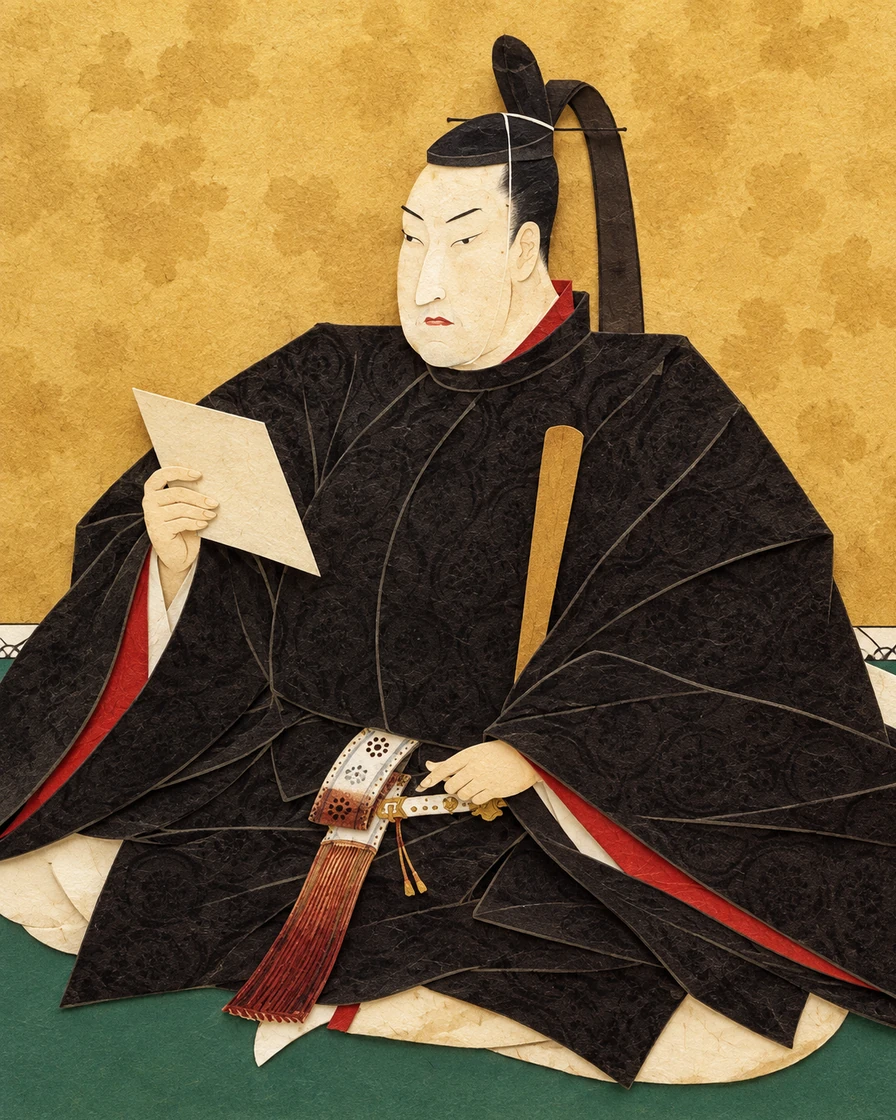
Tokugawa Tsunayoshi (1646–1709) was the fourth son of Iemitsu, the third shogun or head of Japan’s warrior government. His mother later took the Buddhist name Keishōin. After Iemitsu died in 1651, the boy received estates; in 1661 he became lord of Tatebayashi, in present-day Gunma. He married Nobuko of the Kyoto Takatsukasa court family in 1664. His elder brother Ietsuna ruled as the fourth shogun. In 1680, while Ietsuna was gravely ill, Tsunayoshi entered the main house as his adopted heir. After Ietsuna died without a son, he became the fifth shogun. A younger son’s landed position had become the starting point for authority over the wider warrior government. [1][17][18]
Tsunayoshi removed Sakai Tadakiyo, a leading officer under Ietsuna, and advanced Hotta Masatoshi, a senior councillor who had supported his succession. He also intervened in the Takada domain’s family dispute and dissolved the ruling Matsudaira house. He appointed financial examiners and punished negligent local officers to tighten administration of the government’s own lands. Hotta’s murder in Edo Castle in 1684 removed an important adviser. Personal attendants became increasingly influential: Yanagisawa Yoshiyasu gained the post of soba-yōnin in 1688, conveying business directly to the shogun. The changes gave Tsunayoshi greater control while making the ruler’s relationships central to how information and decisions moved. [1][2]
Tsunayoshi gave Confucian learning a public place in his rule, teaching lords and retainers and encouraging loyalty and filial conduct. He ordered the relocation of the Hayashi family’s Confucian shrine in 1690; the enlarged Yushima establishment was completed in 1691. Books prepared for his lectures carried the Chinese scholar Zhu Xi’s commentary with Japanese reading aids. His devotion also reached Buddhist institutions. In 1681 he founded Gokoku-ji at his mother Keishōin’s request on government herb-garden land. Buildings and an estate sustained worship there. These were practical uses of ruling-house resources as well as statements of ethical and religious commitment. [1][3][5][6]
The measures called shōrui awaremi no rei, or orders to show compassion toward living things, formed a series of rules. Early examples appeared around 1685; prohibitions on abandoning children, sick people and cattle or horses intensified in 1687. Dogs received registration and protection, and large enclosures were built near Edo in 1695. A Kōfu town notice of 1688 required reports of dog births and deaths, including coat colors. The policies also restricted hunting and rural firearms. Officials enforced them through supervision and severe penalties, while towns and villages bore costs. Protection reached vulnerable people and animals, but its administration could place heavy obligations on other households. [7][8][9]
Financial pressure led Tsunayoshi’s government to remint gold and silver. The finance official Ogiwara Shigehide helped direct the Genroku reminting of 1695, reducing precious-metal content and increasing available currency while bringing revenue to government. A new gold coin called the koban kept roughly the old weight but contained a smaller share of gold. Further changes followed in the Hōei era. The Bank of Japan’s history distinguishes the initial absence of major disruption from later counterfeiting and loss of value. Meanwhile, the Genroku period saw flourishing art and urban culture. The flourishing of urban culture coexisted with financial difficulty in the ruling treasury. [10][11][17]
In 1701 Asano Naganori, lord of Akō in present-day Hyōgo, attacked the court-ceremony official Kira Yoshinaka inside Edo Castle. Asano was ordered to take his own life and his house lost its domain. Former retainers later killed Kira in a raid during the twelfth month of Genroku 15, the Japanese era year associated with 1702. After custody in four lords’ Edo residences, forty-six men received suicide sentences in 1703. The familiar figure of forty-seven counts one further participant who was not among those sentenced. The episode made loyalty to a dead master and obedience to governing authority matters of public dispute. The later drama Chūshingura gave that conflict an enduring form, while the historical judgments affected both the retainers and their families. [12]
Mount Fuji erupted on December 16, 1707, a modern-calendar date explicitly distinguished from the traditional eleventh month. Ash damaged houses and farmland, blocked roads and later contributed to flooding. In 1708 Tsunayoshi’s government took heavily affected villages into direct administration under the officer Ina Tadanobu. It raised a nationwide levy and ordered territorial lords to supply work for river repairs. Local petitions and labor were also part of the response. The measures reached beyond an individual domain’s resources, but they did not restore every settlement promptly. Recovery and recurring floods continued under later governments, leaving losses that outlasted the shogun whose administration began the intervention. [13][14]
Tsunayoshi’s son Tokumatsu died in childhood in 1683. In 1704 the shogun adopted his nephew Tsunatoyo, son of his brother Tsunashige, who then took the name Ienobu. Tsunayoshi died of smallpox in 1709 and was buried at Kan’eiji in Edo. Ienobu succeeded and reversed much of the animal-protection regime, though prohibitions on abandoning children continued. Yoshiyasu retired. A chronicle commissioned within that former attendant’s circle was completed in 1714. It supplies another strand of remembrance beside harsh criticism and later caricature. The ruler’s life left institutions, punishments and obligations whose consequences cannot be compressed into a single reputation. [1][7][15][16][2]
Classic
Tsunayoshi was born in 1646 at Edo, present-day Tokyo, within the house of the reigning shogun Iemitsu. He was a fourth son, and his mother Keishōin had entered the household as a concubine. Iemitsu’s death in 1651 left his eldest surviving son Ietsuna as the next shogun, head of the warrior government. Tsunayoshi received land and retainers as a younger member of the dynasty. Those resources gave him a household distinct from the main ruling house. [1]
In 1661 his holdings expanded to an assessed two hundred fifty thousand koku, a measure of rice revenue, and he became lord of Tatebayashi in present-day Gunma. His household maintained its own servants, officers and estate income. Nobuko, whom he married in 1664, belonged to the Takatsukasa family of Kyoto court nobles. That marriage connected his branch of the warrior dynasty with a family of high court standing. It was part of the adult position he held before becoming shogun. [1]
In 1680, while Ietsuna was gravely ill and had no son to continue the main line, Tsunayoshi was adopted as his successor. After Ietsuna died, Tsunayoshi received appointment to the shogunate that year. Adoption maintained the recognized dynastic line while bringing a different household into central service. Men who had served him at Tatebayashi accompanied the change; Yanagisawa Yoshiyasu was among them. Their prospects now depended on the new ruler’s dealings with officers whose families had served earlier shoguns. Succession changed both the ruler and the people with access to him. [1][2][17][18]
The new shogun entered a government with powerful serving families. Sakai Tadakiyo had held the senior position of tairō under Ietsuna. Tsunayoshi removed him and promoted Hotta Masatoshi, a senior councillor who supported the succession, to that leading rank. The change placed a trusted adviser near the center of government. Tsunayoshi also settled the unresolved house dispute at Takada, in present-day Niigata, by dissolving its Matsudaira lordship. Even a prominent branch related to the dynasty could lose its domain through the shogun’s judgment. [1]
Territorial lords governed their own domains under the shogun’s authority, while local officers administered the government’s direct estates. Tsunayoshi’s early measures addressed both. He punished lords for poor administration and disciplined local officers over negligent service or failures involving revenue. The appointment of account examiners supplied another means of scrutinizing financial work. Land income had to reach the government through people entrusted with collection and reporting. Tightening those relationships could protect revenue while exposing established officers to removal. [1][10]
Hotta was murdered in Edo Castle in 1684. His death changed the circle around Tsunayoshi. Makino Narisada and then Yoshiyasu became prominent attendants; Yoshiyasu’s appointment as soba-yōnin in 1688 made him a direct intermediary for the ruler’s business. Successive promotions raised his standing above many regular councillors. His equivalence in rank to a senior office should be distinguished from appointment to that office. Personal access became a powerful resource within government, carrying the shogun’s wishes through men whose advancement remained closely attached to him. [1][2]
Tsunayoshi lectured territorial lords and direct retainers on the Four Books, a group of Confucian classics, from 1690 to 1693. The surviving lecture text uses commentary by the Chinese scholar Zhu Xi, with reading marks added by the Hayashi family of government scholars. Its small format allowed listeners to carry the volumes. From 1693 to 1700 he also gave repeated lectures on the Book of Changes. The National Archives counts two hundred forty occasions. Teaching occupied recurring time in the ruler’s relations with serving men. [3][4]
The Hayashi family had maintained a Confucian shrine at Ueno within its private teaching establishment. Tsunayoshi ordered its relocation to Yushima in 1690, and the new premises were completed the following year. The shrine and teaching facilities gained an enlarged public setting through his intervention. His government also encouraged loyalty and filial conduct through posted instructions and recognition of exemplary children. The language of moral relations joined duties within families to obedience among serving officials. The later directly administered academy at the site belonged to a subsequent phase of government. [5][1]
In 1681 Tsunayoshi established Gokoku-ji at Keishōin’s request, inviting the priest Ryōken as founding abbot. Government herb-garden land and an estate assessed at three hundred koku supported the new community. Its buildings were completed in 1682, and another major hall followed in 1697. Keishōin’s rise as the ruler’s mother made religious patronage possible on this scale. Tsunayoshi’s filial commitment had effects in land, buildings and worship, extending a household relationship into the resources and institutions of Edo. [6][1]
Tsunayoshi’s measures from the 1680s, later gathered under the name shōrui awaremi no rei, or orders to show compassion toward living things, formed a changing series of rules. Horses mattered to transport and cultivation: orders prohibited abandonment and excessive loads, requiring people to account for animals whose work helped sustain households. Dogs, birds and other creatures also became subjects of protection. Prohibitions on abandoning children and sick people made vulnerable human lives part of the policy field. The government’s claim to compassionate rule reached ordinary conduct, extending the responsibilities it demanded from subjects and local officers. [7][8]
A notice preserved in Yamanashi’s prefectural collection shows implementation at Kōfu in 1688. Towns were required to submit the dates and coat colors of dogs born or dead there. Recording turned animals into matters of local reporting, while later dog enclosures near Edo required space, food and continuing labor. Their expenses fell on urban residents and surrounding villages. Severe punishment for violations contributed to resentment. An order framed as care therefore produced records, collection obligations and the possibility of discipline for those administering or violating it. [9][7]
Hawking also belonged to a hierarchy of gifts between the shogun, lords and emperor, helping explain why its abolition was gradual. Restrictions on rural guns complicated responses to crop damage, although licensed hunters and some officially authorized shooting remained possible.
Historical disagreement · What political purpose did Tsunayoshi’s protection laws serve?
The historian Tsukamoto Manabu interprets these measures within a government seeking to bring subjects under its protection and control. Older accounts instead emphasized personal indulgence and the burdens imposed by dog protection.
The differences concern the policy’s political meaning; the actual range of rules and the unequal work required to carry them out remain central to assessing it. [7]
The government faced expenses for rebuilding Edo, religious foundations and the maintenance of its establishments. Ogiwara Shigehide, a finance official serving Tsunayoshi, used reminting to increase currency and obtain revenue. Old coins were replaced with new ones containing less gold or silver. The difference between the value issued and the metal used supplied a gain to government. At the same time, more coins could circulate from the available precious metal. The measure addressed a fiscal problem within an economy making extensive use of money. [10][11]
The Currency Museum’s guide gives an approximate weight of eighteen grams for both the earlier Keichō koban and the Genroku koban introduced in 1695. Gold content fell from about eighty-four to fifty-seven percent. The koban was a coin counted at an assigned value, unlike silver pieces commonly traded by weight. Composition, official value and exchange between metals therefore mattered in different ways. The Bank of Japan’s history describes an initially orderly reminting that yielded large revenue, followed by problems including counterfeiting and loss of currency value. [10][11]
Historical interpretation · Debasement, revenue and money supply
Further Hōei remintings began in 1706 and continued beyond Tsunayoshi’s death. Older histories condemned these issues as debased money and associated them with rising prices and a disordered late government.
The remintings supplied revenue and currency before the later problems described in the monetary history. Genroku art, books and urban entertainment developed within the same wider economy. The Edo-Tokyo Museum’s exhibition places cultural flourishing alongside Tsunayoshi’s religious and scholarly interests. A prosperous commercial culture and a strained ruling treasury could occupy the same period, affecting people through different sources of income and obligation. [10][11][1][17]
Asano Naganori, lord of Akō in present-day Hyōgo, was responsible for receiving imperial representatives at Edo Castle in 1701 under the guidance of Kira Yoshinaka, an official versed in court ceremony. He attacked Kira inside the castle and was ordered to take his own life that day. His domain of Akō was confiscated; Kira was not punished for the attack. The different treatment helped produce resentment among Asano’s former retainers. Their master’s offense had also taken place during duties joining the imperial court with Tsunayoshi’s household. [12]
Ōishi Yoshio, the senior Akō retainer, initially worked to restore the house through Asano’s brother. Those efforts failed. The former retainers then organized the raid on Kira’s Edo residence in the traditional twelfth month of Genroku 15. After killing him, they proceeded to their master’s grave and submitted to the government’s judgment. Forty-six men were placed in the custody of four territorial lords at Edo. The familiar figure of forty-seven counts one further participant who was not among those sentenced. The interval between attack and sentence involved supervision by other serving houses, with the men’s fate depending on the ruler’s administration. [12]
Historical interpretation · Loyalty, law and later remembrance
In 1703 the men were sentenced to death by seppuku, the warrior form of suicide, rather than ordinary execution. The government’s decision preserved that status while ending their lives. Punishment also reached children, some through exile and others through placement with relatives. Kira’s heir lost his lands and entered custody as well. Writers differed over whether the raid exemplified righteousness or violated the law. Chūshingura, first staged in 1748, later spread a dramatic version of the affair. The governmental decisions and their costs to surviving households preceded that familiar memory. [12]
The Sumida museum’s account identifies two opposing judgments. Muro Kyūsō’s Akō Gijinroku praised the men as righteous, whereas Satō Naokata’s record of the forty-six men criticized the raid as unlawful.
These writers disagreed over the meaning of the act, not over whether the government punished it. Later theatrical retellings added another layer to that dispute over memory. [12]
Mount Fuji’s Hōei eruption began on December 16, 1707. The Cabinet Office’s historical article explicitly converts that date from the twenty-third day of the traditional eleventh month. Falling ash destroyed or buried buildings and prevented crops from growing. Hills supplying fuel and animal fodder were covered, while mountain roads became difficult to use. The damage reached the resources needed for continued daily life. Land that had yielded revenue now required relief and large amounts of work before cultivation could resume. [13]
Affected villages lay under different lords, notably Odawara, whose lord Ōkubo Tadamasu was also a senior government councillor. Officials collected information and inspected damage. In 1708 the government transferred affected villages into direct administration under Ina Tadanobu; the historical article counts one hundred ninety-seven from Odawara alone. A nationwide levy raised more than four hundred eighty thousand ryō, a monetary unit, toward relief. Domain lords were assigned river works, and subsidies helped support villagers’ removal of ash. Revenue, jurisdiction and ordered labor were mobilized together. [13]
Rain carried volcanic material into rivers and raised the risk of flooding. Repairs could fail again, and changing a channel could shift damage to another settlement. Expert historical study describes an uneven response, influenced by local landholding, technical limits and later changes of government. Villagers repeatedly petitioned and undertook recovery work themselves. Tsunayoshi’s administration began a wider intervention, but its end did not end the disaster. The long aftermath places the ruler’s measures beside the efforts and losses of communities whose need for a livelihood continued after political succession. [13][14]
Tsunayoshi’s son Tokumatsu died in 1683, ending the possibility of that child succeeding him. The daughter Tsuru belonged to another dynastic marriage, to the Kii Tokugawa lord Tsunanori. In 1704 Tsunayoshi chose his nephew Tsunatoyo, son of his brother Tsunashige, as adopted heir. Tsunatoyo took the name Ienobu and entered the main ruling house. These choices maintained succession through kinship and adoption after the loss of a son. They also brought the future ruler’s serving men into relations with Tsunayoshi’s government. [1][15][17]
Tsunayoshi died in 1709 and was buried at Kan’eiji in Edo. Smallpox was the fatal illness identified in the reference account. Ienobu succeeded him and brought his own attendants and the scholar Arai Hakuseki into leading service, while Yoshiyasu retired. Much of the animal-protection regime was reversed, but prohibitions on abandoning children survived. The change addressed specific measures while preserving a dynasty that still claimed ethical authority over its subjects. Not every institution or obligation ended with the ruler whose name had become attached to it. [1][15][2][7]
Yoshiyasu commissioned Ogyū Sorai and other scholars to compile a chronicle of Tsunayoshi after his death, at the request of the imperial prince and Buddhist prelate Kōben. Completed in 1714, it was later presented to the government by Yoshiyasu’s son. Its connection to a favored attendant belongs to the evidence for how the reign was remembered.
Historical disagreement · How has Tsunayoshi’s reign been judged?
Older biographical accounts stress degeneration and oppressive rules; later historians and museum interpretations also examine administration, protection and the demands of peace.
Following the actual acts, their implementation and their costs permits a fuller judgment than either a villain’s label or a restored image of an ideal ruler. [16][1][7][17]