

Edo period
Tokugawa Ienobu
徳川家宣
Overview
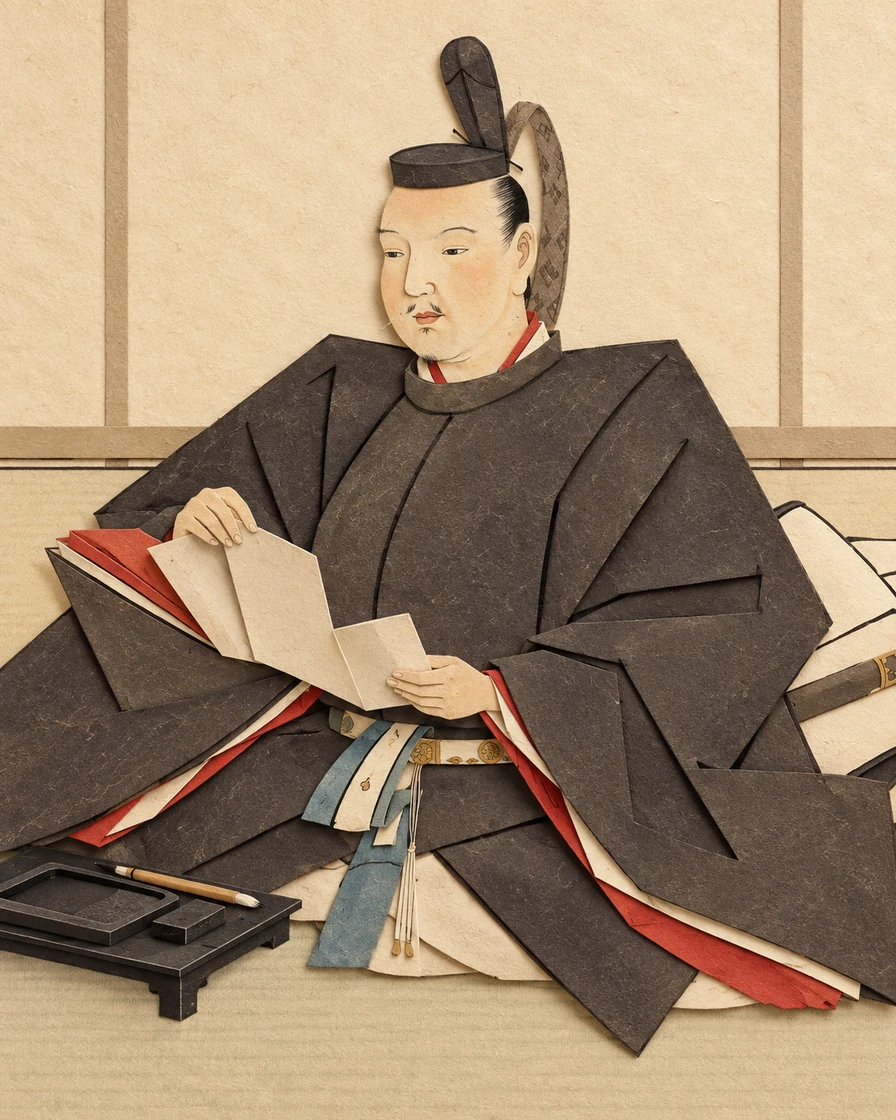
Tokugawa Ienobu (1662–1712) was a son of Kōfu lord Tsunashige, Shogun Tsunayoshi’s brother. Raised for a time in the household of the retainer Niimi Masanobu, he returned to the Tokugawa residence and inherited Kōfu in 1678 under the name Tsunatoyo. He married Konoe Hiroko, a court nobleman’s daughter. His adulthood as a domain lord included study with the Confucian scholar Arai Hakuseki, who later accompanied him into national government. [S01, S02]
Tsunayoshi adopted him as successor in 1704, and Ienobu became the sixth shogun in 1709. He relied on Manabe Akifusa, an attendant with direct access to the ruler, and Hakuseki for advice. His government ended the preceding reign’s extensive animal-protection policy and sought changes in court ceremony, financial administration and currency. The movement of trusted men from his earlier household gave these proposals a practical channel into shogunal decisions. [S01, S02]
Ienobu died in 1712 after little more than three years in office, leaving the child Ietsugu to succeed him. Some initiatives associated with his advisers continued after his death: the major restoration of coin fineness was implemented in 1714. His short reign connected a mature lord’s household and scholarly advisers to a wider reform agenda. Its brevity left much of that agenda dependent on a new ruler and the officials who remained to serve him. [S01, S03, S02]
Sources and notes ViewHide
- [1]
徳川家宣 — 世界大百科事典辻達也 (Tsuji Tatsuya)
- [2]
新井白石 — 蔵書印の世界National Diet Library
- [3]
日本貨幣史 — 18世紀前半 正徳・享保の改鋳Bank of Japan, Currency Museum
Tokugawa Ienobu (1662–1712) was a son of Kōfu lord Tsunashige, Shogun Tsunayoshi’s
Raised for a time in the household of the retainer Niimi Masanobu,
Tsunayoshi adopted him as successor in 1704, and Ienobu became the sixth
Ienobu died in 1712 after little more than three years in office,
Connections
Places
No linked places yet.
Events
No linked events yet.
Relationships
Topics
Zōjō-ji: The Work of Keeping Faith
Books for monks, prayers for the dead, and the responsibilities that survived the end of Tokugawa rule.
Read