

Edo period
Keishōin
桂昌院
Overview
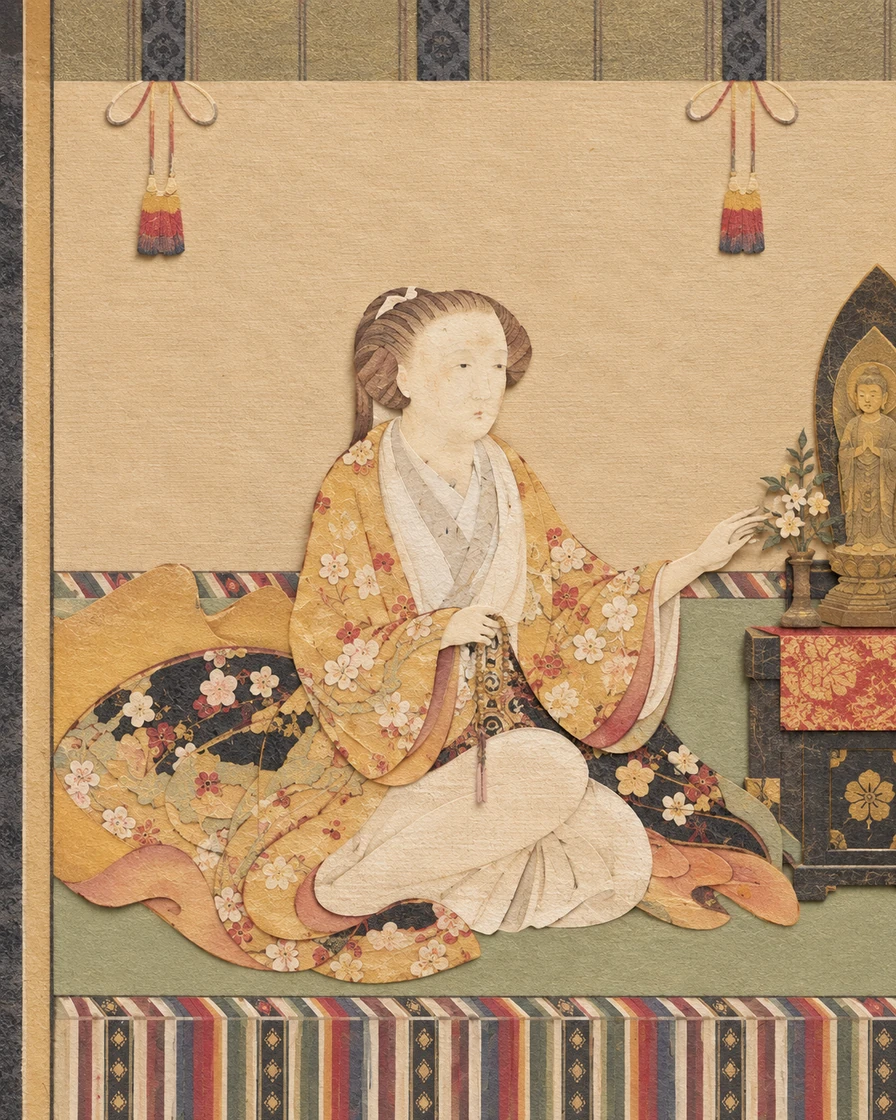
Keishōin, also known as Otama, was born in Kyoto in the 1620s and entered the Tokugawa household as a concubine of Shogun Iemitsu. She bore Tsunayoshi in 1646. After Iemitsu died in 1651 she became a Buddhist nun. Her position changed decisively when Tsunayoshi became the fifth shogun in 1680: the mother of a younger son now stood close to the center of shogunal authority. [S01]
Her religious patronage had lasting institutional effects. In 1681 Tsunayoshi founded Gokoku-ji in Edo in response to her wish, granting land that had belonged to a shogunal herb garden. The priest Ryōken became its founding abbot. Keishōin also donated the Keishōden at Kasuga Shrine in Nara in 1699, associated with prayers for peace and protection of the state. These were particular buildings, communities and devotional commitments sustained through her access to ruling-house resources. [S02, S03, S01]
In 1702 she received Junior First Rank from the imperial court, an exceptional honor that expressed her status without making her a government officeholder. She died in 1705. Her family connections and religious foundations extended the reach of a woman who had entered the shogunal house without the standing of its principal wife. Her documented patronage offers a firmer account of that influence than legends assigning her sole responsibility for Tsunayoshi’s animal-protection policies. [S01, S02, S03]
Sources and notes ViewHide
- [1]
桂昌院 — 世界大百科事典 / 日本大百科全書辻達也 (Tsuji Tatsuya)
- [2]
護国寺についてGokoku-ji
- [3]
春日大社 桂昌殿(中門)Ministry of Land, Infrastructure, Transport and Tourism; Nara regional multilingual project
bore Tsunayoshi in 1646
After Iemitsu died in 1651 she became a Buddhist nun
Her position changed decisively when Tsunayoshi became the fifth shogun in 1680:
Tsunayoshi founded Gokoku-ji in Edo in response to her wish, granting land
Connections
Places
No linked places yet.
Events
No linked events yet.
Relationships
Topics
No related topics yet.