

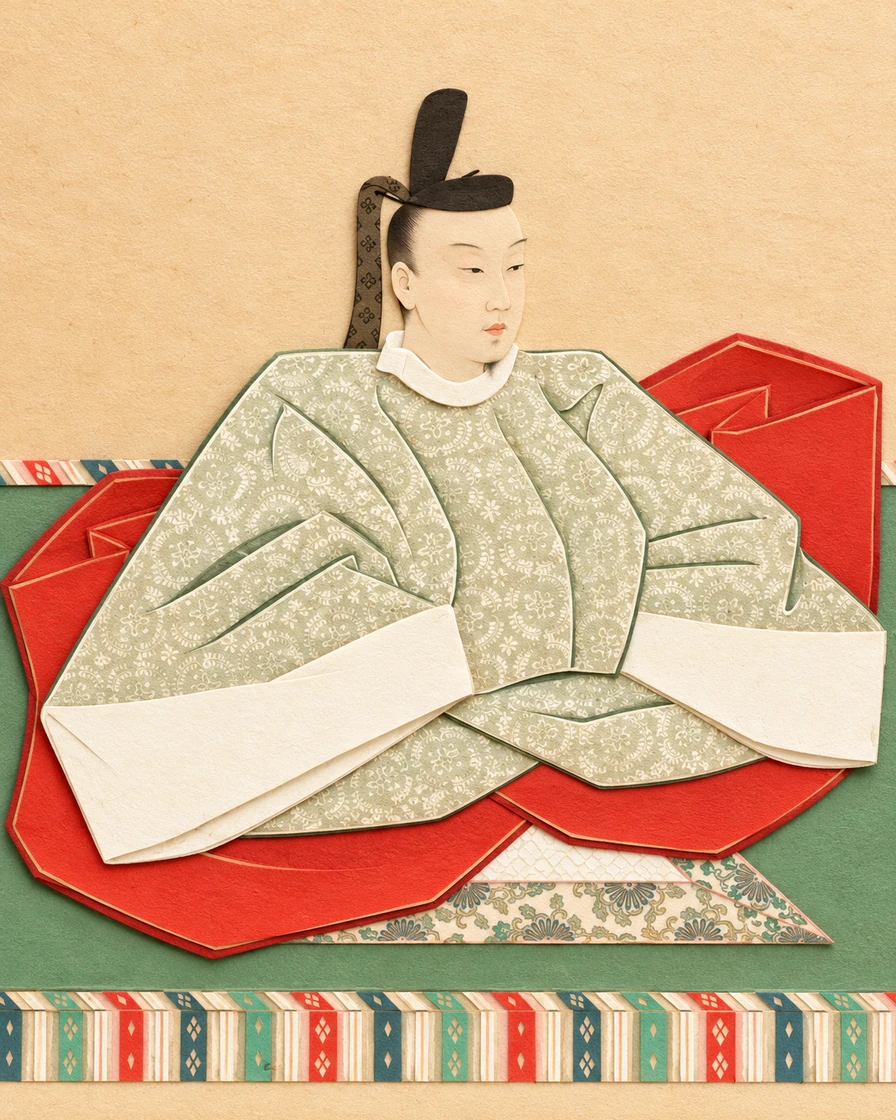
Muromachi period
Emperor Go-Komatsu
後小松天皇
Overview
Emperor Go-Komatsu (1377–1433), the son of Go-Enyū, became emperor in Kyoto in 1382 while still a child. During his reign, Ashikaga Yoshimitsu consolidated the warrior government. Go-Komatsu was already the Northern Court’s ruler when Go-Kameyama transferred the Southern regalia to him in 1392. That transfer ended the rival court’s separate government; it was not his first accession. [S01]
In 1412 he abdicated to his son Shōkō and governed as a retired emperor. Succession remained within the Northern-derived line, despite the Southern side’s expectation of alternation. After Shōkō died without an heir, Go-Komatsu helped install Go-Hanazono from another branch in 1428. Retired imperial authority thus continued to shape the dynasty beyond the end of his own reign. [S01, S02, S03, S04]
Go-Komatsu commissioned an imperial genealogy in 1426, compiled by Tōin Mitsusue. It presented the Northern line as legitimate and excluded Southern rulers from its numbered succession. Genealogy helped organize the memory of the reunion as well as family descent. Go-Komatsu also practiced waka and linked verse, and enjoyed the biwa, a courtly lute. He took Buddhist vows in 1431 and died in 1433, leaving a career that combined succession management, dynastic history and court culture. [S02, S01]
Sources and notes ViewHide
- [1]
後小松天皇 — 世界大百科事典 / 日本国語大辞典 / 日本人名大辞典横井清 (Yokoi Kiyoshi); Shogakukan; Kodansha
- [2]
本朝皇胤紹運録 — 世界大百科事典 / 日本大百科全書今江広道 (Imae Hiromichi); 益田宗 (Masuda Takashi)
- [3]
後花園天皇 — 日本大百科全書 / 世界大百科事典 / 日本史小辞典村田正志 (Murata Masashi); 飯倉晴武 (Iikura Harutake); 山川出版社 (Yamakawa)
- [4]
北朝 — 世界大百科事典新田英治 (Nitta Eiji)
Emperor Go-Komatsu (1377–1433), the son of Go-Enyū, became emperor in Kyoto in
Go-Komatsu was already the Northern Court’s ruler when Go-Kameyama transferred the Southern
abdicated to his son Shōkō and governed as a retired emperor
After Shōkō died without an heir, Go-Komatsu helped install Go-Hanazono from another
Connections
Places
No linked places yet.
Events
The 1392 Settlement Ends the Two Courts
南北朝の合一
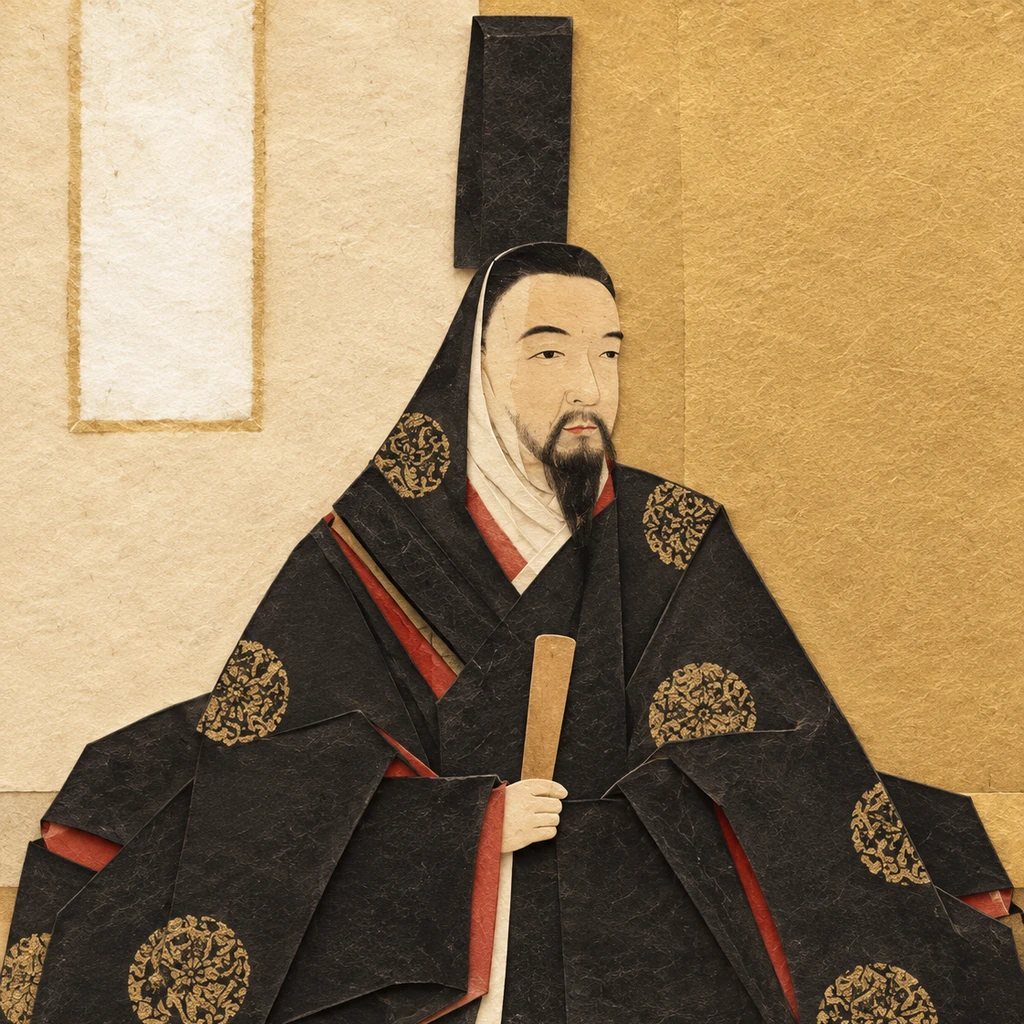
In 1392 Southern Emperor Go-Kameyama left Yoshino, returned to Kyoto, and transferred the regalia to Emperor Go-Komatsu.
Relationships
Topics
Yoshino: When the Temples Became a Court
A displaced imperial household found a home in a religious landscape. Its hosts later gave that household's absence an enduring form.
Read