Read the article below. Interactive reading tools are available when scripts load.
Quick
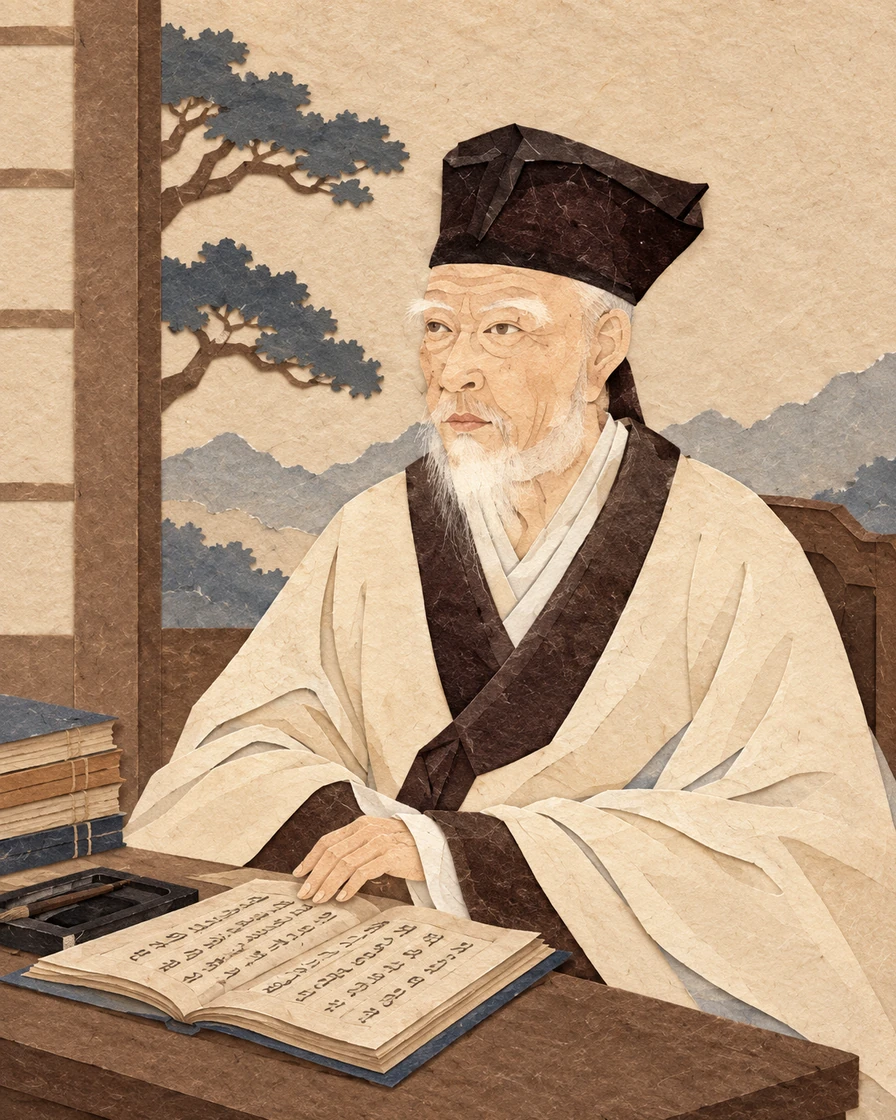
Amenomori Hōshū (1668–1755) came from Amenomori village in Ōmi, now part of Nagahama in Shiga. His father was a physician, and Hōshū initially pursued medicine before studying in Edo, now Tokyo, under Kinoshita Jun’an. Confucian learning joined ancient Chinese writings to questions of conduct and government. In 1689 Jun’an recommended him to the lord of Tsushima, the island domain between Japan and Korea. Hōshū first lived at its Edo residence and moved to the island in 1693. The position made scholarship part of service to a household whose responsibilities included maintaining communication with Korea. His subsequent language learning and diplomacy developed within that employment. [1][2][3]
After entering Tsushima service, Hōshū studied Chinese and Korean in earnest. Nagasaki offered access to Chinese speakers, while visits and assignments at the Choryang Waegwan, the Japanese trading compound at Busan in Korea, gave him another setting for language work. Diplomacy and commerce required people who could understand statements and documents across the water. Hōshū helped develop teaching materials for successors. Zen’ichi Dōjin, dated 1729, places Korean rendered in katakana, the Japanese syllabic script, beside Japanese text in material drawn from Chinese moral stories. Another primer, Kōrin Shuchi, is associated with him but survives through a complicated history of revisions and copies. Spoken knowledge and written tools both mattered to the domain’s continuing work. [1][2][3][4][5]
Hōshū accompanied Korean embassies to Edo in 1711 and 1719 as a Tsushima document official. He worked where the island domain’s continuing relations met the Tokugawa shogun, head of Japan’s warrior government. During the 1711 mission he disputed Arai Hakuseki’s proposed changes to letters and the description of the shogun as Japan’s king. Hakuseki, another pupil of Kinoshita Jun’an, advised the central ruler. Hōshū had to consider how altered forms would operate in ongoing dealings with Korea. His surviving collection includes accounts of the dispute and letters from Korean participants. Embassies required both formal representation of authority and communication among people responsible for sustaining the relationship. [1][2][3]
In 1721 Hōshū submitted a request to be relieved of his Korea-assistant role, criticizing the Tsushima domain’s attitude toward illicit trade. The surviving document places his concerns within his own employer’s administration. He remained based on Tsushima and continued work and writing there. His collection includes proposals on governing conduct, the domain’s finances and the establishment of educational responsibilities. Relations with Korea were therefore part of a larger administrative situation. A scholar who argued for trustworthy dealings also confronted the financial and official practices of the household on which his position depended. [3]
In Kōrin Teisei, written in 1728, Hōshū warned that using Japanese customs alone to judge Korean conduct could produce misunderstanding. He described sincere relations through truthful intention, avoiding deception and needless contention. These were prescriptions for people engaged in actual dealings. His educational proposals and language books sought to prepare successors for that work. The treatise also required officials to know earlier collections of diplomatic records, joining ethical conduct to documentary competence. The modern researcher Iwakata Hisahiko compares this advice with an earlier Tsushima reform memorandum. Hōshū gave an influential form to concerns within a longer practice of mediation; the treatise is not proof that every negotiation followed its ideals. [3][6][7][4][5]
Hōshū’s later life included literary work as well as administration and teaching. His collection preserves poems, correspondence and numerous notebooks of waka, Japanese verse that he studied late in life. In 1748 he transferred the family position to a grandson and retired. He died at Izuhara on Tsushima in 1755; his grave is at Chōju-in in Hiyoshi. Descendants preserved papers that were donated in 1926, and 123 associated objects received national cultural-property designation in 1994. Language materials had another later life through copies and revised editions, including an 1881 Kōrin Shuchi printing. Different kinds of survival preserve the scholar’s relationships, working responsibilities and continued use of teaching texts. [1][3][4][5][8]
Classic
Amenomori Hōshū came from Amenomori village in Ōmi, now in Nagahama, Shiga. Modern references give his birth year as 1668; the official collection description qualifies the received account. His father was a physician, and Hōshū initially pursued medical learning. He later entered Kinoshita Jun’an’s circle in Edo, now Tokyo, where learned training could also lead to service with a lord. [1][2][3]
Jun’an taught Confucian writings on personal conduct and government. His pupils included Arai Hakuseki, who would later advise the Tokugawa ruler. In 1689 Jun’an recommended Hōshū to the Tsushima house. The connection provided employment as a scholar within the lord’s household. Hōshū’s knowledge would be used within the household’s educational and administrative work. Learning and recommendation together furnished a route from a physician’s village to service with an island government. [1][2][3]
Hōshū initially lived at the Tsushima residence in Edo and went to the island in 1693. Tsushima occupied a position between Japan and Korea and served as a channel for relations with Korea. Its scholar therefore worked in a household whose responsibilities reached beyond its own territory. He would spend the rest of his long life based there, serving successive lords while traveling for assignments. The move established the setting in which his classical learning, language work and practical dealings with foreign participants became closely connected. [3][1][2]
Tsushima’s dealings with Korea made language competence a practical requirement. Hōshū studied Chinese and Korean after entering service, including study in Nagasaki and Busan. The Choryang Waegwan at Busan was a Japanese trading compound under Korean controls, where he undertook repeated assignments. Residence and contact occurred through an authorized institution. Korean authorities regulated entry and movement, while Korean interpreters also instructed visitors about customs and supplied information. The setting made conversation, documents and trading business available for study while defining how exchange could take place. [1][3][4][9]
Zen’ichi Dōjin, dated 1729, drew on Chinese moral stories and paired Korean with Japanese rendering. Its Korean is written in katakana, the Japanese syllabic script, rather than in the Korean alphabet. Kim Mun-hŭi’s bibliographical account explains why the transcription matters to later study of eighteenth-century pronunciation. For the original learning task, it gave readers a way to connect written signs familiar to them with another language’s sounds and expressions. The material joined language practice to stories about conduct. [4][3]
Historical disagreement · Who compiled Kōrin Shuchi?
Kōrin Shuchi assembled vocabulary and conversational examples with Korean and Japanese text. It is traditionally associated with Hōshū. The researcher Pyŏn Mu-jin also notes a view that interpreters compiled the material with his assistance. Numerous manuscripts and later revisions complicate the recovery of its earliest form.
The book’s importance rests in sustained teaching and use as well as an author’s name. Copies that continued to change cannot all be treated as one intact text written by Hōshū in a single year. [5][4][3]
Hōshū accompanied the Korean embassies of 1711 and 1719 to Edo as a Tsushima document official. The missions linked the Korean government, the island domain and the Tokugawa shogun, the head of Japan’s warrior government. Travel brought participants into ceremonial encounters and exchanges with Japanese scholars. Hōshū’s responsibility was located within Tsushima’s continuing work, including documents and the conduct of communications. Official duties accompanied the opportunities for learned exchange. [3][1]
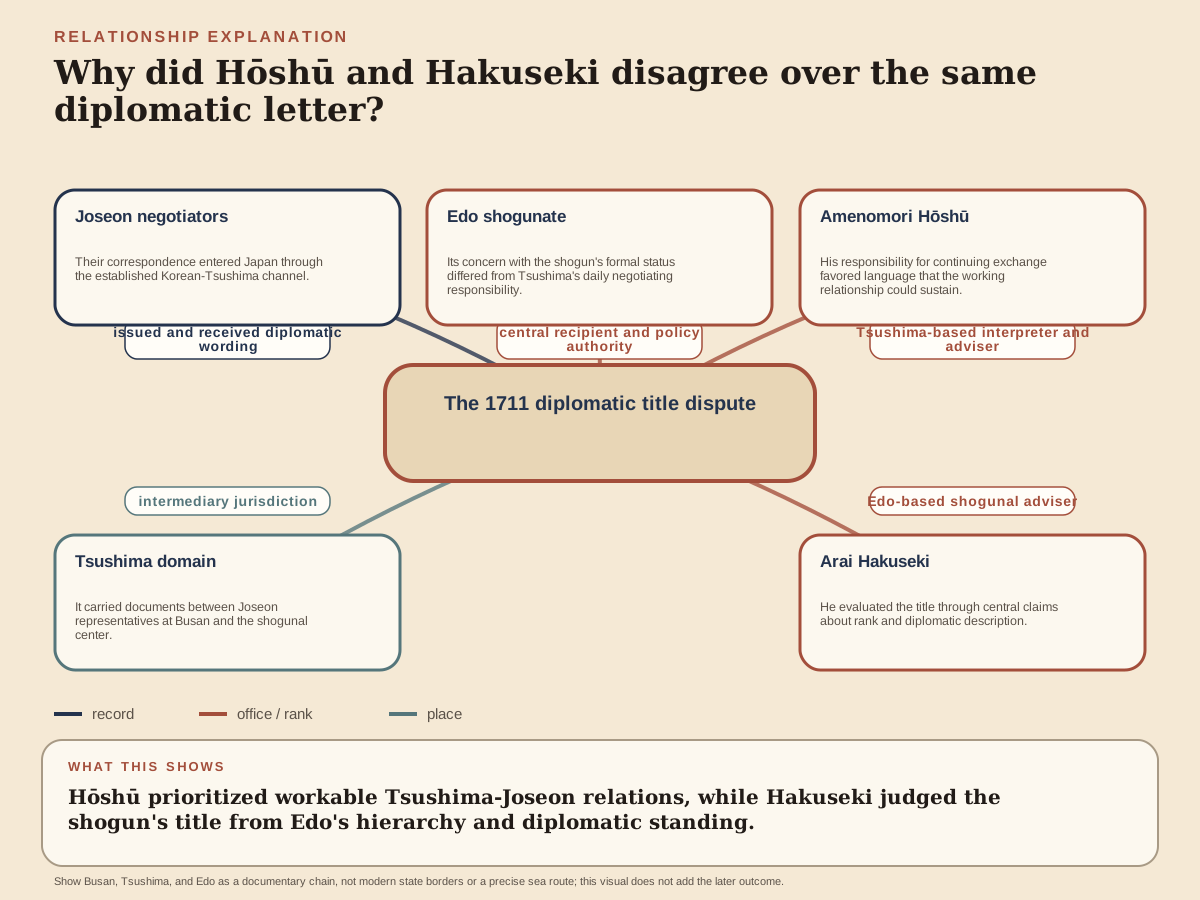
In 1711 Arai Hakuseki sought changes to diplomatic letters and the shogun’s designation as Japan’s king. Hōshū disputed those proposals. Both men had studied under Jun’an, but Hakuseki advised the central ruler while Hōshū served the intermediary domain. The proposed language had consequences across established conventions in Korea and Japan. A title could assert a ruler’s standing while creating difficulties for the officials who had to obtain agreement and maintain future exchanges. [3][2]
The disagreement also concerned authority inside Japan. In the argument discussed by historian Katsurajima Nobuhiro, Hakuseki appealed to earlier diplomatic usage in adopting “king of Japan” for the shogun. Hōshū objected that the emperor remained above the military ruler: control of offices and rewards did not make the shogun entitled to the country’s highest royal designation. He also questioned what the change would achieve abroad. Korea had already shown respect under the previous wording; calling the shogun king would not necessarily increase it. Hōshū acknowledged difficulties with the title taikun, or “great lord,” yet rejected kingship as the remedy. His objection therefore joined a judgment about diplomatic advantage to a defense of the emperor’s place. The dispute concerned the proper ordering of Japanese authority as well as the conduct of relations with Korea. [10]
The official collection description identifies documents on letter alteration and Hōshū’s submissions to the warrior government, rather than leaving the dispute as an anecdote about personality. It also lists letters addressed to him by Korean participants and a record of poetic and written exchanges during the 1711 mission. Takahashi Hiromi’s biography says that disagreement with Hakuseki did not end his respect for him. These different records place argument within a wider network of scholarly contact and official responsibility. The 1719 embassy continued that work under another shogun, Tokugawa Yoshimune. [3][1]
The official collection includes Hōshū’s 1721 submission criticizing the domain’s response to illicit trade and asking to be relieved of his assistant role in Korean affairs. The submission connects a demand for trustworthy dealings to conduct inside his own employer’s administration. The officials maintaining external dealings also operated inside a domain with its own financial needs and practices. Hōshū addressed his objection to that governing household and put his position in the relevant office at issue. [3]
Other surviving manuscripts contain proposals about government, the restoration of the domain’s finances and the conduct expected of its rulers. Memoranda on money sit beside texts about diplomacy and educational arrangements. Their presence shows the range of administrative problems to which the domain scholar directed advice. They preserve his advice on administration alongside records of the offices he held. [3]
A request to leave the Korea-assistant position must be distinguished from the end of all employment or residence. Hōshū remained on Tsushima through the rest of his life, serving successive lords. Documents on family livelihood and succession also survive in the collection. His ability to study, advise and teach continued within that setting. The protest makes a constraint visible: maintaining a principled objection could require challenging practices inside the institution that sustained his own place. [3][1]
Kōrin Teisei, written in 1728, explains that Japanese and Korean customs and preferences differ. Hōshū warned that approaching Korean participants through Japanese expectations alone would make misunderstandings likely. His account of sincerity concerns truthful intention and dealings without deception or contention. The prescription asks officials to recognize a difference before deciding that another person’s conduct is improper. It belongs to the work of maintaining relations through practices whose meanings vary between the two settings. [3]
Sincerity did not exhaust the requirements of Hōshū’s diplomatic advice. Yi Hun, a modern researcher of Tsushima records, points to his insistence that officials know three earlier collections of relations with Korea. These included the classified record Bunrui Kiji Taikō, which made prior cases accessible for consultation. Record knowledge could help an official understand what had been negotiated and how earlier business had proceeded. A usable memory of dealings mattered alongside the personal conduct of the people carrying them forward. [6]
Hōshū’s surviving materials include a proposed curriculum for those entering Korean diplomatic work and a submission seeking educational responsibilities within the domain. Language books supplied another part of that preparation. Kōrin Shuchi arranged everyday vocabulary and examples for learners; Zen’ichi Dōjin connected Korean sounds, Japanese rendering and moral stories. Training aimed to make the work reproducible by successors. The materials continued to develop through copying and revision, linking learned direction to the people who used the texts. [3][4][5]
An individual method within a domain tradition
The modern researcher Iwakata Hisahiko compares Kōrin Teisei with a 1687 Tsushima reform memorandum by Kashima Hyōsuke.
His interpretation emphasizes a tradition of domain reform behind Hōshū’s advice. Hōshū’s contribution remains the formulation of a demanding method: learn languages, consult records and consider the other side’s customs while answering to a governing institution. [7][3][6]
Hōshū wrote essays and Chinese poetry and developed an interest in waka, Japanese verse, late in life. The official collection includes twenty-two waka notebooks, poems from travel with his eldest son and letters from Korean acquaintances. These materials preserve activities beyond state-to-state argument. Poetic exchange and correspondence belonged to relationships sustained among learned participants, while family travel and later verse also formed part of the life of a scholar based on Tsushima. [3][1][2]
In 1748 Hōshū transferred the family position to a grandson and retired. He died in 1755 at Izuhara on Tsushima, where he had remained based for decades. The city’s cultural-properties catalogue records his grave at Chōju-in in Hiyoshi. The long period of residence joined repeated official assignments to continuing household and scholarly ties. Retirement ended his active family position, while manuscripts and relationships provided other means through which the work could remain known. [3][8]
Descendants donated papers to the Hōshū association in 1926. In 1994, 123 objects from this transmitted group received national designation, including writings, official records, letters, poems and portraits. Kōrin Shuchi reached later learners through a different process: manuscripts changed, and revised printed versions appeared in the late nineteenth century, including 1881. Later editions are evidence for continued use, but their altered texts should not all be attributed directly to Hōshū. The surviving materials make it possible to follow both an individual working life and institutions whose learned tools continued beyond it. [3][4][5]