

Edo period
Amakusa Shirō
天草四郎
Overview
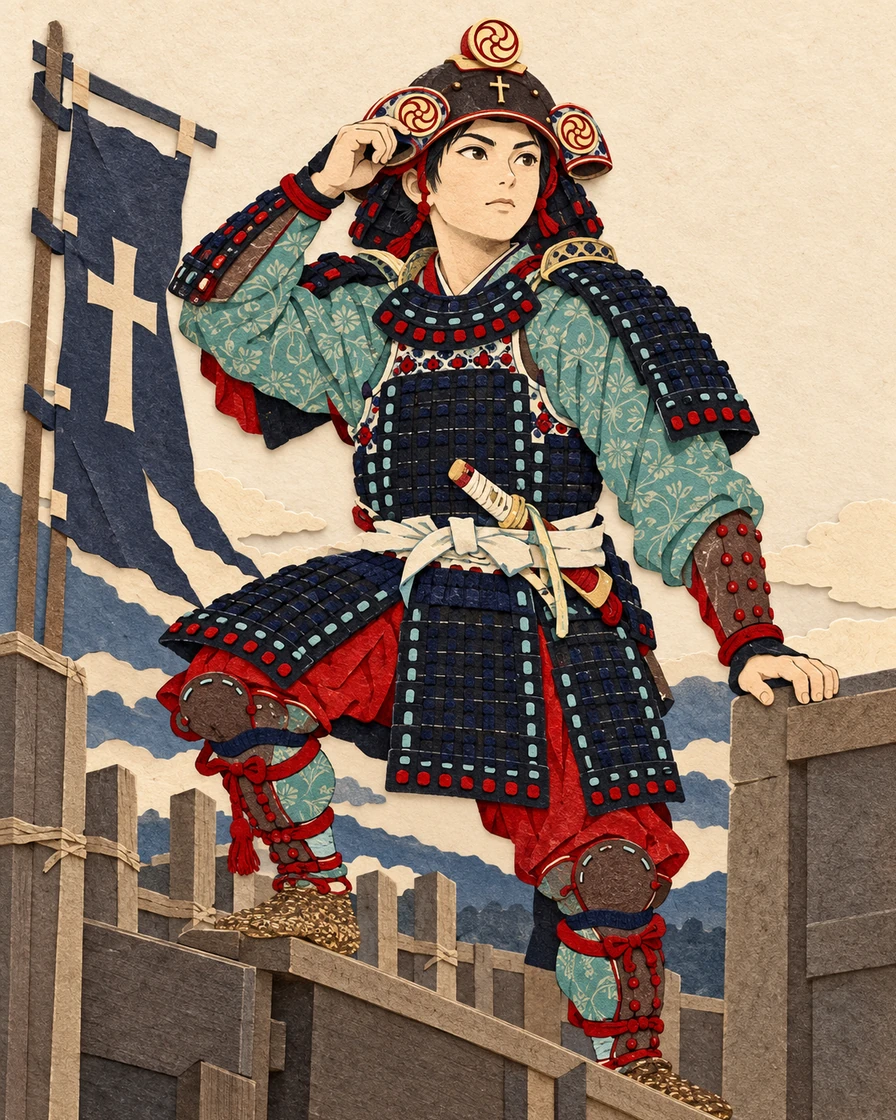
Amakusa Shirō, born in the early 1620s, grew up at Uto in Kyushu. His father, Masuda Jinbei Yoshitsugu, had served the Christian lord Konishi Yukinaga before that household fell in 1600. Shirō became a Christian and appears to have received some education. His early life is sparsely documented, and sources disagree on his birth year. He was still a teenager when people in Shimabara and Amakusa rose against their lords in 1637. [S01]
Religious persecution combined with severe taxation and hardship after poor harvests. Shirō became the rising’s religious rallying figure, while experienced village leaders and former warriors helped organize its forces. The rebels occupied the abandoned Hara Castle, where Christian families as well as fighters endured a long siege. Claims of Shirō’s miraculous powers helped make him an exceptional figure within the movement; they are evidence of belief and mobilization, rather than proof of supernatural acts. [S01, S02]
Shogunal forces took the castle in 1638, killing Shirō and large numbers of its defenders. Excavated human remains and Christian devotional objects preserve the material traces of the siege. Later military tales continued to retell his life. His prominence arose from a community’s desperate resistance and the authority attached to a young religious leader; it does not establish that he personally directed every military operation. [S01, S02, S03]
Sources and notes ViewHide
- [1]
天草四郎 — 日本大百科全書中村質 (Nakamura Tadashi)
- [2]
原城跡と島原・天草一揆Minamishimabara City Board of Education
- [3]
四郎乱物語Amakusa City
His father, Masuda Jinbei Yoshitsugu, had served the Christian lord Konishi Yukinaga
was still a teenager when people in Shimabara and Amakusa rose against
Shogunal forces took the castle in 1638, killing Shirō and large numbers
Connections
Places
No linked places yet.
Events
The Shimabara–Amakusa Uprising and the Siege of Hara
島原・天草一揆
People in Shimabara and Amakusa rose against harsh taxation and Christian persecution in 1637, gathered at Hara Castle, and were defeated by shogunal forces in 1638, with most of those inside killed.
Relationships
Topics
Hara Castle Ruins: Living Inside a Rebellion
Small shelters, remade bullets and messages across the lines reveal how people inhabited a fortress—and how little the walls could settle for them.
Read