Read the article below. Interactive reading tools are available when scripts load.
Classic
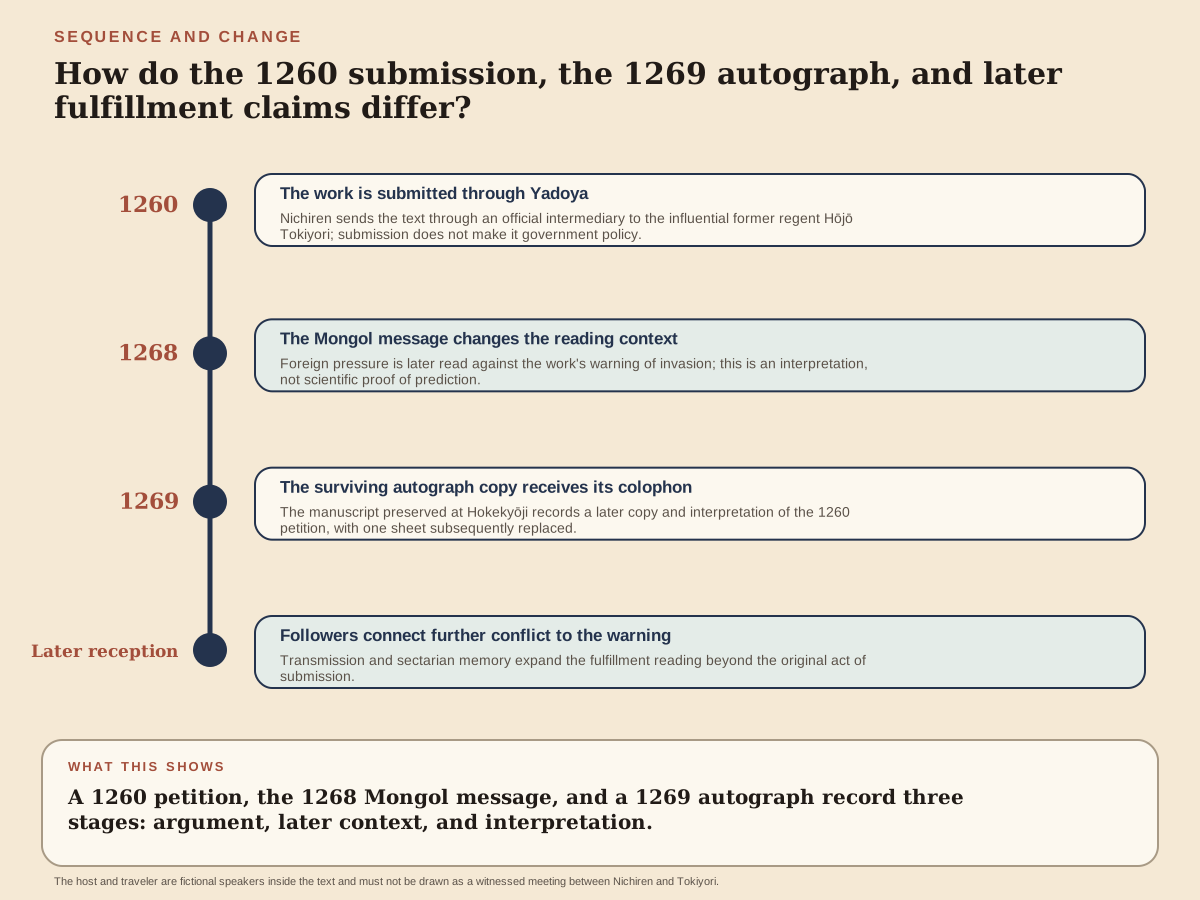
Earthquake, famine and epidemic formed the setting for Nichiren’s Risshō Ankoku Ron, or Establishing the Correct Teaching for the Peace of the Country. In the seventh month of 1260 he submitted the work through Yadoya, an official intermediary, to Hōjō Tokiyori. Tokiyori was a former regent who retained influence; he was not the current holder of that office.
In 1253 Renchō returned to Seichōji and publicly taught the primacy of the Lotus Sutra. Nichiren traditions commemorate the declaration on the twenty-eighth day of the fourth month of the traditional calendar. He advocated the daimoku, chanting Namu Myōhō Renge Kyō, an expression of devotion to the sutra's title, and came to use the name Nichiren. He also criticized exclusive reliance on nenbutsu, calling on Amida Buddha for salvation. That challenge reached people who trusted the practice for dying relatives and ancestors, including patrons of the temple that had educated him.
Polemic could appear not merely incorrect but dangerous.
Historical disagreement · When did Nichiren leave Seichō-ji?
Tōjō Kagenobu was a steward appointed by the warrior government to supervise an estate. Tradition depicts him as a Pure Land supporter enraged by Nichiren's words. The timing of the departure is disputed. Temple tradition makes him flee after the 1253 declaration; Yutaka Takagi, as described in Jacqueline Stone's 1999 review, reconstructs a longer temple and estate conflict ending in winter 1254.
Dōzen-bō's position was difficult. Protecting a former student need not mean accepting his claims. Accounts of assistance by fellow monks demonstrate that institutional attachment and doctrinal allegiance could diverge. The name Nichiren joined sun and lotus imagery in later interpretation. Whether every element of the naming occurred at the exact remembered hour is less important than the new public identity through which he wrote and organized.
Historical disagreement · What did Nichiren’s declaration in 1253 establish?
The declaration gave Nichiren a public teaching and identity, not an immediately complete religious institution. Followers gathered through preaching, letters and household patronage. His mature positions on esoteric Buddhism, the object of devotion and his own religious role developed through later conflicts and exile. Nichiren lineages read 1253 differently: some see the complete founding teaching already proclaimed, while historical interpretations emphasize a public turn within Tendai-derived Buddhism.
Its small immediate organization and immense later authority belong to different stages of the story.
The remembered declaration made staying at Seichōji difficult. Local opposition and support from fellow monks shaped his departure. He carried a teaching that could be repeated without a library, but establishing a community beyond his former temple would require patrons willing to sustain it.
The text presents a fictional dialogue between a host and a traveller distressed by disasters. Its host argues that abandoning correct Buddhist teaching has driven away protective deities. A principal target is Hōnen’s advocacy of exclusive nenbutsu practice in the Senchakushū. Nichiren connects the religious patronage of rulers to the security of their subjects and urges acceptance of the Lotus Sutra.
The work warns of internal conflict and foreign invasion if the error continues. These are scripturally framed political warnings, not an established explanation of earthquakes or a scientifically verified prediction. The submission did not make Nichiren’s position government policy. His criticism placed him in conflict with influential teachings and the authorities supporting them.
Hokekyōji preserves an autograph copy made in 1269, with later replacement of one sheet. Its colophon interprets foreign pressure as fulfilment after the Mongol message of 1268. Followers subsequently connected the warnings to further conflicts and invasion. The surviving roll thus records a petition’s later interpretation and transmission as well as the argument first submitted in 1260.
Nichiren inherited the Tendai conviction that the Lotus Sutra occupied a supreme position within Buddhist classification. His innovation was not discovering the scripture but radicalizing what its primacy required in his age. The concept of mappō, the Final Dharma age, framed religious capacity as historically altered. A practice suitable in one era might fail in another. This transformed doctrinal ranking into emergency diagnosis. The daimoku offered concentration. A short vocal practice connected ordinary adherents with the scripture's title and promised participation in a vast teaching without requiring monastic mastery of every chapter. Exclusivity also organized identity. A small community surrounded by powerful temples needed reasons not to dissolve into common practice. Naming other paths as ineffective or harmful made adherence costly and therefore socially meaningful.
Pure Land was the earliest central target because nenbutsu practice was widespread across formal institutions and households. Criticism reached deathbed hope, ancestors, patronage, and the authority of the Pure Land teacher Hōnen's legacy, not just a scholastic thesis. Zen became vulnerable to the claim that it privileged a mind-to-mind transmission beyond written scripture. In Kamakura, Chinese-lineage teachers enjoyed Hōjō patronage. Polemic against Zen could therefore implicate elite cultural and political choices. Nichiren's relation to esoteric Buddhism was complex. He used categories and ritual assumptions from the broader Tendai/esoteric world even as he increasingly condemned the subordination or misreading of the Lotus. His criticism still drew on concepts learned within these traditions. The Ritsu or disciplinary revival posed another rivalry. Figures such as Ninshō joined precept authority, social relief, construction, healing, and government patronage.
Nichiren's opponents were not empty figures of an establishment. Ninshō's religious authority, for example, was connected to relief and healing as well as elite patronage. Nichiren nevertheless represented rival practices as dangers to their adherents and the country. That claim could make resistance appear to confirm the persecution predicted for a Lotus defender. The surviving writings show changes in his arguments, but some texts later attributed to him remain contested. They cannot all establish his views at the same date or with equal confidence.
Exclusivism was therefore theological conviction and minority strategy. It centered practice, authorized confrontation, explained persecution, and refused easy absorption. The same qualities that sustained the movement increased the chance that debate would become public-order conflict. The label “Nichiren Buddhism” is retrospective convenience at this stage. A durable institution developed only as adherents and patrons sustained these practices.
After leaving his home temple, Nichiren made Kamakura the center of his public activity. The warrior government's officials and Hōjō households were also patrons of religious institutions. Temples performed funerals and healing rites, held estates and offered learning or relief. Pure Land devotion crossed institutional boundaries, while Chinese teachers and Kenchōji gave Zen a conspicuous connection with Hōjō patronage. By condemning these practices, Nichiren challenged choices embedded in government service and ordinary households, not only doctrines debated by monks.
Nichiren's hut was a material base. Its existence depended on local permission and households willing to support an outspoken teacher. Matsubagayatsu connected hillside shelter to routes through the city. Later Ankokuronji, Myōhōji, and Chōshōji traditions preserve different claims to Nichiren's residence and persecution. Their competition is reception evidence, not reason to choose one modern precinct as the uncontested exact floor. Follower formation extended beyond listening. Toki Jōnin in Shimōsa preserved writings and provided a regional household node.
Shijō Kingo's warrior service linked conviction to employment risk. The Ikegami brothers belonged to another family negotiation in which faith, inheritance, and paternal authority could collide. Women followers are harder to compress into one category. Some were married into warrior or local households; some traveled or exchanged gifts and letters; some lived through widowhood, illness, childbirth, property problems, or family opposition. Nichiren tailored correspondence to particular constraints. Texts traveled through them. Recipients and intermediaries helped letters reach audiences beyond his preaching place. Urban preaching and regional correspondence grew together. The city's disasters heightened competition. Earthquake, disease, hunger, fire, and political rumor produced demand for explanation and protection. Competing clerics could interpret the same suffering through different cosmologies.
Kamakura brought Nichiren close to patrons able to maintain his work and officials able to punish it. Preaching in the city and corresponding with regional households grew together. When earthquakes, famine and disease intensified, these contacts gave him an audience for an argument that placed responsibility on the religious choices of rulers.
Nichiren made exclusive devotion to the Lotus Sutra the basis of public remonstration and organized religious action. His disaster argument linked doctrine to government responsibility, while exile, attack and correspondence turned persecution into evidence within his own religious interpretation.
His longer importance rests in an unusually large body of writings and in networks of disciples and lay patrons that survived him. Those networks did not remain a single institution: regional leadership, succession and later doctrinal disputes produced several Nichiren traditions. The historical legacy is therefore both textual and institutionally plural.
Seichōji's institutional tradition places Nichiren there from about age twelve and associates his later vows and clerical name Renchō with Dōzen-bō, a Tendai monk. His surviving writings do not independently establish every stage of this training.
Seichōji belonged to Tendai, a Buddhist tradition that placed the Lotus Sutra—a scripture teaching the possibility of Buddhahood for all—at the summit of its textual hierarchy. Temple practice could nevertheless combine Lotus study with initiatory rituals, devotion to Amida Buddha, whose Pure Land offered believers a destination after death, and local cults. Learning required access to texts in literary Chinese, often copied or borrowed, and guidance in reading and recitation. The teacher remained important to Nichiren even when he did not fully accept his former student's increasingly exclusive claims.