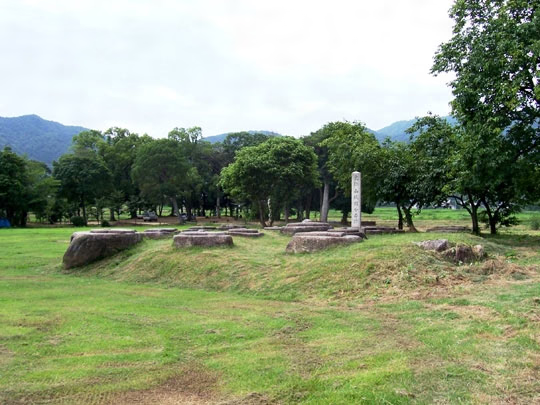
Map: GSI Japan Between 740 and 745, Emperor Shōmu's court shifted its political center from Heijō-kyō to Kuni, then toward Naniwa and Shigaraki, before returning to Heijō. No continuous road or intact palace binds those moves together today. What survives is a distributed archive: palace foundations reused by a provincial temple at Kuni, buried administrative compounds and an unfinished Buddhist project in the Shigaraki basin, and two superimposed palace phases beneath modern Osaka at Naniwa. Reading those places together makes the mobility of an eighth-century court visible. It also prevents the sequence from becoming a list of royal whims: each site exposes the labor, materials, ritual programs, transport connections, and incomplete construction that a capital demanded.