

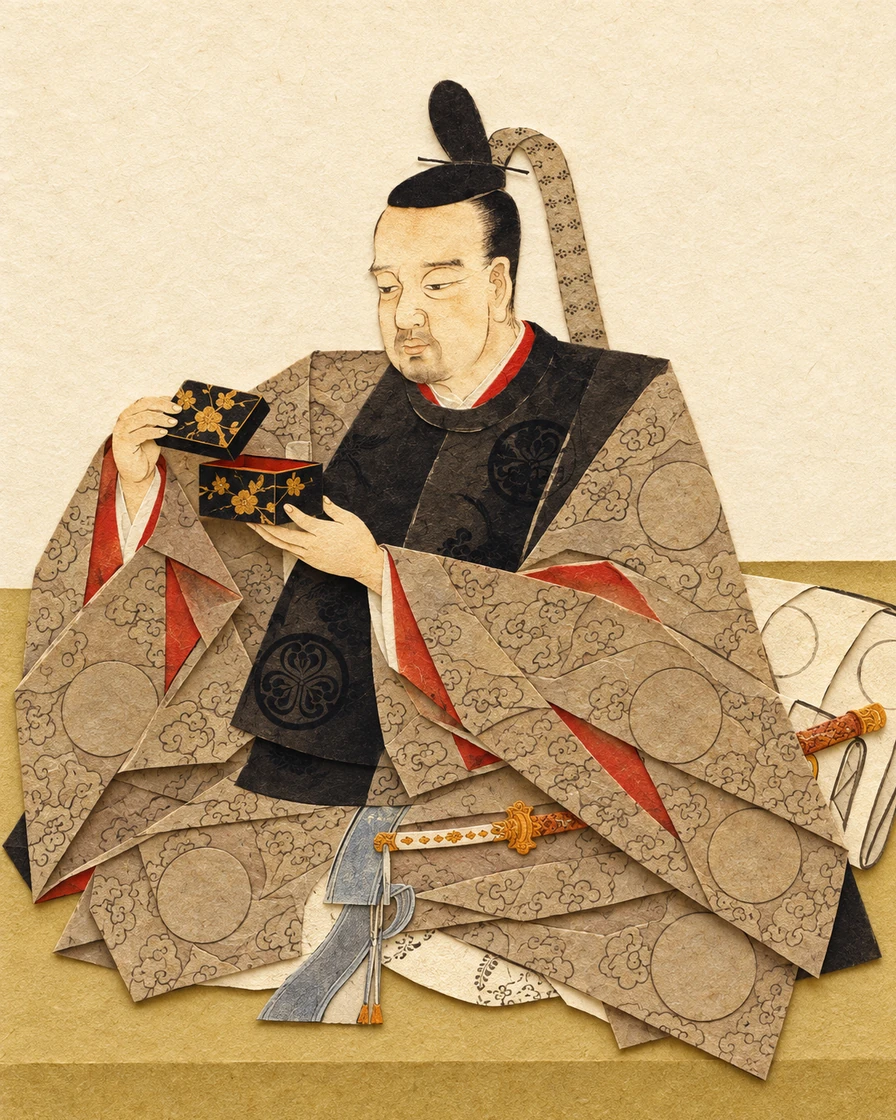
Edo period
Tokugawa Ienari
徳川家斉
Overview
Tokugawa Ienari (1773–1841), a son of Hitotsubashi Harusada, entered the main shogunal household through adoption by Ieharu in 1781. He became the eleventh shogun in 1787 and remained in office for fifty years. His accession placed a member of a collateral Tokugawa house at the head of the dynasty, drawing on the succession arrangements that had grown around its branches. [S01, S02]
Early government depended on Matsudaira Sadanobu’s Kansei reforms, which sought rural recovery and financial discipline while imposing restrictions on public expression. Reform policies continued under later senior councilors before a greater reliance on favorites and household patronage developed. Currency debasement provided revenue, but mounting expenditure and the severe famine of the 1830s exposed continuing strains. The revolt led by Ōshio Heihachirō in Osaka in 1837 made the failure to relieve suffering sharply visible. [S01]
Ienari also extended family ties by placing many of his children in Tokugawa branches and other lords’ households through adoption and marriage. In 1837 he transferred the shogunate to his son Ieyoshi, yet retained political influence as a retired ruler until his death in 1841. His long government combined dynastic expansion with successive administrative strategies. The enlarged family network outlasted him; it had not removed the fiscal and social distress already apparent during his lifetime. [S02, S01]
Sources and notes ViewHide
- [1]
徳川家斉 — 世界大百科事典 / 日本大百科全書 / 日本史小辞典北島正元 (Kitajima Masamoto); 藤野保 (Fujino Tamotsu); 山川出版社
- [2]
徳川一門―将軍家をささえたひとびと― 第2章 一門の広がりEdo-Tokyo Museum
Tokugawa Ienari (1773–1841), a son of Hitotsubashi Harusada, entered the main shogunal
became the eleventh shogun in 1787 and remained in office for fifty
The revolt led by Ōshio Heihachirō in Osaka in 1837 made the
Connections
Places
No linked places yet.
Events
No linked events yet.
Relationships
Topics
No related topics yet.