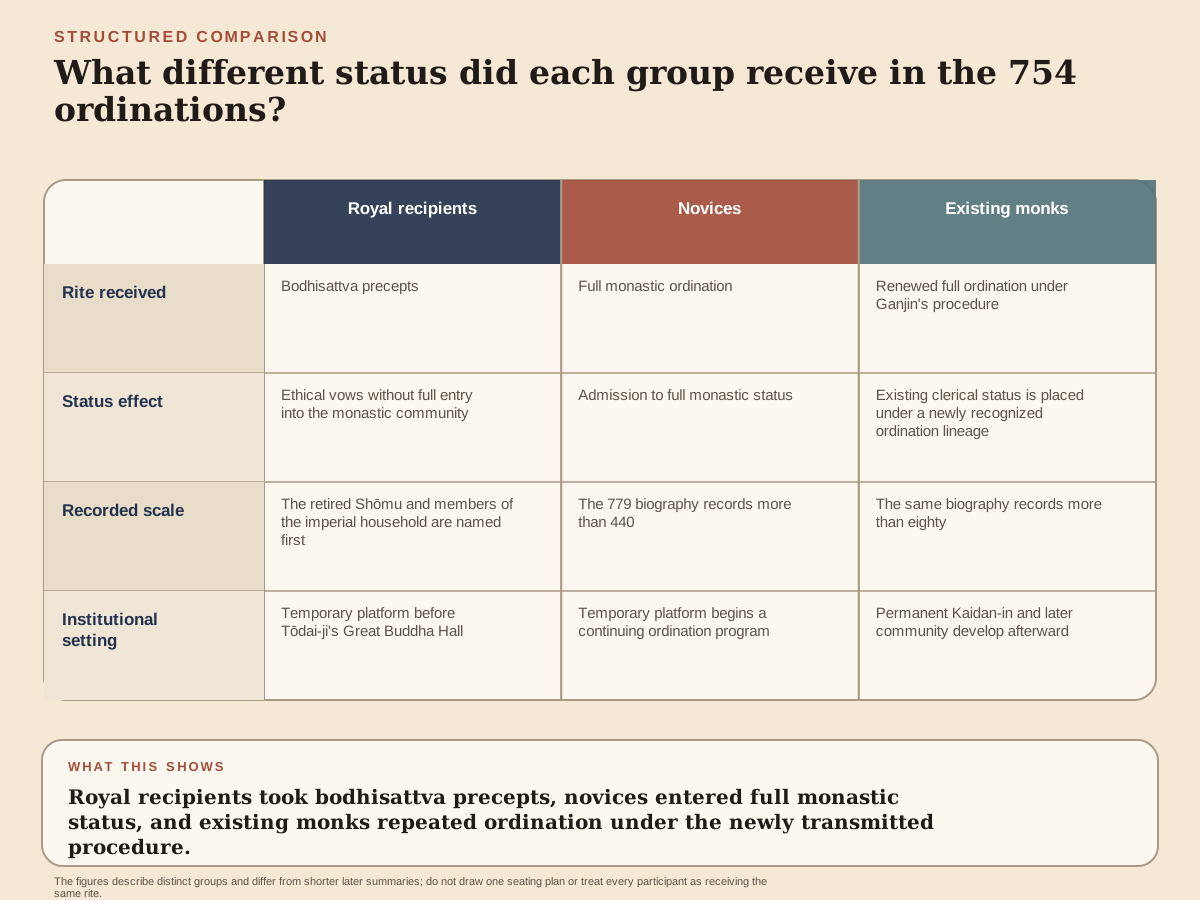
After reaching Nara in 754, Ganjin received the court's authorization to transmit Buddhist precepts. These were the rules and commitments governing religious practice and membership in the monastic community. A temporary ordination platform was erected before Tōdai-ji's Great Buddha Hall.
The 779 biography connects Ganjin's failing sight with repeated southern heat and says a foreign practitioner offered eye treatment, after which he became blind. It places this sequence during the return north, following the group's stay in Guangzhou and movement to Shaozhou. The testimony supplies no clinical detail establishing a modern diagnosis or the treatment's exact effect.
Blindness made guidance on unfamiliar roads and ships more important. Ganjin had already taught for decades, and the expedition included trained companions able to carry texts and procedures with him. His religious authority could continue within that community, though successful travel would not restore his sight.
The loss of sight remained part of his life in Japan. The successful crossing ended the expedition's long struggle to arrive, not the practical consequences of disability.
The Tang Daiwajō Tōseiden, written in 779, records the sovereign receiving bodhisattva vows first, followed by members of the imperial household. Shōmu, now retired, participated in this ceremony. Royal acceptance of bodhisattva vows was distinct from full admission to the monastic community: the biography separately records the ordination of more than 440 novices and the renewed ordination of more than eighty existing monks. Those figures describe different groups, not two competing totals for the same rite.
A permanent ordination compound, the Kaidan-in, was subsequently built west of the Great Buddha Hall. Ganjin's work joined a recognized ritual procedure to the court's regulation of the clergy. The temporary ceremony began that teaching and ordination program; the permanent facilities and the later community at Tōshōdai-ji developed afterward.
The Japanese embassy offered what earlier coalitions lacked: ocean-going vessels prepared for a state mission, experienced crews, recognized officers, and a return itinerary linked to Japanese reception. Yet the same diplomatic status created liability. If Tang officials searched the ships and found a protected master being removed, an ambassador could be accused of violating the conditions under which the mission traveled. Ganjin’s name and those of several disciples were reportedly presented, then removed from the official passenger arrangement when leaders feared the consequences. Ōtomo no Komaro, a deputy leader of the Japanese embassy, later brought the group aboard secretly at night. This was not a clean transaction between two states jointly sponsoring cultural exchange. Success emerged from a state route used through individual risk and partial concealment.
The biography names twenty-four companions at a preparatory departure from Yangzhou toward Suzhou in the tenth month of 753. They included fourteen male clergy, three nuns, a lay supporter and travelers identified with regions beyond China. This was one stage in a changing passenger arrangement: clergy boarded embassy vessels, were ordered ashore, and later boarded secretly; Fushō traveled on a different embassy ship. The twenty-four should not be read as a fixed final total of everyone who reached Japan. The older geographical labels also cannot simply be converted into modern nationalities. Texts, images, relics and ritual materials accompanied the travelers and would equip the teaching community in Japan.
The embassy's four ships separated on different routes. Ganjin's vessel passed islands south of Kyushu and landed in Satsuma, a province in southern Kyushu, in the twelfth month of 753 in the traditional calendar. Days later the party reached Dazaifu, the government's center in northern Kyushu. In the second month of 754 they traveled through Naniwa, near modern Osaka, and Kawachi before entering Nara on the fourth day of that month. The court placed them at Tōdai-ji, the great Buddhist temple associated with the imperial Great Buddha project. Arrival had become official recognition and a place from which to begin teaching.
The final passage joined unauthorized boarding to an official route home. Once the group entered Japanese jurisdiction, the court that had requested preceptors could recognize its presence and provide a base. The long-sought crossing was complete, but the work of establishing ordination in Japan had only begun.
In 754 the court established a temporary ordination platform before Tōdai-ji's Great Buddha Hall. The setting linked Ganjin's procedures with retired Emperor Shōmu's major Buddhist project. Imperial recipients took bodhisattva precepts, ethical commitments available beyond the clergy. Novices received full monastic ordination, while established monks relinquished earlier ordination and took the new procedure. These were different ceremonies and changes in status, not one undifferentiated act performed on four hundred identical candidates.
The surviving accounts count participants differently. Museum and temple summaries use approximately four hundred; the 779 biography gives more than 440 novices and more than eighty older monks in addition to the imperial recipients. The shorter summaries do not reproduce the biography's separate categories, and no underlying attendance register is available here to reconcile the totals. Repeated ordination shows that validity was negotiated, not self-evident. Japanese monks already possessed robes, offices, temple roles, and recognized careers. Some chose to place those statuses under the new procedure; the account does not establish how every other monk responded. The ceremony’s force came from producing enough participants and patrons that later ordinations could point to a recognized precedent. The court’s involvement joined discipline to administration. Official recognition of clerical status affected appointments, exemptions, temple residence, and the state’s ability to regulate monks and nuns.
A stricter lineage could strengthen religious accountability and also concentrate control in the institutions authorized to ordain. Spiritual reform and bureaucratic classification were not separate effects. Reception before the ceremony made that alignment explicit. Chinese monks already in Japan, senior Japanese clergy, and more than a hundred officials are placed around the arrival in the early biography. Kibi no Makibi conveyed the sovereign’s welcome and assigned Ganjin broad responsibility for transmitting ordination. The account celebrates consensus, but the number and rank of greeters show that the court treated this as policy, not a private temple experiment. Ganjin’s group supplied what a manuscript could not: teachers occupying differentiated roles, embodied knowledge of ritual sequence, and a community able to judge candidates.
The court's participation gave the ceremony public standing, while Ganjin's companions supplied experienced officiants and Japanese clergy supplied local knowledge and future teachers. A permanent precinct would follow in 755. That change would turn a highly visible event into a practice candidates could seek repeatedly.
Ganjin helped establish a durable system of Buddhist ordination in Japan by bringing trained clergy, texts, ritual procedure and material expertise. His importance did not lie in introducing Buddhism to an empty country, but in supplying a recognized community capable of conducting and teaching full ordination.
The transfer depended on Japanese envoys, Tang and maritime networks, companions, court patronage and temple resources. The ordinations at Tōdai-ji and the community at Tōshōdai-ji made the practice repeatable after Ganjin’s death. Later heroic voyage stories preserve the cost of his persistence, but they can obscure the collective institution that made success durable.
The 748 departure carried a company of roughly thirty-five according to the biography. Wind took the vessel far south toward Hainan, an island off China's southern coast, instead of east to Japan. The account describes raw rice rationed without fresh water and fourteen days at sea before landing. Its rain and rescue stories also contain dreams and miraculous signs, showing how the community understood survival amid real material distress.